How Humidity in Southeast Asia Affects Wood Furniture (And What HDB Buyers Should Know)
If you have ever run your hand along a slightly sticky drawer front in a Tampines resale flat, or noticed a faint mustiness behind the wardrobe in a Punggol EC, you already know the answer to a question most Singapore buyers only ask after the damage shows up. Southeast Asian humidity is not a side note for wood furniture. It is the single environmental factor that decides whether your new solid wood sofa, dining table, or bed frame quietly settles into your home or starts a slow, six-month fight with the air around it. After more than 12 years of shipping solid wood pieces across this region, including to buyers living in compact HDB and condo units across Tampines, Bedok, and Punggol, the patterns are predictable. The good news: with the right wood, the right construction, and a few habits, you can avoid 90% of the problems.
What exactly does the climate do to a solid wood piece?
Solid wood is a hygroscopic material. It drinks and releases moisture as the relative humidity (RH) around it shifts. Singapore sits in a humid tropical band where outdoor RH ranges from roughly 65% at midday to over 95% during monsoon surges between November and February. Indoors is a different story, but only slightly: HDB flats without constant dehumidification usually sit between 70% and 85% RH most of the year, and bedrooms above the lift core can run even higher at night.
When wood absorbs moisture, it swells across the grain. When the air dries, it shrinks. The motion is small per hour, but over a season it adds up to visible movement: a 180 cm dining table top can change by 2 to 4 mm in width, and a 60 cm solid wood nightstand leg can shift nearly a millimetre at its widest point. That expansion is harmless if the joinery allows it. It is destructive if the piece was built like MDF furniture in a tropical market mindset, with tight glue joints, sealed backs, and no relief.
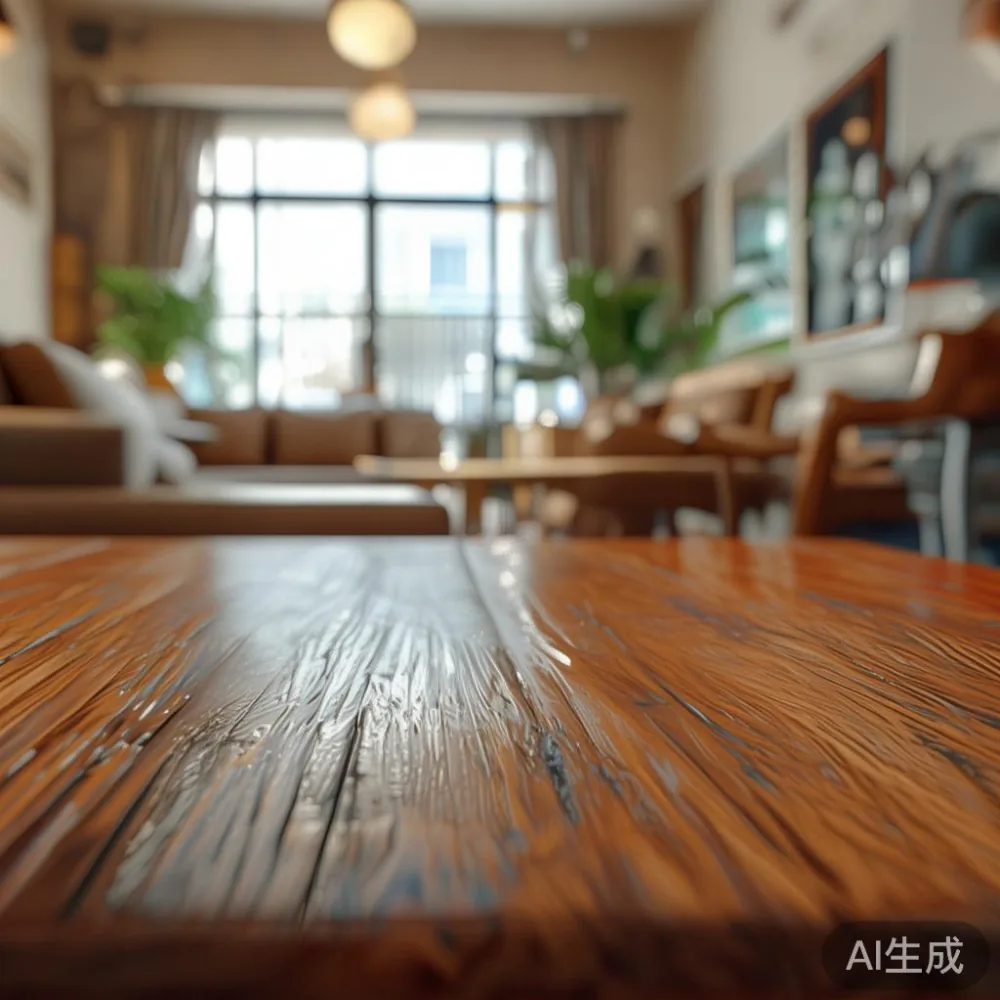
Three effects matter for the average HDB owner: small seasonal gaps between table leaves or extension panels, hairline cracks along long-grain faces of a bed frame, and the gradual loosening of dowels in older cabinets. None of these are defects in the wood. They are physics.
Does a French bed vs Modern bed behave differently in humidity?
The question of French bed vs Modern bed is worth pausing on, because the construction style changes everything in our climate. A traditional French provincial bedroom set tends to use solid poplar or beech frames with thicker panels, deeper mouldings, and visible joinery. A post-modern light luxury frame (think slim metal-tipped legs, low-slung upholstered headboards, and minimal hardware) often uses engineered cores wrapped in solid wood veneer.
In a 75 m2 HDB flat at 80% RH, both designs move, just in different ways. The French provincial for bedroom setup uses wood thick enough that the movement is slow and forgiving, and the surface is usually painted or stained in a way that masks seasonal shifting. The post-modern frame will look pristine on day one and show veneer micro-cracks at the corners by month nine if you skip a dehumidifier. Neither is automatically safer; the wood species and the panel thickness matter more than the styling label.
Is European light luxury wardrobe worth it in a Tampines three-room flat?
This is one of the most common DM questions I get from buyers shopping for an HDB living room refresh that includes a wardrobe upgrade. The honest answer depends on three measurements: your corridor, your lift, and your bedroom wall.
A fully built European light luxury wardrobe can weigh 180 to 260 kg and stand 220 to 240 cm tall. Delivery into a Tampines or Bedok block usually means a cargo lift sized 1.2 m deep by 1.5 m wide (some newer BTOs are 1.3 m by 1.7 m). The wardrobe has to fit through that lift opening, plus the corridor at your floor, which in many older HDB blocks is around 1.2 m wide. Before you fall in love with a 240 cm tower, take a tape measure to your lift lobby. If you are working out how to style French provincial wardrobe in apartment settings on social media, you will notice almost every featured HDB has a 180 cm or 200 cm unit, not the European showroom hero.
Is a European light luxury wardrobe worth it, then? Yes, in the right flat, ideally a Punggol or new BTO with 1.5 m+ lift access and a 9 m wide master bedroom, where the scale actually matches the room. For a standard 3-room HDB, a 180 cm light-luxury solid wood wardrobe in the 1,800 to 2,400 SGD range is usually a smarter match than a 240 cm imported unit that has to be partially disassembled to get through your door.
What about sofas, dining tables, and marble tops in a humid HDB livingroom?
The HDB living room is the centrepiece of post-renovation life in Singapore, and it is also where humidity gets the most unpredictable, because open windows, the daily cooking cycle, and afternoon sun team up to push RH from 65% to 90% within an hour of rain. Three pieces deserve attention.
Solid wood sofa: frames in rubberwood, ash, or oak in the 2,400 to 4,800 SGD band handle HDB humidity well, especially when the cushions are removable and the slats under the seat run front-to-back (so air moves rather than pools). Watch out for any sofa built with a continuous MDF back panel, which traps moisture and curls at the bottom edge after two monsoon seasons.
Dining table: a 160 cm or 180 cm solid wood dining table at the 1,200 to 2,600 SGD mark is one of the safer purchases here. Extension tables with metal tracks need the tracks cleaned and lightly waxed every six months, or they start to grind from dust and humidity. A marble table pairing a stone top with a solid wood base looks high-end but carries its own rule: the underside of the stone needs a moisture barrier, otherwise mineral salts can leach into the wood base in tightly air-conditioned flats and stain the frame grey.
Bed frame, nightstand, and small storage: low-profile frames clear the floor so airflow stays strong under the bed, which is helpful for keeping RH pockets down. MIDHILL furniture shipped to Singapore since 2014 has been built for this region, including a 10-year structural warranty that covers joint failure from seasonal movement up to 4 mm, which is more generous than the regional norm.
Will humidity ruin pieces labelled Boho, light luxury, or American light luxury?
Labels are a marketing shortcut, not a material spec. A piece can be tagged for sale Boho furniture in one listing, French provincial for bedroom in another, and American light luxury in a third, while the actual construction is identical: rubberwood frame, MDF panels, paper-thin veneer. The wood species and the panel thickness, not the style label, decide how the piece survives.
That said, there are real differences between the styles:
- American light luxury tends to favour oak and ash with lighter stains and metal accents, which is friendly to humid climates because lighter stains show water damage less obviously.
- French light luxury leans on beech and walnut with a darker finish; beautiful, but expect to wipe water rings within 20 minutes during rainy weeks.
- Post-modern light luxury often mixes marble, brass-tone metal, and curved solid wood, which works well if the metal is stainless or solid aluminium, not just plated steel that rusts at the screws by year two.
If you compare a top 10 American furniture list with a top 10 European one for humid climates, the American light luxury category usually features more outdoor-grade joinery and fewer sealed-back cabinets, simply because the brand is designed for wider geographic use including high-humidity US states.
How should an HDB owner maintain wood furniture month to month?
Maintenance here is not complicated, and it costs almost nothing beyond a small dehumidifier or a DampRid bucket in the wardrobe. The habits below are what the MIDHILL team in Foshan walks every Singaporean customer through at delivery.
- Keep indoor RH between 50% and 65%. A 20 SGD digital hygrometer on each floor is more useful than any furniture product. When RH climbs above 70% for more than 48 hours, run a dehumidifier.
- Avoid direct afternoon sun on oak and beech. HDB windows in Punggol and Bedok often face west. UV is a secondary enemy; it cooks moisture out of one side of the panel faster than the other, which is how small surface cracks start.
- Leave 5 cm behind wardrobes. Air needs to move. Pushing a 60 cm deep wardrobe flush to the wall traps moisture and grows mould on the back panel.
- Clean with a barely damp microfibre cloth. Never wet-wipe a French provincial wardrobe face within 10 minutes of cooking; the steam settles into the grain and lifts the stain.
- Schedule refinishing every 7 to 10 years. A 10-year structural warranty protects the joints, but the surface finish is wear-and-tear. We offer lifetime refinishing on most models, which means a 200 to 350 SGD sanding-and-recoat in your own HDB livingroom can make a 12-year-old bed frame look new again.
- Wax extension rails every six months. Beeswax, not silicone spray. Silicone traps moisture against the metal.
What about shipping, GST, and 14-day returns for buyers here?
Pricing in this article is in SGD and includes typical landed estimates. A solid wood sofa in the 2,400 to 4,800 SGD range, a dining table from 1,200 to 2,600 SGD, a 180 cm light-luxury wardrobe from 1,800 to 2,400 SGD, and a queen-size bed frame from 1,100 to 1,800 SGD are realistic bands for direct-from-factory solid wood. Orders above US$350 (around S$475) ship free to Singapore, with a typical 25 to 40 day door-to-door transit. GST is calculated at checkout, currently 9%, so a S$2,000 wardrobe lands closer to S$2,180 after tax.
Delivery into your HDB unit is included for most pieces above 80 kg in Tampines, Bedok, Punggol, and the rest of the island. For tighter blocks, we pre-measure your lift and corridor before shipping, so the 14-day return window still applies if a measurement goes wrong on our side. Refinishing, replacement of small components, and the 10-year structural warranty are all honoured in Singapore through our regional warehouse.
Will my solid wood piece look exactly like the showroom photo?
No, and that is by design. A solid wood top carries visible grain movement, small mineral streaks, and colour variation that varies from board to board. In a French provincial for bedroom set painted in matte cream, this shows up as a slightly mottled finish that reads as artisanal. In an American light luxury oak frame, the same variation reads as warmth. If you want a piece that looks identical block to block, you want veneer or laminate, and that is a different conversation about longevity in humid HDB conditions.
Two months ago I visited a customer's 4-room BTO in Punggol Summit, where they had combined a French provincial for bedroom suite with a post-modern light luxury marble table in the dining area. Both pieces had been delivered eight months apart, both had settled into the home, and both showed exactly the kind of seasonal micro-gaps along the extension rails and wardrobe door edges that tells you the wood is moving correctly with the climate. The owners had a small dehumidifier running on a hygrometer between 58% and 62%. The furniture looked rested rather than stressed.
Where do I start if I am renovating an HDB livingroom next quarter?
Start with measurements, not Pinterest. Measure lift depth and width, corridor width at the tightest turn, and the wall where the longest piece will sit. Bring those numbers to any furniture brand you are considering, including MIDHILL, and ask what configuration will fit your specific block. If your block sits in Tampines GreenRidge or Bedok Reservoir, with a 1.2 m by 1.5 m lift, stick to wardrobes no deeper than 55 cm and dining tables no longer than 180 cm closed. If you are in a newer Punggol or Bishan BTO, you usually have a 1.3 m by 1.7 m lift, which opens up 240 cm wardrobes and 200 cm dining tables without disassembly.
From there, choose one hero piece for the HDB living room (a solid wood sofa or a marble table as the centrepiece), build the supporting pieces around it (nightstand, bed frame, small dining chairs), and commit to a maintenance rhythm. The furniture will outlast your lease, your renovation cycle, and possibly your next resale buyer if you take care of it like the solid wood investment it is.