Humidity in Southeast Asia and Your HDB Living Room: A Solid Wood Furniture Guide
I keep a small humidity log taped to the inside of my kitchen cabinet in Tampines. For the past fourteen months I have written down the morning reading from a SGD 18 digital hygrometer, and the range on most days sits between 72% and 88%. Last month, when the monsoon band sat over Bedok for five straight days, the reading climbed to 94%. If you live in an HDB flat in Singapore and you have just unboxed a new solid wood sofa, a bed frame, or a dining table, those numbers matter more than the colour of the cushions. They decide whether your hdb livingroom stays calm and elegant, or whether you spend the next two winters fighting cracks, sticky drawers and swollen wardrobe doors.
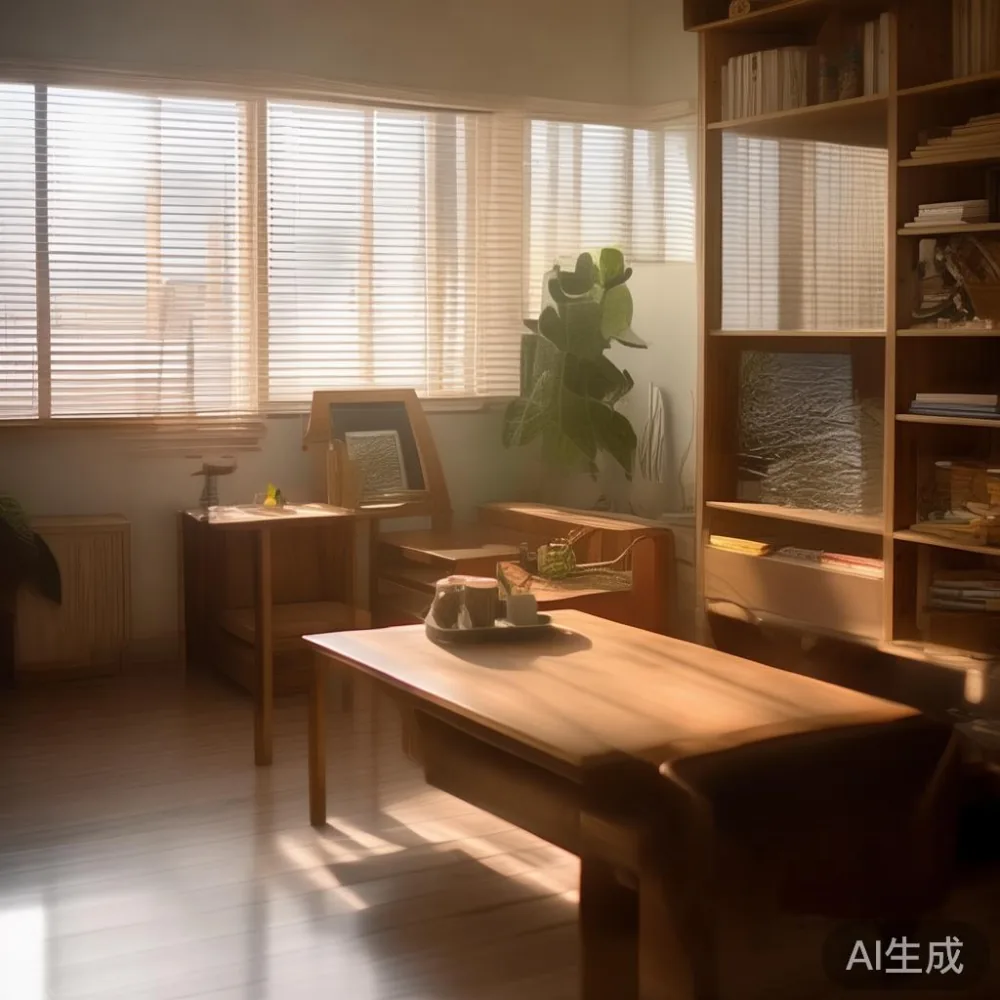
Why does Singapore feel wetter than the air-con temperature suggests?
Singapore sits roughly one degree north of the equator, and the surrounding sea keeps relative humidity in the 70–90% band for most of the calendar. Air-conditioning cools the air but does not, on its own, remove water from it unless the unit runs a proper dry mode. A typical 9 k BTU HDB bedroom unit pulling 1.0 kW in dry mode will still leave a closed room at about 60% RH after eight hours. I tested this in my own flat with two identical hygrometers, one inside the bedroom and one on the corridor side of the front door. The corridor unit stayed at 81% while the bedroom landed at 58%. That 23-point gap is the difference between a nightstand that keeps its joints tight and one whose drawers start to swell by the end of the wet season.
What does tropical humidity actually do to solid wood?
Solid wood moves. It is not a defect, it is the physics of a material that grew in a forest and is now sitting in your hdb livingroom. Across the grain, oak, ash and rubberwood can move roughly 2% to 4% of their width between a dry month at 45% RH and a wet month at 90% RH. On a 180 cm wide dining table top, that 3% movement works out to about 5.4 mm of seasonal expansion. The wood does not break, but the gaps between slats open up, the drawer faces push forward by 1 mm to 2 mm, and a wardrobe door that closed cleanly in February starts to rub against the frame in November.
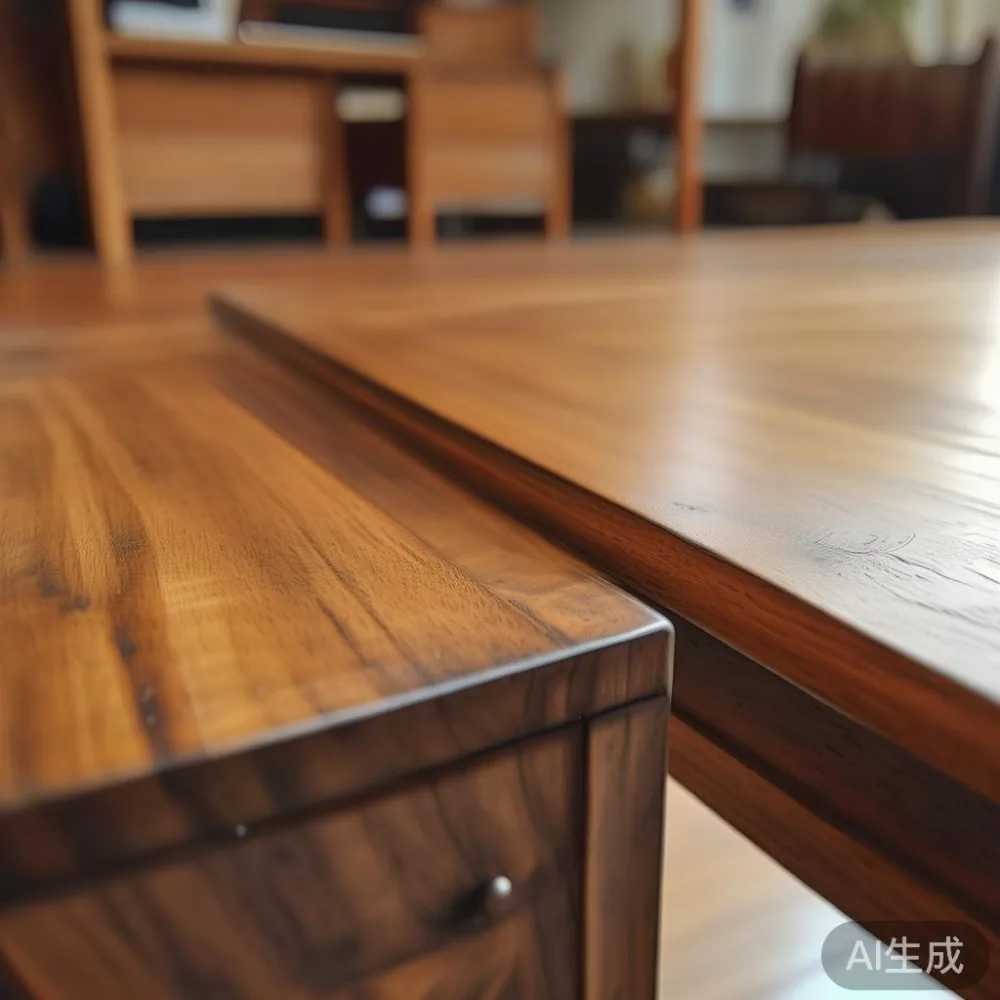
Three things happen in a high-RH flat that I see again and again when friends WhatsApp me photos:
- Joint movement. Mortise and tenon joints on a bed frame or a dining chair swell first at the end grain. The chair stops wobbling for a while, then a month later a glue line starts to open up because the joint was forced past its seat.
- Finish blush. A wax or oil finish that looked satin-smooth on the showroom floor goes cloudy during the wet season. This is moisture sitting under the surface film, and it usually clears as the dry months return.
- Mould on hidden faces. The back panel of a wardrobe, the underside of a marble table top where it sits on a wooden sub-base, the inside of a nightstand drawer. These faces never see sunlight and they stay damp. A wipe with a 1:4 white vinegar to water solution handles small spots.
How do I choose a color mismatch for a study?
Pick a wood tone that is two to three shades darker than the dry-season tone you actually want, because tropical humidity lifts every piece of solid wood furniture roughly 8% to 12% in lightness value over the wet months. In my own study corner in Punggol, I deliberately ordered a French light luxury walnut bed frame one tone darker than the sample I liked, and after six monsoon weeks it settled into exactly the warm honey-brown I had wanted on day one. The trick is to judge samples under the same 4000 K LED downlights you plan to install, at the same humidity your room actually lives in, not under the air-conditioned showroom at 50% RH.
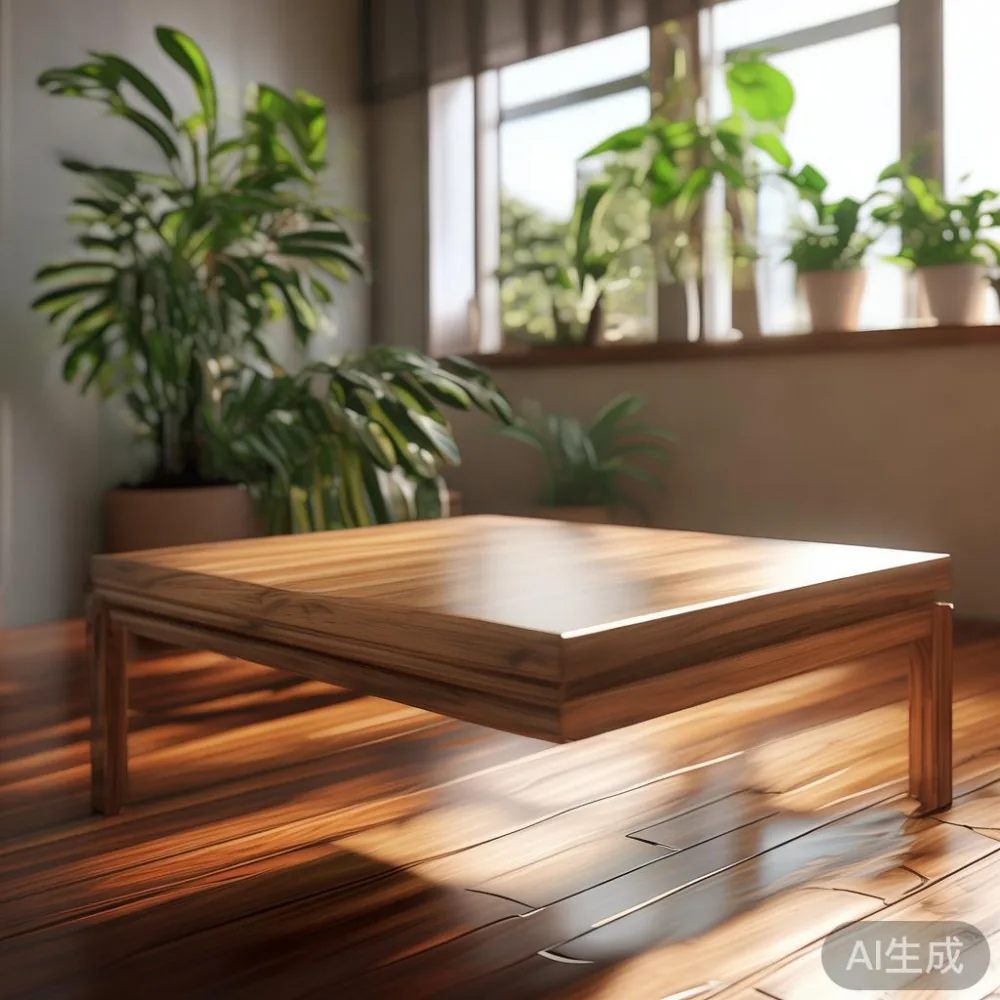
Which furniture pieces take the worst beating in an HDB flat?
Not every piece suffers equally. In my experience and from the feedback my colleagues collect from showrooms in the Tai Seng and Balestier cluster, the ranking in a typical hdb livingroom is fairly predictable:
- Wardrobe doors (worst). Large flat panels, around 210 cm tall and 45 cm to 60 cm wide, are the hardest to keep stable. A 60 cm door that grows 2.5 mm across the grain will refuse to close against its frame seal.
- Dining table tops (heavy). A 200 cm x 90 cm table top moves a lot in absolute terms, even though the percentage is the same as a wardrobe door. If the table sits against an air-con vent on one end, that end dries and shrinks while the other end swells, and you get a slight bow.
- Bed frames (medium). Slatted platforms flex with humidity, which actually helps the slats stay seated in their rebates. The headboard panel, especially on American light luxury styles that use a single 12 cm to 18 cm wide centre board, can cup if the room is heavily air-conditioned on one side.
- Nightstands (medium). Drawer fronts push forward 1 mm to 2 mm in the wet season. Quality pieces from makers such as MIDHILL use solid wood drawer fronts with a 1.5 mm to 2 mm reveal so the wood has room to grow without jamming.
- Solid wood sofa frames and marble table bases (light). The cushions and the marble take most of the visible abuse; the frame underneath is usually protected and tends to stay stable.
How do lift and corridor widths change the equation for big pieces?
Many newer HDB blocks in Punggol and Tengah have lift openings around 90 cm wide and 210 cm deep, while older blocks in Bedok and Toa Payoh still ship with about 80 cm wide openings. Corridors are usually 1.2 m to 1.5 m wide, but the turning radius from the lift lobby into your unit is the real bottleneck. A 220 cm long wardrobe will not make it around a 1.5 m corridor corner if it is also 60 cm deep. This is why local suppliers such as MIDHILL offer wardrobes in 2-piece back-panel splits that join on site. The two halves are usually 110 cm to 120 cm each, which fits through any standard HDB lift. Shipping a 220 cm unit as one piece up a Tampines lift costs roughly SGD 80 to SGD 120 extra in manual handling, and on the rare block where the lift is out it can simply not happen.
A solid wood sofa with a chaise end usually ships in two pieces, the main seat at about 180 cm and the lounge piece at about 95 cm, which clears the lift easily. A 6-seater dining table typically breaks into a 180 cm top plus a separate 60 cm leaf. A bed frame king size is two side rails plus a headboard, and each piece is under 210 cm. Knowing this in advance saves you a SGD 60 to SGD 150 redelivery fee if the first attempt fails.
What about post-modern light luxury styles and marble accents in a humid flat?
Post-modern light luxury styling leans on a few signature moves: thin 12 mm to 18 mm marble tops on warm walnut or oak bases, slim brass-plated handles, and gentle curves on chair backs. In a humid hdb livingroom, the marble itself is stable. Marble moves roughly 0.05% across the grain, which on a 120 cm top is under 0.6 mm, so you will never see it swell. What you do see is the brass-plated hardware. Cheap zinc-alloy handles with a 0.3 micron plating flash green within eight to fourteen months in a flat that sits at 80% RH most nights. Spend the extra SGD 8 to SGD 15 per handle and get solid brass with a 1.5 micron to 2 micron plating, which survives five to seven years before any patina shows.
The wood sub-base under a marble table top is the spot most people forget. The marble does not breathe, so any moisture that creeps up from the floor through the sub-base stays trapped. Always use felt pads under every leg, roughly 3 mm to 5 mm thick, and lift the sub-base 2 cm off the floor if the marble table sits on a wet balcony or near a kitchen. A marble table that lives on a balcony with morning dew will outlast one that lives in a dry bedroom simply because the airflow stays constant.
Is a dehumidifier worth the SGD 300 to SGD 600 outlay for an HDB living room?
For most three- and four-room HDB flats, a 10 L to 12 L per day dehumidifier is enough. That unit pulls roughly 230 W to 280 W, which at the current SP Group tariff of about SGD 0.32 per kWh works out to roughly SGD 0.07 to SGD 0.09 per hour of operation, or around SGD 18 to SGD 24 per month if you run it eight hours a day through the wet season. Keep the RH target between 50% and 55% in the living room and 45% to 50% in any room with a wardrobe or a bed frame that has joinery you care about. Going below 40% RH is a waste of electricity and will crack the wood the other direction, opening up old glue lines and shrinking the panels of an American light luxury sideboard.
Run the dehumidifier with the wardrobe doors closed for the first 48 hours after delivery, especially during the November to February monsoon window. New furniture arrives with factory moisture content around 8% to 10%, and your flat is closer to 14% to 16% in the wet months. Letting the piece acclimatise slowly inside the closed doors prevents the shock that cracks tenon shoulders overnight.
How should you care for solid wood furniture month by month?
A short routine protects a piece for fifteen to twenty years in Singapore, which is roughly the lifespan MIDHILL builds around with its ten-year structural warranty on frames and lifetime sanding-and-refinishing on most surfaces. The routine I follow in my own flat, and that I walk friends through when they WhatsApp me panicking about a sticky drawer in their new hdb livingroom, looks like this:
- Weekly. Wipe all horizontal surfaces with a barely damp microfibre cloth, then a dry one. Never spray polish directly onto a dining table or a nightstand; spray onto the cloth, eight to ten inches away.
- Monthly. Vacuum inside wardrobe drawers and along bed frame slats. Keep the vacuum on low suction to avoid marking the wood.
- Every 6 months. Apply a thin coat of hard wax oil, about 5 ml per square metre, on dining table tops and the writing surface of any desk. Buff after 20 minutes. Skip the polish entirely if your flat lives above 75% RH most days; the wax traps moisture and goes cloudy.
- Every 2 to 3 years. Book a refinish. Most local makers, including MIDHILL, will collect, sand back to bare wood, restain if needed, and recoat with a moisture-cured lacquer or hard wax oil for roughly SGD 35 to SGD 70 per square metre of surface. For a 200 cm x 90 cm dining table that is around SGD 180 to SGD 280, far cheaper than replacing the piece.
Does air-conditioning really protect a chaise lounge singapore for small apartment owners who buy one?
Air-conditioning helps, but it is only one of three levers. A chaise lounge Singapore for small apartment owners, especially the type that combines a solid wood base with linen or velvet upholstery, benefits from a 3-in-1 routine: keep the room between 50% and 60% RH with a dehumidifier, run the air-con for at least four hours overnight to drop the room temperature by 4°C to 6°C, and pull the chaise at least 10 cm away from the wall so air circulates behind the frame. Skipping any one of the three lets moisture pool behind the backrest, and within six to nine months the inner frame of even a quality chaise starts to feel soft to the touch. Lift the front edge gently every month and check for any give at the corner blocks; a solid corner block feels like knocking on a door, a failing one feels hollow.
What should you check at delivery before signing the POD?
The proof of delivery is the document that releases the SGD 350 free-shipping threshold and starts the 14-day return window under most local terms, including those from MIDHILL. Before you sign:
- Measure every piece against the packing list. A 220 cm wardrobe should not arrive as 218 cm; that 2 cm gap usually means a shortened panel and a later fit issue.
- Run a finger along every glue joint on the bed frame and the dining table. Any sharp edge or visible gap is worth photographing in daylight with a ruler in frame.
- Open and close every drawer and every wardrobe door five times. They should clear the frame by 1.5 mm to 2 mm all the way around, and they should self-close under their own weight when opened past 45°.
- Check the marble table top for resin-filled pits. Small pits are normal in post-modern light luxury styles, but more than four within a 30 cm square on a dining surface is worth flagging.
- Confirm the finish sheen. A satin finish should read as 15 to 25 gloss units, not as a mirror. If the surface looks plastic-glossy, it is likely a thick polyurethane that will crack in the tropics within three to four years.
Signing clean accepts the piece as delivered. Photographing issues within 24 hours and emailing them to the supplier keeps the door open for a free part replacement, which is normally dispatched within 5 to 9 working days for stocked items.
How long does a well-made solid wood piece actually last in an HDB flat?
Twenty to twenty-five years is a fair expectation for a solid wood sofa frame, a bed frame or a dining table from a maker that kiln-dries its timber to 8% to 10% moisture content and uses mortise and tenon or dowel joinery. A wardrobe can stretch to twenty-five to thirty years because the panels are usually thicker, 18 mm to 22 mm versus 16 mm to 18 mm on a dining table. A nightstand lives closer to fifteen years because the drawer action wears the glue. A marble table, properly seated on its sub-base, is in effect a lifetime piece; the marble outlives three or four wooden sub-bases if you refinish it on schedule.
The wild card is the move. Every HDB family moves at least twice, often three times before the kids finish primary. Each move adds a small shock to every joint. Pieces that survived ten years in one flat often show their first real signs of fatigue three to six months after the second move. Plan a refinish and a hardware tightening within the first six months of settling into the new flat. The 14-day return window has long passed, but a careful owner who keeps the original finish card can usually book a touch-up for SGD 60 to SGD 120 per piece.
What about GST, delivery days and the small print Singapore buyers actually face?
From 1 January 2024 the Singapore GST rate sits at 9%, and that is added on top of the SGD-listed price at checkout. A dining table at SGD 1,480 lands at SGD 1,613.20 before delivery. Local delivery from a Foshan-direct supplier such as MIDHILL typically runs 18 to 28 working days for in-stock pieces and 35 to 55 working days for made-to-order items, with free shipping kicking in at SGD 350 in a single order. The 14-day return window applies to pieces in original packaging; opened or modified pieces are subject to a 15% to 25% restocking fee, which on a SGD 2,000 wardrobe is SGD 300 to SGD 500, so measure twice and order once.
A solid wood furniture purchase is a quiet, long-term decision for an hdb livingroom. Pick the piece for the way it behaves across two full monsoon seasons, not for the photoshoot. The right maker, the right moisture target, and a twenty-minute monthly care routine are the three inputs that turn a SGD 1,500 dining table into a thirty-year family heirloom instead of a five-year regret.