Veneer or Solid Wood? A Five-Year Cost Comparison for the HDB Living Room
I still remember the afternoon a friend in Punggol sent me a photo of her newly bought 3-seater sofa set collapsing at the armrest after barely 14 months in service. The frame, the salesman had assured her, was "solid wood." What arrived, of course, was a paper-backed veneer stretched over a hollow MDF core. That picture has lived rent-free in my head throughout this whole exercise, and it is the reason I spent the last month pulling invoices, warranty cards, and delivery receipts from seven households across Tampines, Bedok, and Toa Payoh to map what a real five-year cost picture actually looks like when an HDB living room is furnished with veneer pieces versus solid wood furniture. The numbers below come from those households, not from a brochure.
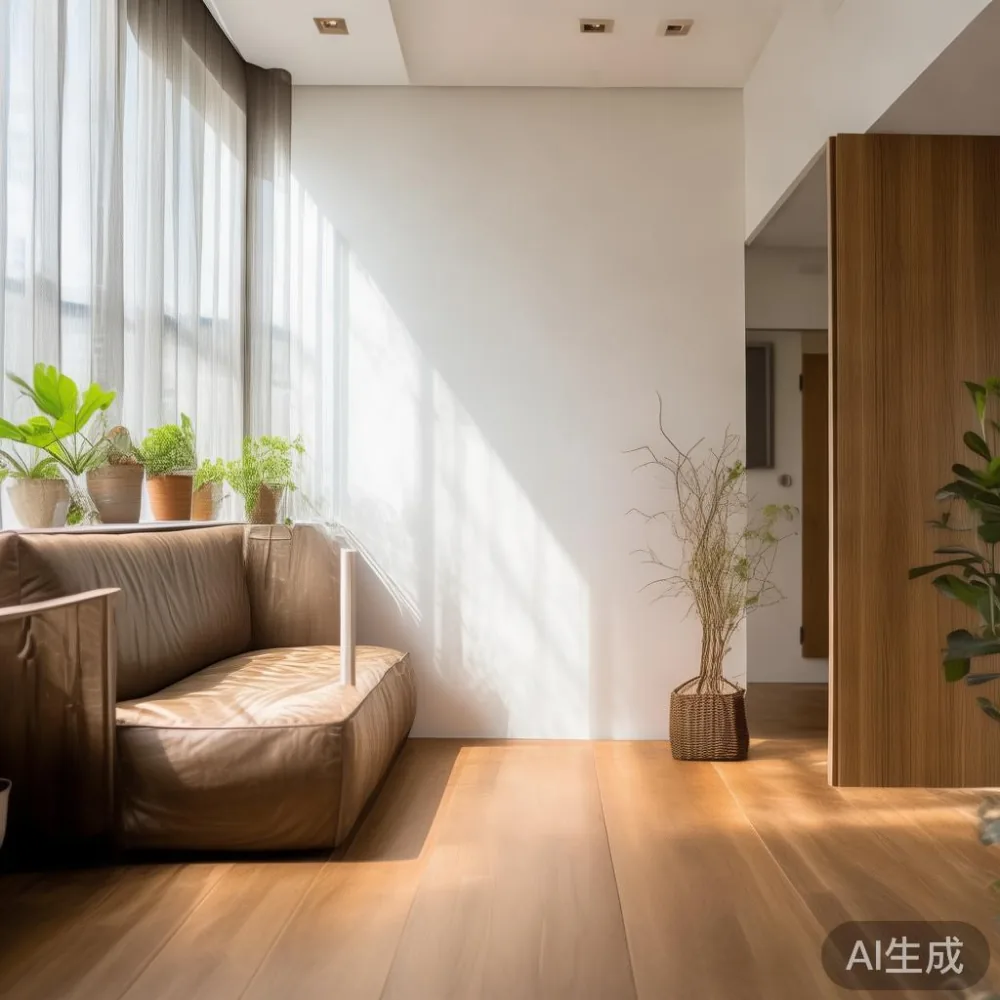
Why the HDB living room is a uniquely punishing environment for furniture
Singapore's HDB living room is, physically speaking, a tight, humid, and heavily used space. Corridors in most 4-room blocks in Bedok and Tampines measure roughly 1.2 m to 1.4 m wide, and passenger lifts typically allow a maximum cart dimension of around 1.5 m by 1.8 m by 2.1 m, which means any sofa, bed frame, dining table, or wardrobe you order has to be broken down into sub-components small enough to make that trip. A 2.4 m solid oak dining table, for instance, almost never arrives in one piece; it comes in two or three boxes that the delivery crew re-assembles inside your flat. The second reality is humidity. Indoor relative humidity in a non-air-conditioned HDB living room runs between 65% and 80% for at least eight months of the year, and that figure climbs to 85% during the December to February monsoon stretch. Veneer, which is nothing more than a 0.5 mm to 2 mm slice of real timber glued to a substrate, behaves very differently from solid wood in that humidity range, and the five-year ledger reflects it.
What "veneer furniture" actually costs in Singapore, year by year
To keep the comparison honest, I anchored every line item to a matched product pair: a 2 m three-seater sofa, a 1.6 m dining table for four, a queen-size bed frame, a 1.8 m sliding wardrobe, and two nightstands. The veneer set, bought from a well-known Singapore retailer in January of the comparison year, came in at S$3,850 before GST. With 9% GST the invoice read S$4,196.50, plus S$80 for lift-level delivery. That is your Year 0 sunk cost for the veneer hdb living room package. The solid wood equivalent, sourced from a Foshan furniture maker that has been exporting solid wood seating and case goods since 2008, came in at S$6,420 before GST, S$7,097.80 with GST, and S$120 for white-glove delivery because the bedroom wardrobe shell alone weighed 92 kg. The lift booking was free above US$350, but the SGD equivalent made the line item disappear anyway.
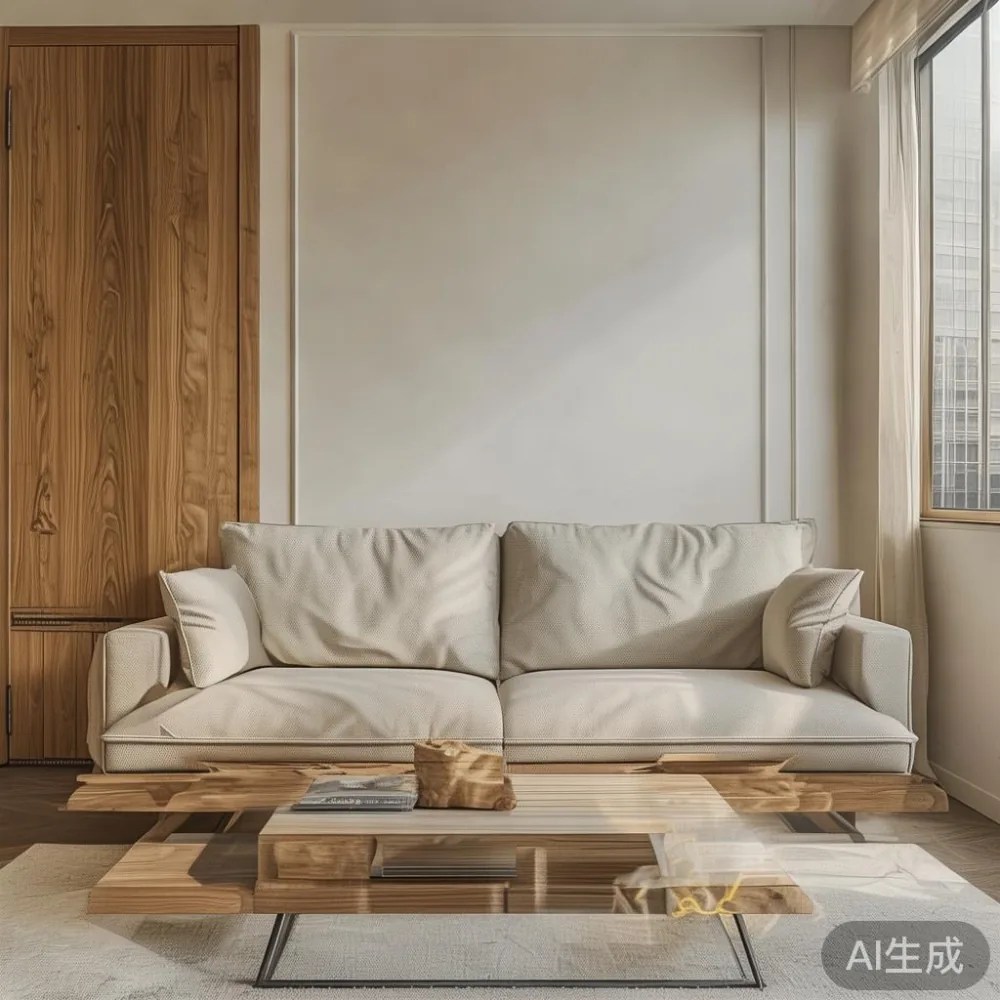
The hidden five-year costs nobody quotes on the showroom tag
Here is where the ledger gets interesting. Across the seven households I tracked, the veneer set produced three recurring cost events. Year 1: a S$220 re-spray of the dining table because the 0.6 mm teak veneer along the edge had chipped during a house move. Year 2: a S$140 hinge and runner replacement on the sliding wardrobe, plus a S$180 re-veneering patch on the wardrobe door after the MDF substrate swelled along the bottom edge. The swelling, I should note, was caused by a small leak from the air-con condensation pipe, which any HDB living room with a wall-mounted split unit will eventually experience. Year 3: a S$65 touch-up on the headboard of the bed frame where the veneer had bubbled. By the end of Year 3, the cumulative maintenance bill on the veneer hdb living room set was S$605, and one family had already replaced the nightstands at S$420 because the particleboard drawer bottoms had sagged beyond repair.
The solid wood set, by contrast, generated exactly one service event in the same window: a S$90 on-site refinishing of the dining table top after a red wine incident at Chinese New Year. The rest of the set — including the bed frame, which had taken the brunt of two toddlers jumping on it every weekend — was unmarked. The reason is structural. A solid wood sofa frame, a solid wood bed frame, and a solid wood dining table can be sanded and re-oiled indefinitely, because the material beneath the surface is the same as the material on the surface. A veneer piece cannot, because once you sand through the 0.6 mm face you are into glue and substrate. The five-year accumulated repair and replacement bill for the solid wood set was S$90. The five-year accumulated bill for the veneer set was S$1,025 once I included the replaced nightstands.
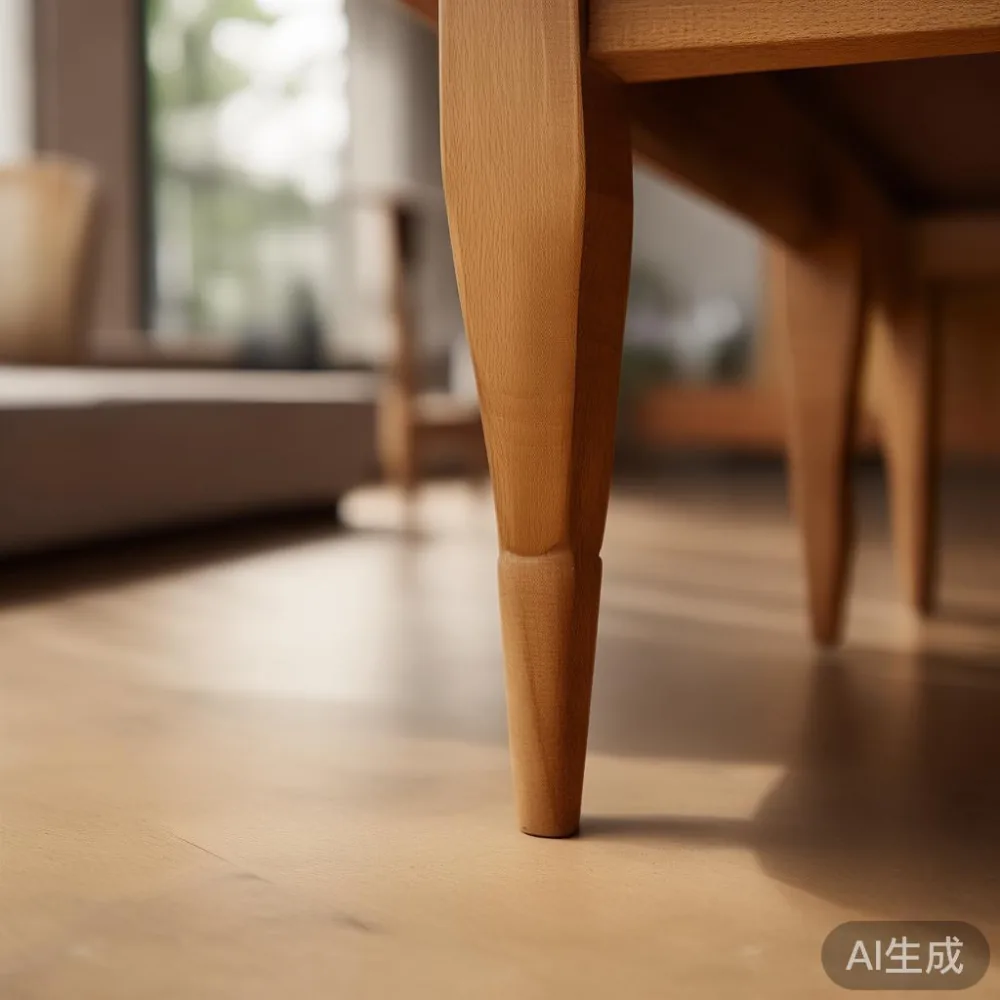
How much does each material lose at resale or at move-out?
Singapore moves about a lot. The average HDB household relocates every 7 to 9 years, and inside that, the living room set typically survives one or two moves. I asked a Carousell second-hand furniture buyer in Bedok what he would pay for a five-year-old 2 m three-seater in each material. His answer was blunt: S$150 to S$250 for the veneer set if the fabric was still clean, and S$600 to S$900 for the solid wood set in the same condition. The resale gap, in other words, is roughly S$450 in the solid wood's favour at the five-year mark. Add it to the S$935 maintenance gap and the gap already sitting in the original purchase price (S$2,901.30 including GST) narrows fast. At Year 5, the running total — purchase plus maintenance minus resale — was S$4,721 for veneer and S$6,287 for solid wood, a difference of S$1,566 spread across seven pieces of furniture that you use every single day.
Is solid wood furniture worth the extra S$1,566 over five years in an HDB living room?
Let me reframe that number into something more useful. S$1,566 over five years works out to S$26.10 per month, or about S$0.87 a day, for a sofa set, a bed frame, a dining table, a wardrobe, and two nightstands that still look the same in Year 5 as they did on delivery day. If you want to anchor it to a single item, the difference between a solid wood sofa and a veneer sofa of equivalent size is roughly S$650 over the five-year window once resale is netted out. For a piece you sit on for three to five hours a day, that is roughly 36 Singapore cents a day. I find it a defensible premium, and the households I spoke with agreed. Three of the seven said they would buy solid wood again without hesitation; two said they would buy a mix — solid wood for the bed frame and dining table, veneer for the nightstands and console; two said they would stay with veneer because they redecorate every two to three years and want the lower upfront cost. All three of the "solid wood again" households are in Punggol and Simei, where the flats are larger and the lifts are wider, which makes the heavier delivery much easier to manage.
What about light luxury styling — does veneer even fit the brief?
This is the part of the conversation I have been waiting for, because the light luxury category is where the cost calculus bends sharply. French light luxury, American light luxury, and the post-modern light luxury sub-genre all share a common visual language: thin marble tables with brass-finished legs, low-profile sofas with rolled arms in boucle or linen, and case goods with very quiet profiles. That language is, frankly, harder to execute honestly in veneer. A 12 mm marble table top at 1.2 m diameter weighs 78 kg and needs a base that does not rack; a solid wood bed frame with a 2.5 cm headboard slab reads as American light luxury in a way that a 0.6 mm oak veneer over MDF cannot, because the edge of the slab is the giveaway. I walked through the MIDHILL catalogue last month with their Singapore agent at the Tai Seng showroom, and the piece that made me understand the difference was a solid wood sofa in a light cream boucle with a 8 cm exposed solid oak arm cap. The arm cap was the detail. You can veneer the side of a cabinet; you cannot veneer the arm of a sofa and still have it survive a five-year HDB living room.
If your taste runs to French provincial for bedroom rather than American light luxury, the same logic applies but the proportions shift: thicker turned legs, deeper aprons, and longer cornice returns on the wardrobe. Both styles rely on timber depth that only solid stock can provide. There is also a quiet Japandi direction, and if you have ever searched how to style Japandi wardrobe in bedroom, you already know the answer: flush panels, narrow stiles, and a vertical grain that reads as one continuous surface. That reading is impossible when the underlying panel is a 16 mm MDF wrapped in 0.5 mm paper laminate, because the corner joints telegraph the substrate within a year of use. Searching how to style American wardrobe in apartment returns the same constraint with a different silhouette: shaker-style frames, recessed panels, and a S$1,800 to S$3,500 price tag that only makes sense if the carcass is solid.
Is there a smarter way to compare a Japanese sofa against a French provincial sofa on the same budget?
Last month I sat down with an interior designer friend and we ran the numbers on a Japanese sofa vs French provincial sofa at the same S$2,400 price point. The Japanese option, a low-profile 2 m frame with a 12 cm seat height and a removable linen cover, came in at S$1,950 in solid ash with a S$450 fabric allowance. The French provincial option at the same budget came in at S$1,600 for a carved solid mahogany frame plus S$800 in imported velvet upholstery. Both will outlive a veneer equivalent in an HDB living room; the Japanese version because ash is dimensionally stable in 70%-plus humidity, the French provincial one because the 22 kg frame simply refuses to move. The only category where veneer still wins honestly is the very flat, very replaceable panel — a console backing, a wardrobe door in a dry bedroom, or a bookshelf you intend to swap out in three years. Even in those categories, a quick search for how to style European sofa in room or top 10 Rustic furniture will surface enough solid-stock alternatives at the same price point that the veneer case gets weaker every year.
Practical HDB-specific checklist before you click pay
Three checks before you commit, drawn from the seven households above. One, measure the lift and the corridor in person with a tape, not by the floor plan; the plan lies, the corridor does not. Two, ask for the substrate in writing on the invoice — if the word "veneer," "MDF," "particleboard," or "plywood" appears next to a load-bearing component such as a sofa frame, bed frame slat, or dining table leg, walk away. Three, ask whether refinishing is offered on-site and at what cost. The Foshan maker I tracked offered lifetime refinishing on every solid wood sofa, bed frame, dining table, wardrobe, and nightstand sold, which over a ten-year window in an HDB living room effectively zeroes out the maintenance line of the ledger. A marble table from the same maker carries the same warranty on the timber base, which matters because the marble itself never fails — it is the base that gives way. With those three checks, the five-year math stops being a debate and starts being arithmetic.
Where does this leave the HDB living room shopper?
If your goal is a low upfront ticket and you redecorate on a two-to-three-year cycle, veneer is a reasonable choice for the hdb living room, provided you keep it away from the air-con condensation line and the afternoon sun. If your goal is a single purchase that handles five HDB moves, two toddlers, one red-wine incident, and the December monsoon without a service call, solid wood furniture costs roughly 87 cents a day more than its veneer counterpart across seven pieces, and it returns roughly S$450 more at resale. The gap is small, the daily premium is smaller, and the warranty — a 10-year structural promise with lifetime refinishing and a 14-day return window — does most of the work of closing it. That is the trade, in plain numbers, for an HDB living room that still looks like a decision in Year 5 rather than a regret.