Before You Buy a Sofa You Cannot Sit On: An HDB Livingroom Guide
A sofa can look perfect in a showroom and still fail on the third evening in a Tampines HDB flat. The problem may not be comfort. It may be a lift that cannot take the sofa’s carton, a corridor corner that traps one arm, a low dining table that leaves no knee space, or simply a frame that is not proportioned for the room.

This guide explains how to assess a sofa before ordering it, especially when your furniture must move through the common corridors and passenger lift of a Singapore home. It also covers the less visible checks that affect daily use: seat height, foam density, frame construction, removable covers, and the aftersales support behind them. MIDHILL builds solid wood furniture for practical residential use, and this same fit-first approach applies to a solid wood sofa, bed frame, dining table, wardrobe, or nightstand.
All dimensions below are approximate unless a product page states otherwise. Measure your own home rather than relying on a floor plan. HDB layouts can vary by block, and renovation doors may differ from original measurements.
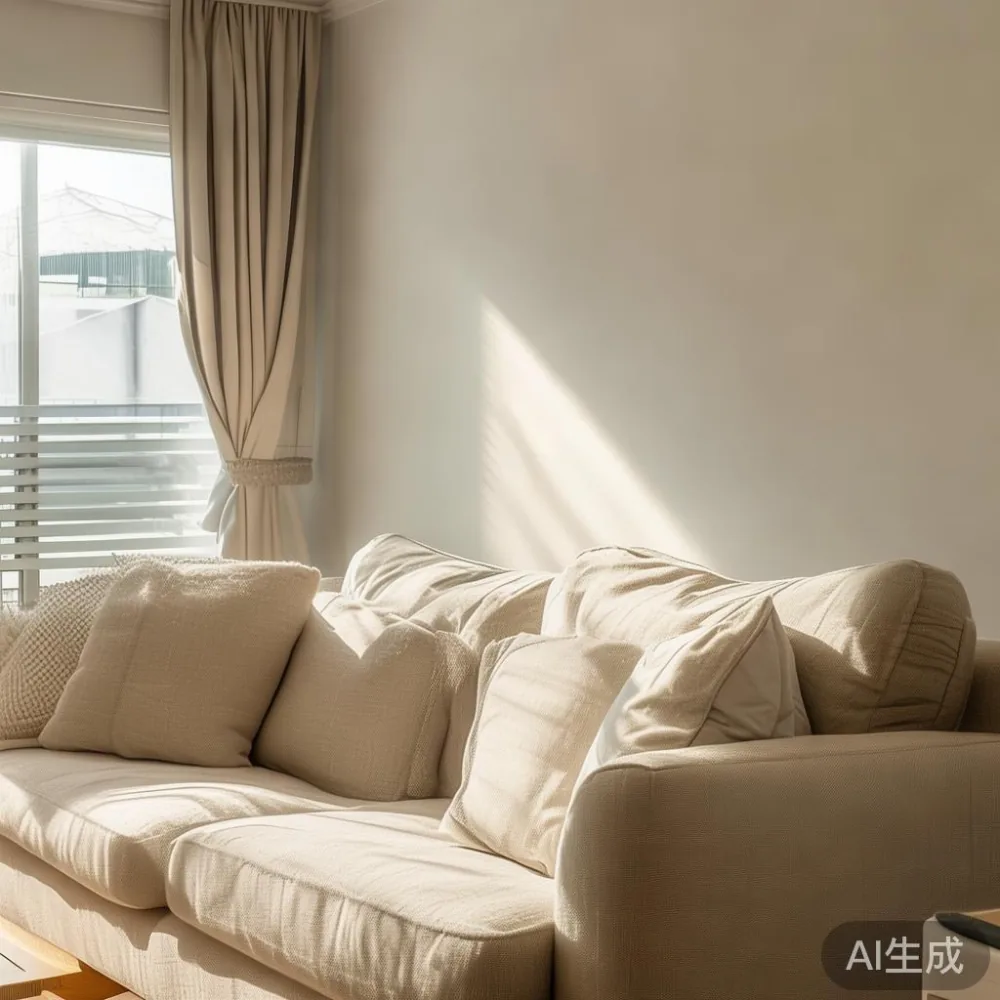
What dimensions should I measure before ordering a sofa for an HDB flat?
Start with the route from the building entrance to the living room. In many Singapore developments, the narrowest part is not the unit door but the turning space at the corridor, the lobby pillar, or the lift door. Measure the clear opening, not the nominal door width. A sofa arm may fit straight through while the backrest catches at the corner.
For a compact 3-seat sofa, check whether its packed dimensions can stay below common residential lift limits. Do not assume every lift accepts a large carton. Obtain the sofa’s outer carton length, width and height in centimetres, then compare them with the lift’s internal usable dimensions. A 210 cm carton may enter a lift with a 200 cm internal depth if it is tilted, but only if the turning space and ceiling clearance allow it. Ask the supplier for the carton dimensions rather than guessing from the assembled sofa.
Measure the unit door after the property renovation. A common residential door opening may be around 85–90 cm, but this is not a guarantee. If the carton is wider than the opening, removal of the door leaf or a professional pivot may be required, subject to building management approval. Never force a carton into a corridor or hold a lift door open. Those actions can damage the property and create access problems for neighbours.
Next, tape the intended sofa footprint on the floor. Include circulation space of at least 75–90 cm along a main passage, although a narrow HDB livingroom may require a more efficient layout. The sofa should not sit directly against a radiator, curtain mechanism or frequently used doorway. Leave enough room to clean behind it, ideally 10–15 cm where practical.
Also check the coffee table gap. A usable coffee-table-to-seat distance is generally 35–45 cm. A dining table used beside the sofa needs about 40–50 cm of clear leg space. These are working allowances, not fixed building rules, but they prevent the crowded feeling common in many hdb livingroom arrangements.
Is a deep sofa worth it if the living room is only 3 metres wide?
A deep sofa can be comfortable, but depth consumes floor area and makes lifting and delivery harder. An sofa depth of 90–95 cm is manageable in many compact living rooms. A depth above 100–105 cm needs careful measurement because it reduces the space between the sofa and a marble table or TV console.
Compare the seat depth with your body shape, too. A 55–58 cm usable seat depth suits many adults, while approximately 48–52 cm is easier for shorter users. Back cushions compress over time, so assess the sofa after sitting rather than judging it while standing. If your feet do not rest naturally on the floor, a 45–48 cm seat height may be more suitable than a standard 43–45 cm.
Ask for the load rating and the foam specification. There is no universal showroom shortcut: a foam labelled “comfort foam” may vary considerably between suppliers. A maker should state the foam density or at least explain its construction, such as a layered high-resilience foam core with a softer surface layer. For frequent daily use, a seat core around 35–40 kg/m³ is a reasonable reference point, not a promise of softness or durability.
The frame deserves the same attention. Look for kiln-dried hardwood, plywood or engineered timber components, with joints fixed by screws, bolts or dowels rather than only staples. Ask whether the base is solid wood or metal, and whether the sofa is made as a knock-down unit. A knock-down solid wood sofa can enter an HDB lift more easily, but assembly may require 2 people, 30–60 minutes and basic tools.
Consider the arms as well. A narrow arm of 10–15 cm saves space, while a broad 20–25 cm arm can support a laptop or cup but eats into the usable seat width. In a 200 cm-wide three-seat sofa, around 180 cm may remain for seating. Test the layout with cardboard boxes of 180 cm, 90 cm and 40 cm before committing.
How do I know if the fabric and cushions will still look good after one year?
Ask how the upholstery can be cleaned. Removable seat and back covers are useful in an HDB home, particularly with children, pets or frequent meals. Machine-washable covers should come with care instructions and spare fabric. If the covers are fixed, obtain the cleaning code and confirm whether spot-cleaning is the only approved method.
Do not judge colour by a showroom wall alone. Natural light can make beige appear much lighter, while evening lighting can make grey look warmer. Request at least 3–5 cm of fabric or a clear swatch. View it near your own floor and curtains, preferably from morning and evening. If the sofa uses a pale French provincial fabric, light soil will show faster, so check whether the weave can be brushed and washed.
For seat comfort, test the sofa for 10 minutes, not 30 seconds. Sit at each end, cross your legs, lean back and reach for a side table. A loose back cushion that slips forward can make the sofa feel unusable even when its foam is sound. Tighter, gusseted back cushions may maintain their shape better but can feel less relaxed.
Check the cushion return policy. A reasonable expectation is that foam compression can be assessed during an initial settling period, often within 30 days, while obvious manufacturing defects remain covered for longer. Get the period, exclusions and remedy in writing. Also confirm whether sagging foam is repaired or replaced and whether return freight is included.
Light-luxury design should not compromise maintenance. French light luxury may use pale textiles and curved profiles; American light luxury often pairs clean lines with generous upholstery; post-modern light luxury may mix shapes and materials. All three approaches require realistic cleaning plans. A cream French provincial sofa may suit a bright Tampines livingroom, but its light upholstery will show spills sooner than a charcoal model.
Can a sofa be delivered upstairs in 5–7 working days?
Delivery speed depends on stock, fabrication and access, so ask for a written delivery window rather than accepting “fast delivery” as a guarantee. A stock model may arrive in 5–7 working days within Singapore, while a made-to-order solid wood sofa can require 6–10 weeks. Custom upholstery may take 8–12 weeks. Peak periods, renovation schedules and long-distance freight can affect the final date.
The delivery quote should state whether it includes carrying the sofa to the unit door, placing it in the livingroom, unpacking and assembly. A carry-in service commonly ends at the ground-floor entrance or lift lobby unless a specific floor service is confirmed. For an upper-floor HDB unit, ask whether the elevator reservation and excessive carrying charges are included.
Confirm the access inspection before the sofa leaves the warehouse. Photograph the lift, lobby turns and door openings, and note any protected flooring. For a sofa that cannot be assembled outside, the delivery team may need 10–20 minutes of maneuvering space. Clear a route measuring at least the carton’s widest dimension plus 5–10 cm on each side where possible.
Some suppliers offer a curbside or white-glove delivery process. The distinction matters more than the label. “Curbside” usually means the item remains outside; “room of choice” means it is placed inside the intended room; “white glove” generally adds unpacking, assembly and packaging removal. Put each task in the quotation so the service level is clear.
Insurance is another detail. Ask what happens if a corner is damaged during delivery and whether replacement is arranged before collection. For MIDHILL orders, the stated 10-year structural warranty and lifetime refinishing service apply to eligible solid wood products under their published terms; confirm that upholstery, mechanisms and finishes are covered as described, rather than assuming every component has the same duration.
What should I compare in the return policy and warranty?
A 14-day return period gives you time to test scale and comfort, but check the conditions. The sofa should be unused and in its original packaging for a standard return, unless the policy allows a used-item assessment. Custom-made pieces, special-order fabrics and certain clearance items may be excluded. Ask for the restocking fee, return freight and whether the original delivery and collection are both included.
The structural warranty should name the covered components and years. For a solid wood sofa, that may include the main frame, joints and certain structural parts. Foam, fabric, electrical mechanisms and finish changes may have different limits. A 10-year frame warranty is meaningful only if wear, accidental damage, unauthorised repairs and commercial use exclusions are written clearly.
For an HDB livingroom, local aftersales access is worth considering. A Singapore-based supplier can assess a loose joint or frame concern without an international shipping process. Confirm whether spare cushions, feet, screws and fabric are stocked locally. A replacement cushion should not require a new sofa order and a 6-week wait.
Payment terms can also expose the quality of the seller. A deposit of 30–50% may be normal for a made-to-order piece, while a smaller balance before dispatch provides more protection. Check that the order form records the exact dimensions, colour, fabric, frame material, delivery date and access notes. A floor-plan drawing marked “approximately” is less useful than signed dimensions with tolerances.
Is French provincial sofa worth it for a small Singapore livingroom?
The honest answer depends on visual balance and available space. French provincial styling often uses carved edges, turned legs and rounded arms. These details can add character to an HDB livingroom without making it feel heavy if the upholstery is restrained and the scale is modest. A sofa around 190–205 cm wide with a 90–95 cm depth may suit a compact room better than an oversized model.
For shoppers asking whether is French provincial sofa worth it, consider how often you want formal curves rather than a loose, lounge-like seat. A French provincial sofa can work in a light-luxury apartment, but paired with the wrong coffee table it may feel crowded. A simple marble table with pale veining, a low-profile side table or a narrow console can keep the composition balanced.
Material realism matters. Solid wood legs and a hardwood frame may appeal if longevity is your priority, while a metal or reinforced timber frame can also work if the construction is properly specified. Do not accept “solid wood” as a description of the whole sofa without checking whether it refers only to the frame or visible components. Veneer, MDF and solid timber can coexist in a well-made product; transparency is what matters.
If your family uses the sofa daily, removable covers and a stain-resistant fabric may be more practical than dense decorative detailing. If you are comparing Japanese sofa vs Japandi sofa, note that “Japandi” usually describes a blend of Japanese restraint and Scandinavian functionality rather than one fixed construction. A Japanese floor-sitting sofa can save space, but it changes the ergonomics of an HDB TV area. A conventional sofa with a firmer 43–45 cm seat height may serve more users.
Look at products sold under phrases such as for sale Industrial furniture only to compare frame and finish standards. “Industrial” often means exposed metal, dark finishes or reclaimed-style wood, but the label does not guarantee structural quality. Judge the actual joints, coating thickness, weight capacity and care instructions.
How should I plan a complete livingroom before the sofa arrives?
Begin with the largest fixed items, then work inward. A bed frame may dictate bedroom circulation rather than the livingroom, but its style often sets the material language. In the livingroom, position the TV console, dining table and marble table first. If you eat beside the sofa, preserve 40–50 cm of leg clearance. If the sofa faces the TV, keep the viewing distance practical; a 55-inch television is commonly viewed from around 2.5–3.5 metres in many homes, though personal preference varies.
A wardrobe and nightstand belong in the bedroom, but their finishes can guide the livingroom palette. Warm oak can connect with a solid wood bed frame, while black metal legs and a muted fabric may create an American light luxury mood. For post-modern light luxury, combine one curved statement piece with simpler companions rather than crowding every surface.
Do not rush because a showroom set closes a deal. Search listings for designer Modern light luxury furniture and compare documented specifications, not only the photograph. Marketing language such as cheap European light luxury furniture may lead you to a price, but the frame details, warranty and service terms determine long-term value. Price comparison should include fabric grade, foam density, frame timber, dimensions and delivery scope.
For other rooms, learn how to style French provincial bed in apartment layouts by repeating a restrained colour rather than every carved detail. A light upholstered bed with a solid wood footboard can pair with plain curtains and one upholstered headboard. In the livingroom, one French-inspired sofa, a simple dining table and coordinated nightstand may create a clearer result.
Check the sofa’s actual weight too. A large solid wood frame may weigh 65–100 kg before upholstery, while a knock-down unit may have heavier components but fit through the lift. Ask for separate part weights. This tells you whether you need 2 or 3 people for assembly and whether the floor can take the concentrated load. For more direct specification advice, MIDHILL can be contacted at +86 188 2788 2512.
Finally, inspect under the sofa and along its perimeter. A dust cover may not be included, but it can reduce cleaning around the base. Confirm that skirting boards, floor vents and power outlets remain accessible. Once the sofa is in place, photograph the delivery condition, test each cushion and review the care guide before signing the delivery record.
What are the final checks before I pay?
Your final checklist should be short enough to use. Confirm the assembled and carton dimensions in centimetres. Record the seat height, depth, arm width, frame materials, cushion construction, maximum load and colour code. Verify the exact delivery day, floor service, assembly work, packaging removal and access fees. Read the return and warranty terms, including structural coverage, upholstery limits and claim procedures.
Then sit on the sofa in the position it will occupy. Check head support, lumbar comfort, knee clearance and the distance to the marble table. Walk around it to make sure the main route remains clear. A sofa you cannot sit on may look luxurious in a catalogue, but a correctly scaled, comfortably framed and deliverable sofa can make an ordinary HDB livingroom work much harder.
For reference, a suitable sofa specification is not one universal size. It is the size that fits the measured doorway, lift and room while matching the people using it and the service terms you can rely on. That is the difference between buying a visual object and bringing home usable furniture.