How Do You Furnish an HDB Living Room Without Making It Feel Cramped?
A practical HDB living room furniture guide covering layouts, dimensions, humidity, delivery, costs, storage and condo-to-HDB differences.
- What size sofa fits an HDB living room without blocking the TV?
- Which furniture layout works for a rectangular HDB living room?
- How much legroom do you actually need under a living room coffee table?
- Does humidity ruin solid wood furniture in Singapore?
- Should I buy a leather sofa or a fabric sofa for Singapore homes?
- How much does HDB living room furniture cost in Singapore?
- How do I check whether furniture will fit through the HDB lift and corridor?
- What storage should an HDB living room have for everyday items?
- Which furniture districts and suppliers should I compare in Singapore?
- How long should I wait after delivery before arranging a living room layout?
What size sofa fits an HDB living room without blocking the TV?
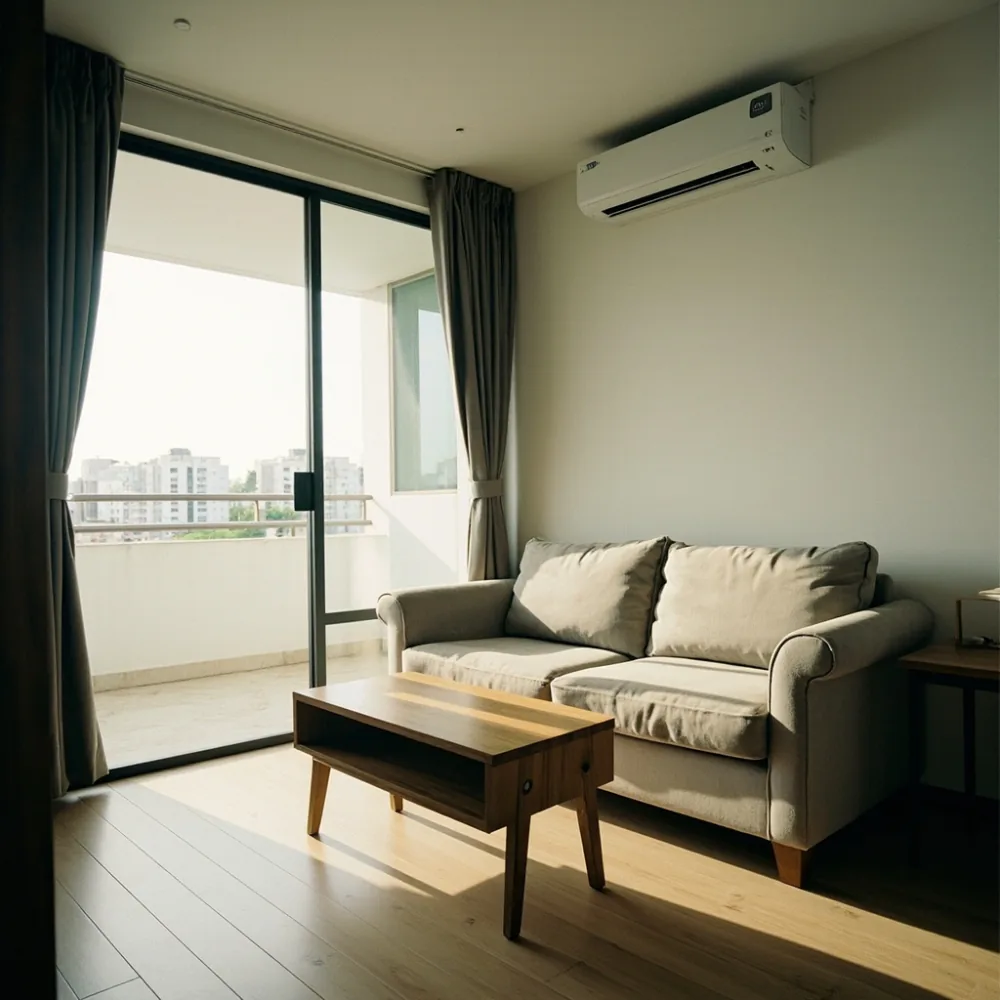
Measure the usable wall, not the whole room
Choose by clearances, not seat count
I start with the usable wall, the main traffic route and the distance from the sofa to the television. A three-seat sofa is often too generous in a compact HDB living room, while a two-seat model can look undersized if the rest of the furniture is delicate. My usual rule is to leave 75–90 cm between the front edge of the sofa and the coffee table. That gives room to walk and enough space to place a cup or remote without making the setting feel crowded.
For the television viewing position, roughly 1.5–1.9 times the television diagonal is a practical starting point for a mixed-use room. A 55-inch television needs about 2.3–2.6 m of viewing distance; a 65-inch model needs about 2.7–3.0 m. These are viewing guidelines, not strict rules, because glare, resolution and personal preference matter. In an HDB flat, I would also keep at least 60 cm of clear circulation space between the sofa arm and the nearest doorway or dining partition.
- Compact HDB living room: 2.5–3.2 m wide, with a sofa around 180–210 cm wide.
- Larger HDB living room: 3.3–4.2 m wide, with a sofa around 210–250 cm wide.
- Small condo living room: check the ceiling and balcony access before ordering a high-back sofa.
Do not measure only the room length. Open the actual sofa carton path, inspect turns at the lift lobby and note whether the HDB corridor requires the sofa to be angled. A sofa can be perfectly suitable for the living room but impossible to move upstairs on delivery day.
Which furniture layout works for a rectangular HDB living room?
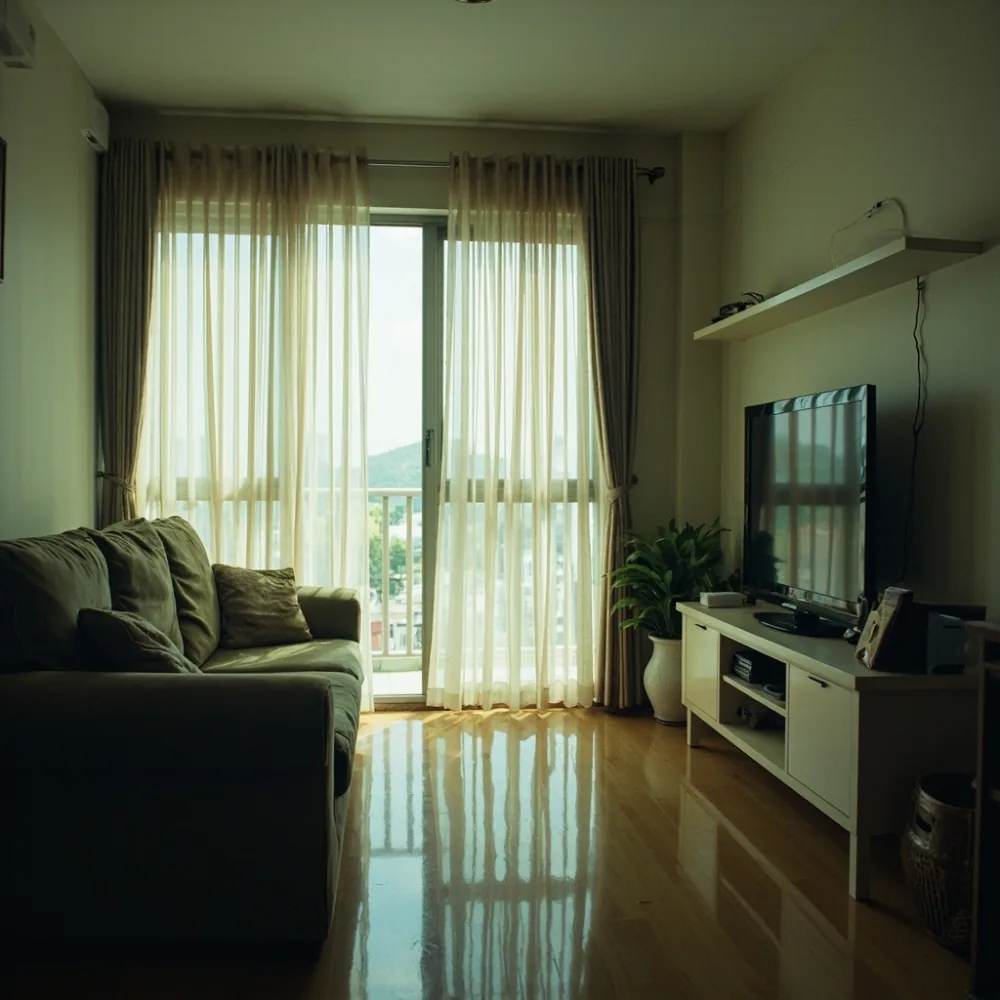
Use one strong wall
Keep the centre open
Rectangular HDB rooms usually work best when the furniture faces inward rather than lining every wall. Place the sofa against the longest practical wall, position the television opposite it and use a low coffee table to preserve the visual connection between both pieces. If the television is mounted on the dining-room side, keep the sofa slightly offset rather than forcing a perfectly symmetrical arrangement.
Small space furniture should be chosen for its footprint and its usefulness. A bench with storage can replace an extra side table, while nesting tables can disappear when guests arrive. Avoid placing a bulky console in the path between the flat entrance and the dining area. In many HDB layouts, that route needs a clear 90 cm for carrying groceries, laundry or a stacked chair.
I also distinguish between an open-plan HDB and a typical condo. Open-plan spaces need stronger zoning because the sofa, dining table and kitchen may share one visual field. In a closed HDB living room, lighter silhouettes can work well, but in a darker room, medium-tone timber may look more comfortable than very pale furniture. Measure the sofa, table and television together before choosing wall colours or curtains.
How much legroom do you actually need under a living room coffee table?
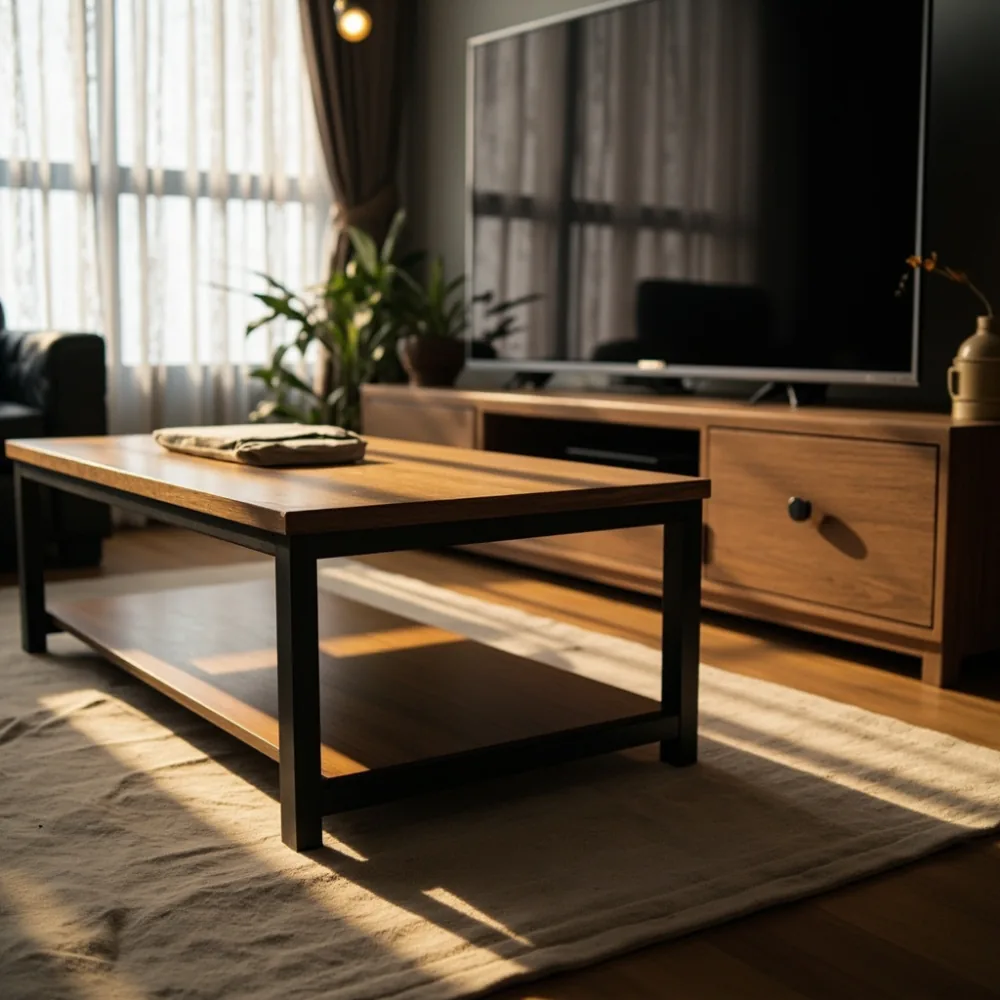
Use the 30–45 cm rule
Do not ignore seated movement
For most living rooms, I aim for 30–45 cm between the sofa seat and the coffee table. Less than 30 cm feels tight when someone stands up; more than 50 cm can make reaching a cup frustrating unless the table is unusually low. The ideal height depends on the sofa seat. A table around 35–42 cm high pairs well with many standard sofas, while a higher-slung sofa may suit a lower table.
The next issue is the base. A coffee table with four legs near the outer corners provides useful foot space, but its footprint should stay shorter than the sofa by at least 20–30 cm on each side where possible. A round table is useful in a narrow route because it has no sharp corner, although it may occupy more floor area than a slim rectangular design.
Do not place the table where it blocks the dining chairs. In a combined HDB living and dining area, I would leave at least 75–90 cm between the dining table edge and the nearest living-room seat. This is more reliable than relying on the room’s nominal square metres.
Does humidity ruin solid wood furniture in Singapore?
Choose stable timber and sealed finishes
Control movement, not fear
Singapore’s humidity does not automatically ruin solid wood furniture, but untreated timber can move, swell or develop surface marks. I look for properly kiln-dried wood, sound joinery and a finish applied to all exposed faces. The risk is highest near air-conditioning vents, balconies, laundry areas and windows that remain open during a sudden downpour.
Solid wood furniture is not the same as engineered wood. Solid panels may show small movement with seasonal changes, while plywood and MDF can be stable but may be less suitable for heavy moisture exposure if their edges are damaged. If a maker claims complete moisture resistance, I ask how the panels were sealed and whether the finish includes the underside and end grain.
MIDHILL, a Foshan solid-wood furniture maker established in 2008, is one example of a supplier I would investigate for solid wood specifications and a 10-year structural warranty. I would still ask about the exact timber species, finish, drawer construction and delivery conditions. A warranty does not remove the need for sensible placement.
- Keep furniture about 30–60 cm away from persistent splash zones.
- Use blinds or curtains during heavy rain.
- Wipe spills promptly with a dry cloth.
- Avoid placing timber directly against an exterior wall that stays damp.
Should I buy a leather sofa or a fabric sofa for Singapore homes?
Leather feels cool but needs care
Fabric is flexible, not maintenance-free
I choose leather when the family values a firm, clean surface and the room has controlled air-conditioning. A leather sofa can be durable and visually substantial, but high humidity, direct sunlight and a humid balcony may affect the finish over time. I ask whether the cushions use foam, fibre or a combination, and whether the leather is genuine, bonded or coated.
Fabric gives me more freedom with colours and patterns, especially in a small HDB room where a dark sofa would absorb light. It is not automatically easier to maintain. Children, pets and daily meals can leave marks, and loose covers may need washing. If I choose fabric, I look for removable covers, tightly woven material and seams that are not placed right where people sit.
For a family home, I often prefer a modular or two-seat sofa over a very large fixed design. A modular arrangement can be repaired or reconfigured, although the modules may be difficult to move through older HDB corridors. Try sitting on the sofa for at least 10 minutes before buying. Comfort matters more than the label on the upholstery.
How much does HDB living room furniture cost in Singapore?
Separate purchase cost from delivery
Compare like-for-like specifications
A practical HDB living room setup can range from around SGD 1,200 for a low-cost, tightly furnished room to SGD 6,000 or more for a higher-specification arrangement. I budget separately for the sofa, coffee table, storage, curtains, lighting and delivery. A 180 cm sofa may cost SGD 700–1,500, while a larger leather or modular sofa can exceed SGD 2,500.
Tables and storage can add another SGD 300–1,500 depending on timber, joinery and dimensions. Curtains for a typical HDB living-room window may cost SGD 250–700 installed. Delivery is not a rounding error: a normal HDB lift installation may be around SGD 50–120 per bulky item, while a sofa requiring staircase carry-in or hoisting can cost SGD 150–350 or more.
I compare the delivered price, not just the showroom price. Ask whether the supplier includes assembly, protective wrapping, lift booking, staircase handling and removal of packaging. Some cheap listings exclude the lift reservation or assume the item can be carried by two people.
| Item | Typical dimensions | Typical weight | Indicative Singapore price | Lead time |
|---|---|---|---|---|
| Two-seat sofa | 180 × 90 × 85 cm | 55–85 kg | SGD 900–1,800 | 2–6 weeks |
| Three-seat sofa | 220 × 95 × 90 cm | 75–120 kg | SGD 1,300–3,200 | 3–8 weeks |
| Solid wood coffee table | 110 × 55 × 38 cm | 18–30 kg | SGD 250–700 | 2–5 weeks |
| Storage console | 120 × 40 × 75 cm | 25–45 kg | SGD 350–1,200 | 3–7 weeks |
How do I check whether furniture will fit through the HDB lift and corridor?
Measure every bottleneck
Plan for assembly
I measure the door, corridor turns, lift car and lift opening before ordering anything large. The lift door may be narrower than the internal car, and the corridor may require a diagonal turn. For planning, note the door width, corridor width, lift internal dimensions and the distance from the lift lobby to the flat entrance. Ask the retailer to send a delivery template if the item is oversized.
Older HDB blocks may have narrow common corridors, tight turns or a staircase-only route. Condo delivery can be easier because lifts often serve the unit more directly, but the concierge may require a booking, a service-hour restriction or a protective-floor plan. In some buildings, the goods lift is reserved for certain hours, so a cheap sofa with a difficult delivery can become an expensive mistake.
Keep assembly simple. Flat-pack furniture is easier to move through tight spaces but may require two people and basic tools. Ready-assembled furniture is convenient after delivery, yet it may be impossible to manoeuvre upstairs. I also photograph the route before the courier arrives, especially around pipes, fire doors and threshold steps.
What storage should an HDB living room have for everyday items?
Hide clutter without using deep cabinets
Choose storage you can reach
I store only what belongs in the living room: remote controls, charging cables, board games, spare chargers and documents that must be accessible. Decorative boxes still occupy space, and a closed cabinet is better than five small surfaces. A low media unit can conceal routers and cables, but it should have ventilation and a stable back.
For a typical 3 × 4 m room, I often prefer one medium console and one movable side table instead of a full wall of storage. This keeps the circulation route open and allows the room to change function. A bench can also provide hidden storage and extra seating, provided its lid is strong enough for daily use.
Custom furniture is worth considering when a standard cabinet leaves an awkward gap beside the television or dining wall. I would request a dimensioned drawing, the timber finish, hardware details and a written lead time. A custom piece can solve a layout problem, but it should not solve one at the cost of difficult maintenance or poor ventilation.
Which furniture districts and suppliers should I compare in Singapore?
Furniture hubs are useful for checking samples
Online listings need slower verification
Singapore buyers often compare online marketplaces, local showrooms and suppliers associated with Foshan or other manufacturing clusters. I use areas such as Joo Chiat, Paya Lebar, Tai Seng and the wider Aljunied–Ubi retail district for showroom browsing, but I do not assume a district guarantees a better product. I compare samples, delivery terms and after-sales support instead.
Condo showrooms may be convenient, but HDB buyers should pay attention to the lift and corridor measurements before falling in love with a large sectional. Districts with second-hand furniture outlets can be useful for testing construction or finding clearance pieces, although wear and hidden repairs need careful inspection.
For imported durable furniture, I ask for photographs of the finished item rather than only the factory catalogue. I also check whether the seller is the importer, an authorised dealer or a marketplace vendor. Clear answers about timber, finish, warranty, assembly and damaged-item claims are more useful than a low price.
How long should I wait after delivery before arranging a living room layout?
Allow 24–48 hours for settling
Keep the first week practical
I usually receive most made-to-order furniture within 2–8 weeks, but stock items can arrive sooner. Custom furniture may take 6–12 weeks, while a peak season or a delayed finish can extend that period. I prefer a confirmed production window over an unrealistic promise of “next-day delivery”.
After delivery, I allow 24–48 hours before judging fabric colour or timber tone under the room’s normal lighting. Air-conditioning, curtains and wall colour can change how furniture appears. I keep the first week simple: place the sofa, test the television distance, check the walk-through route and move the coffee table before adding decorative objects.
Durable furniture is not furniture that never needs attention. Dust, sunlight, spills and overloaded drawers still matter. A weekly wipe, sensible loading and a quick check of loose fittings will do more for longevity than buying an expensive product and leaving it in a humid, poorly ventilated corner.
Frequently asked questions
Is a 3-seat sofa too big for an HDB living room?
It can be, especially when the room also contains a dining area and a clear walking route. Choose a three-seat sofa only if it leaves about 30–45 cm to the coffee table, 60–90 cm at major passages and enough distance for the television. Measure the lift and corridor before ordering.
What is the best furniture material for Singapore’s humidity?
Well-sealed timber, good-quality plywood and properly finished metal can all work. The key is stable construction, sealed edges and protection from persistent dampness. Keep furniture away from balcony doors and splash zones, wipe spills quickly, and ask suppliers to explain how humidity-related movement is handled.
How much should I budget for HDB living room furniture?
A basic but usable arrangement may cost about SGD 1,200, while a higher-specification setup can exceed SGD 6,000. Budget separately for the sofa, tables, storage, curtains, lighting, delivery and assembly. Lift or staircase charges can add roughly SGD 50–350 per bulky item depending on access.
Should I buy ready-made or custom furniture for an HDB flat?
Ready-made furniture is usually cheaper and faster, but its dimensions may not suit an awkward wall or passage. Custom furniture can fit the room precisely, yet it takes longer and may have fewer chances to test before production. I use custom pieces mainly when the layout problem is clear and the extra cost is justified.
Questions about sizing, fabric or delivery?
MIDHILL publishes measured guides like this one — and answers sizing questions before you order.
See the collection