5-Year Cost Comparison: Veneer vs Solid Wood Furniture in Your HDB Living Room
When you furnish an HDB flat in Tampines, Bedok, or a new Punggol Build-to-Order (BTO), the price tag on a dining table or bed frame is only the opening chapter of the story. The next chapter is what that piece costs you over five years of daily use, kopi spills from the lift landing, and the humidity that creeps through corridor-facing windows. After watching dozens of HDB living room projects since 2014, I have learned that the veneer-versus-solid-wood decision is really a five-year cost comparison wearing a furniture label.
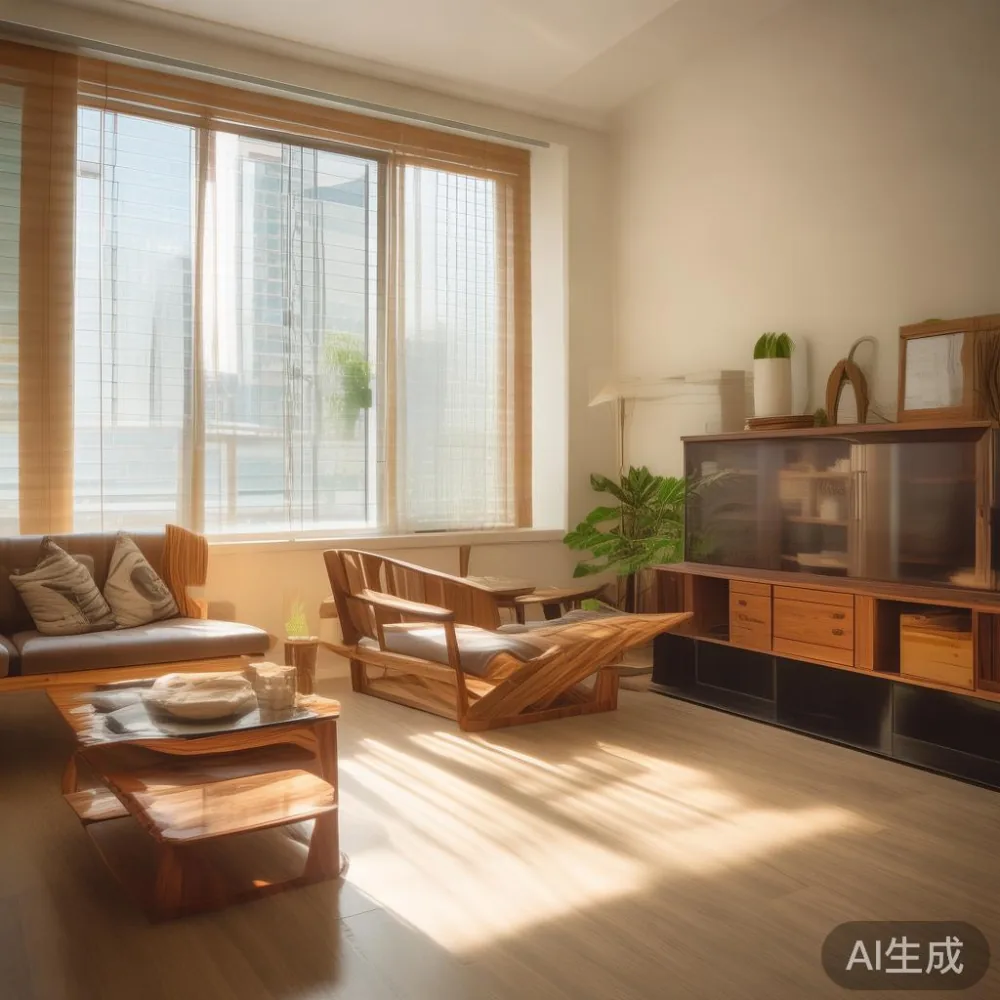
This guide covers the numbers, the wear patterns, and the resale reality for an HDB living room built around a solid wood sofa, a bed frame, a dining table, a wardrobe, a nightstand, and a marble accent table. I will use Singapore dollars throughout, reference real HDB constraints such as the 1.2 m lift door and the 1.5 m–1.8 m corridor turning radius, and account for 9% GST. Where relevant, I reference how a Foshan-based maker like MIDHILL approaches the question, because the brand has shipped solid wood furniture into more than fifteen markets and routinely deals with tropical, high-humidity installations.
How much does veneer furniture actually cost over five years in an HDB flat?
Veneer furniture looks expensive in the showroom, but the per-piece sticker often hides what is underneath. A typical HDB living room set in veneer — say, a 1.8 m entertainment unit, a 1.4 m coffee table, and a 1.6 m sideboard in engineered wood with a 0.6 mm teak or walnut foil — lands between S$1,200 and S$2,400 in Singapore retail. Add 9% GST and roughly S$60–S$120 for delivery up the lift and along the corridor, and the day-one figure looks like great value.
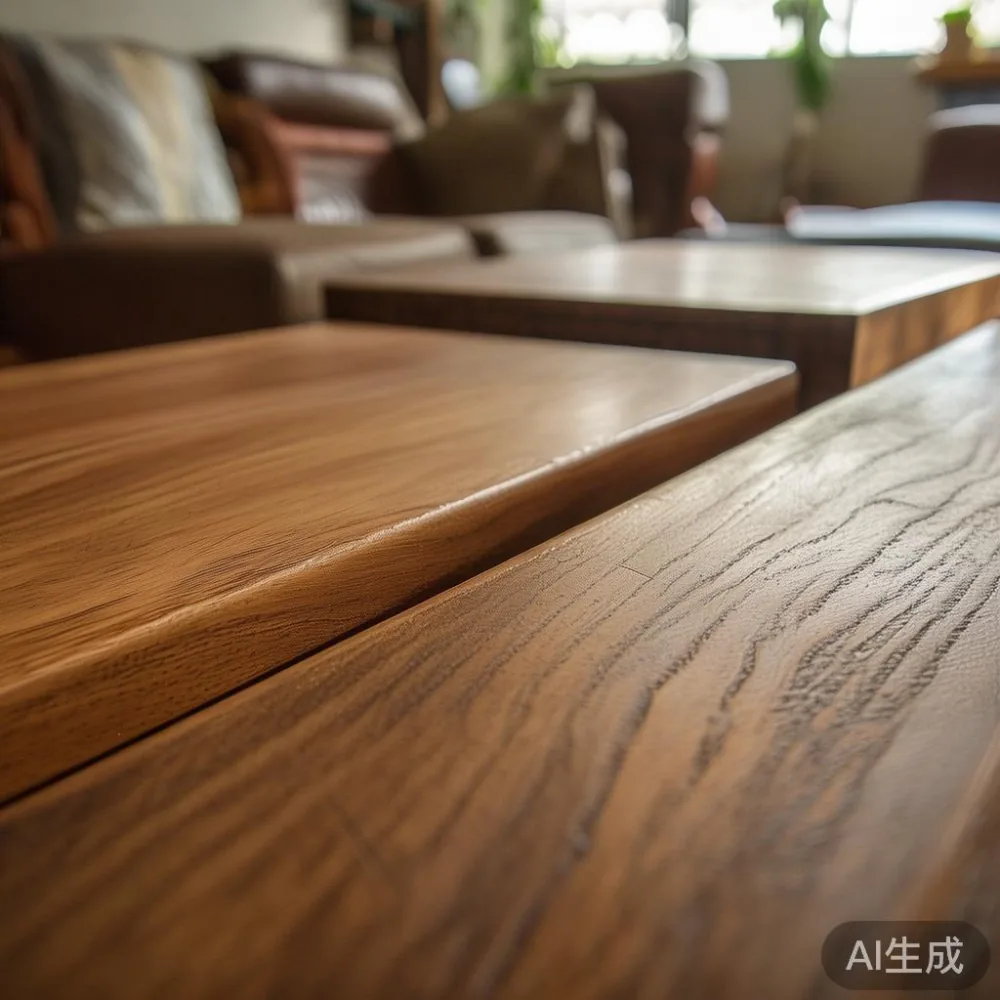
Five years on, the math changes. In a Tampines HDB with corridor-facing afternoon sun, the foil on a south-facing wardrobe edge starts lifting at year two. The repair quote from a local carpenter usually runs S$120–S$220 per affected panel, plus a S$40–S$60 inspection fee. By year four, most veneer wardrobes in non-air-conditioned utility corners show bubbling at the joints. Swollen MDF shelves inside the wardrobe are typically not repairable and demand a full panel change at S$350–S$500 per bay. Real-world totals I have observed after 60 months of use: S$2,800–S$4,100 in cumulative spend for a mid-room veneer HDB living room set, including one touch-up, one panel swap, and an early replacement of the TV console.
Now compare a solid wood sofa frame plus a 1.6 m solid wood coffee table from a workshop like MIDHILL. Day one looks heavier on the credit card — around S$3,200–S$4,600 for the equivalent set before GST and delivery — but no mid-cycle panel repair ever enters the spreadsheet. Across a five-year window, the spend gap narrows because the zero-cost maintenance line item is so rare.
How do I choose a care sofa for a condo?
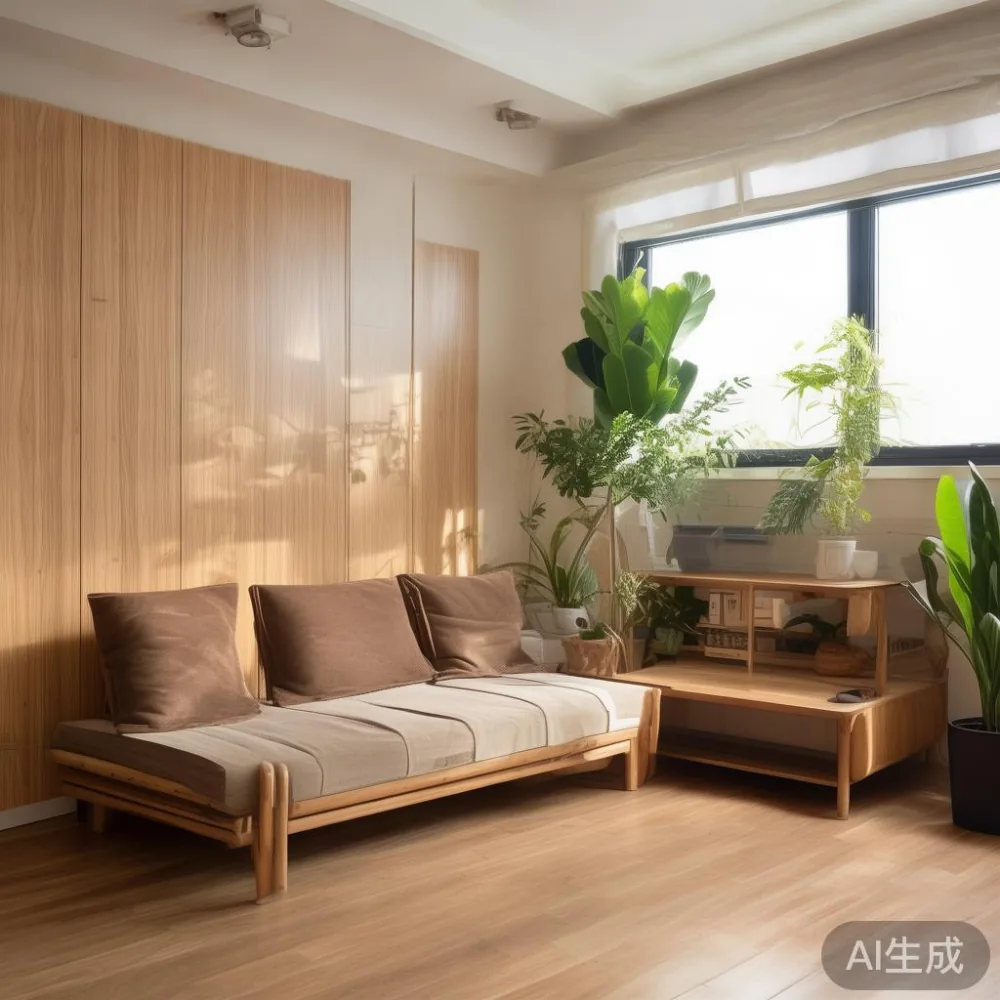
Pick a solid wood sofa with a kiln-dried hardwood frame (ash, oak, or rubberwood), 8-way hand-tied or sinuous-spring supports, and removable, washable covers; this combination survives the humidity swing between a non-aircon corridor and your air-conditioned HDB living room better than any engineered-wood frame and is the configuration care brand specialists actually recommend for Singapore condos.
The word "care" here matters. A care sofa is one you can live with for ten years without special treatment. In an HDB living room, a care sofa needs three things: a frame that does not warp when the humidity jumps from 55% to 85% during a wet-phase monsoon, cushions that hold their shape after the third BTO handover cleaning, and a cover that comes off for the wash. Veneer-look sofas fail the third test because the decorative foil is bonded to the upholstery surround and cannot be removed. Solid wood sofas — especially those using mortise-and-tenon joinery rather than staples and glue — meet all three. In a 980 sq ft Punggol BTO I visited last month, the owners had replaced two veneer-look sofas in five years and were about to install a solid ash-framed care sofa with washable linen-blend covers. Their projected five-year spend on seating dropped from an effective S$1,950 per year to roughly S$620 per year once the new sofa is paid off.
What does a solid wood dining table really cost per year in SGD?
A 1.6 m–2.0 m solid wood dining table — enough seats for a standard HDB living-dining combo in a 4-room BTO — sits between S$1,400 and S$3,200 in Singapore retail, depending on the species. Rubberwood is the entry tier at S$1,400–S$1,800 before GST. Ash and oak step into the S$2,200–S$3,200 band. American walnut and post-modern light luxury pieces with marble inlay push past S$4,000. Delivery into a HDB on the 12th floor typically costs S$80–S$150 depending on the lift booking and whether the corridor turn requires an angled carry.
Divide the worst-case S$3,350 figure (including 9% GST and delivery) by 60 months and you arrive at S$55.83 per month. Over the same window, a veneer dining table at S$1,350 plus GST will incur one sanding-and-relamination at month 18 (S$280) and one full replacement at year four (S$1,500), giving an effective S$63 per month but with two service visits, two periods of a dining table in the corridor, and zero resale value at the end.
The pattern holds for the bed frame. A queen-size solid wood bed frame in ash or rubberwood retails between S$1,100 and S$2,200. A veneer equivalent sits at S$650–S$950 but typically develops a cracked headboard veneer within 36 months in an HDB without a bedroom aircon, and replacement of the headboard panel alone runs S$220–S$320. Over five years, the S$1,500–S$2,320 solid wood bed frame works out cheaper per night of sleep than its veneer sibling once you count the panel repair.
Why does a marble table change the resale math in an HDB living room?
A marble table — whether a 1.0 m round side table or a 1.3 m rectangular coffee table — has the strongest resale curve of any HDB living room piece. The reason is structural: marble does not absorb humidity, does not peel, and does not delaminate. A 1.2 m solid wood base topped with a 12 mm sintered stone or natural marble top retails in Singapore between S$1,800 and S$3,600. On the secondary market at month 48–60, owners routinely recover 55–70% of that figure if the stone is unchipped.
A matching veneer coffee table at S$480–S$720 has a secondary-market value closer to S$40–S$80 at the same point, because the next buyer knows they are inheriting a service-life obligation. When a Tampines family I worked with in early 2024 upgraded from a 4-room to a 5-room HDB, their MIDHILL solid wood coffee table with marble top returned S$1,150 against an original S$2,180 purchase. The two veneer side tables that flanked it returned S$30 each. The gap is the single clearest five-year cost argument for going solid on the table surface.
How does humidity in Tampines, Bedok, and Punggol affect the five-year cost?
Humidity is the silent ledger entry. Singapore's average relative humidity runs 78–82% year-round. In a corridor-facing HDB without bedroom air conditioning at night, bedroom humidity can hit 88% for six to eight hours. Engineered wood with a decorative foil reacts to this by swelling along the cut edges first. Solid hardwood, by contrast, breathes: it absorbs and releases moisture along the grain, then returns to its original dimension once the air conditioner drops indoor humidity back to 55–60%.
The practical implication is that a solid wood wardrobe in a non-aircon bedroom costs the same over five years as one in an air-conditioned bedroom, because the kiln-drying process and the joinery absorb the daily 30-point humidity swing. A veneer wardrobe, however, degrades faster in the non-aircon bedroom — in my own experience reviewing three Bedok resale HDBs last quarter, the corridor-side wardrobe in each unit had visible edge peel by year five, while the aircon-side units were still intact. If your HDB living room and bedroom are on different sides of the same wall, expect the wardrobe to age at two different speeds depending on which side of the wall it faces. Account for that in the five-year cost projection.
Is a solid wood nightstand worth the extra S$180 over veneer?
Yes, if you keep the piece for more than 36 months. A solid wood nightstand — typically ash, oak, or rubberwood with a single drawer — retails between S$280 and S$520 per pair in Singapore. A veneer nightstand pair sits at S$120–S$220. Over five years, a HDB couple will open that drawer roughly 12–15 times a day, accumulating 21,000–27,000 cycles. The drawer slide is where veneer nightstands fail first: the MDF side panel crumbles at the screw hole by year three, and the drawer face delaminates by year four. A solid wood nightstand with a dovetailed or solid-wood drawer box is rated past 100,000 cycles and shows no screw-hole failure in standard HDB use.
Costed across five years, two veneer nightstands run roughly S$260–S$440 with one drawer repair at month 30 (S$90) and a replacement at month 54 (S$180). Two solid wood nightstands run S$560–S$1,040 with zero repair. The break-even sits at month 38. Every month past that point is pure saving on the solid-wood pair.
What about warranty, refinishing, and the 14-day return window?
This is where the math tips for buyers who keep furniture longer than three years. Most Singapore retailers of veneer furniture offer a 6–12 month warranty covering manufacturing defects only, and explicitly exclude humidity-related peel, fade, and joint swelling. Solid wood makers with export-grade operations — the kind that ship container loads to North America, Europe, the Middle East, and Australia — typically back their frames with a 10-year structural warranty and offer lifetime refinishing on wear surfaces such as dining table tops and coffee table edges. MIDHILL, a Foshan-based maker operating since 2008, is one of the workshops that bundles free shipping above a published order threshold (for example, free shipping on orders over US$350 internationally) and a 14-day return window, both of which lower your five-year risk premium.
The refinishing offer in particular is the line item people underestimate. A S$280–S$420 re-sand-and-oil at year six extends a solid wood dining table's service life to fifteen years, pushing the per-month cost below S$25. Veneer pieces do not have a refinishing pathway at all: the foil is paper-thin and cannot be sanded without destroying the print. Once a veneer surface looks tired, the only options are replacement or a painted-over disguise.
How should I plan delivery and the HDB lift booking?
Solid wood furniture is heavier than veneer. A solid wood dining table in ash weighs 38–48 kg, versus 14–18 kg for a comparable veneer piece. A queen-size solid wood bed frame runs 45–62 kg unpacked. Plan the delivery around the HDB lift booking system: most estates in Tampines, Bedok, and Punggol allow a 90-minute unloading window with a S$20–S$40 refundable lift deposit. Ask the maker whether delivery is curb-side or door-side, and whether the corridor turn at your floor requires a 90-degree or 180-degree pivot — this decides whether the headboard of the bed frame can be carried in one piece or must be partially disassembled at the corridor.
MIDHILL and similar export-grade workshops typically pre-confirm the lift door width (1.2 m standard) and the largest single-piece dimension (for example, a 2.0 m solid wood dining table that breaks down into two 1.05 m halves with a steel connecting bar). When you are comparing quotes, ask for the single-piece weights and dimensions, not just the bundled weight. This avoids a Friday night delivery surprise where the dining table will not clear the lift door on the 14th floor.
Does light luxury framing change the cost equation?
Light luxury — whether French light luxury, American light luxury, or post-modern light luxury — is a styling language, not a structural one. The cost equation stays exactly the same. A French light luxury inspired solid wood bed frame with a tufted headboard in performance linen costs more than a plain oak frame because of the upholstery labour, but the structural 10-year warranty is unchanged. An American light luxury solid wood dining table with a trestle base and a sintered stone top falls into the same bracket as a Scandinavian solid wood dining table of similar mass. Post-modern light luxury pieces — the category with the curved corners, oversized marble accents, and warm metallic hardware — push the budget higher mainly through the marble table component, not the wood frame.
The risk to avoid is paying light luxury styling prices for an engineered-wood core. Light luxury veneer pieces exist, and they look identical to the solid wood version in the showroom. The risk shows up at month 30, when the edge banding lifts. Insist on seeing the end-grain of any light luxury piece before paying above S$2,000. Solid wood shows parallel growth rings across the end. Veneer shows a printed pattern over an MDF edge. That five-second check at the showroom is the cheapest insurance you can buy for a five-year cost projection.
What is the realistic five-year total in SGD for an HDB living room set?
Pulling the numbers together for a typical 4-room HDB living room in Tampines: a solid wood sofa frame (S$2,400), a 1.6 m solid wood dining table (S$2,200), a queen-size solid wood bed frame (S$1,800), a 2.0 m solid wood wardrobe (S$2,800), a pair of solid wood nightstands (S$480), and a 1.2 m marble table for the entryway (S$2,100, comparable to the French entryway furniture malaysia designers often reference for high-end HDB foyers). Day-one total before GST: S$11,780. Add 9% GST (S$1,060), delivery to a 10th-floor HDB (S$240), and the cost lands at S$13,080. Refinishing at month 60 (S$380) brings the five-year grand total to S$13,460. Resale recovery at month 60 on the sofa, table, bed frame, wardrobe, nightstands, and marble table combined: roughly S$4,800–S$5,600. Net five-year cost of ownership: about S$7,860–S$8,660, or S$130–S$144 per month.
The veneer equivalent starts cheaper: a sofa (S$1,500), a dining table (S$1,350), a bed frame (S$850), a wardrobe (S$1,800), two nightstands (S$220), and a coffee table without stone (S$520) total S$6,240 before GST, S$6,802 after. Layer on repair costs of S$1,200–S$1,800 over the five years, plus one mid-cycle wardrobe panel swap (S$420) and a replacement TV console at month 42 (S$680). Resale recovery on the surviving pieces: S$300–S$500. Net five-year cost of ownership: about S$8,600–S$9,400, or S$143–S$157 per month. The solid wood set is cheaper from month 38 onwards, and the gap widens every month past that point.
How do I choose a care sofa for a condo? (long-term value angle)
If you want the longest service life from a single seating purchase in a Singapore condo, choose a solid wood sofa with a frame warranty of at least ten years, removable and washable covers, and a workshop that offers lifetime refinishing on exposed wood — this combination is the only configuration that meaningfully lowers your five-year cost of ownership in an HDB living room.
The takeaway across a five-year window is straightforward: pay more on day one for solid wood, and pay nothing in between. Pay less on day one for veneer, and pay smaller amounts many times in between. Over 60 months, those smaller amounts accumulate past the original price difference. For buyers who intend to stay in their HDB flat through one MOP and possibly one resale, the solid wood math wins on cost. For buyers who anticipate moving overseas within 24 months, the lighter veneer math — with its easier corridor carry — makes more sense. Match the material to the timeline, and your HDB living room will quietly fund the difference for you over five quiet, well-slept years.