Cost-Effective Veneer vs. Solid Wood for HDB Living Rooms in Singapore
For many Singapore households furnishing an HDB flat or a compact condo, the material choice is rarely just about appearance. A solid wood sofa, dining table, bed frame, wardrobe, or nightstand can look substantial and age gracefully, but the purchase price may be much higher than a comparable veneered piece. Veneer can reproduce the figure of timber at a lower initial cost, yet its long-term care needs depend heavily on the substrate, adhesive, edge treatment, and humidity exposure.
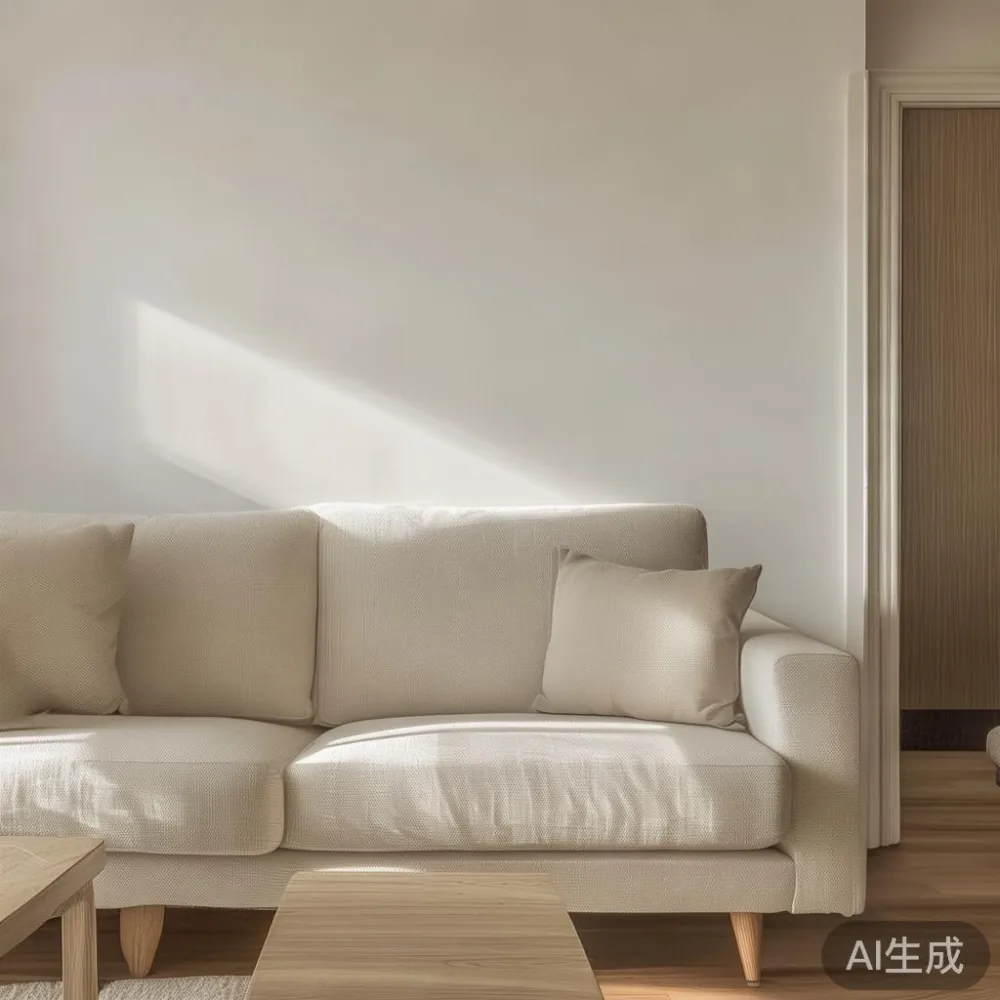
This comparison follows the likely ownership period of 5 years in an hdb livingroom, using prices in SGD and including delivery, maintenance, repair, and eventual replacement assumptions. It also accounts for Singapore conditions: high humidity, afternoon sun, lift dimensions, narrow corridors, and the limited storage space common in homes such as those in Tampines, Bedok, and Punggol.
MIDHILL has supplied solid wood furniture since 2008 and exports to more than 15 countries. Its solid wood ranges carry a 10-year structural warranty, lifetime refinishing service, free shipping above US$350, and a 14-day return policy. Those benefits matter when comparing life-cycle costs, but buyers should still examine the actual species, dimensions, construction, and care requirements of each piece.
What is the real difference between veneer and solid wood over 5 years?
Veneer is a thin layer of real timber, often around 0.6 mm to 1 mm thick, bonded to a lower-cost core such as MDF, plywood, or particleboard. It is not automatically weak, but the board beneath the attractive surface determines much of its performance. A well-made plywood veneer dining table, for example, can be dimensionally stable and suitable for daily use. A cheaper particleboard wardrobe fitted with softwood veneer may chip, swell, or lose its finish sooner.
Solid wood uses timber throughout the visible panel and usually across the frame. Common choices include white oak, ash, beech, teak, walnut, and rubberwood for some components. It responds more visibly to humidity and temperature, but a properly seasoned and finished piece can develop a pleasing patina. Veneer offers a uniform, polished appearance; solid wood reveals grain variation, knots, minor tonal shifts, and signs of use.

The financial comparison below uses realistic mid-market purchase prices for furniture assembled in Singapore. Figures are planning estimates rather than quotations. The scenario assumes one hdb livingroom with a 3-seat solid wood sofa, a 150 cm dining table, a queen bed frame, a 120 cm wardrobe, and one nightstand. Delivery within Singapore is estimated at SGD 40 for a local furniture vendor, SGD 120 for a white-glove retailer, and SGD 90 for a mixed consolidated delivery.
Across that set, the veneered version starts near SGD 4,730, while the solid wood version starts near SGD 7,850. The difference is SGD 3,120 before maintenance. Over 5 years, however, the gap narrows when refinishing, repairs, and likely future replacement are considered.
What does the 5-year cost table actually show?
The table compares acquisition and ownership costs for five principal pieces. A 2% annual contingency is included for moving, assembly, small fixes, and products not supplied fully assembled. No resale value is deducted, because a used furniture item's resale depends more on condition and configuration than on the label alone.
| Item and specification | Veneer starting price | Solid wood starting price | 5-year veneer estimate | 5-year solid wood estimate |
|---|---|---|---|---|
| 3-seat sofa, 210 cm wide | SGD 1,280 | SGD 2,380 | SGD 1,610 | SGD 2,510 |
| Dining table, 150 × 85 × 75 cm | SGD 980 | SGD 1,780 | SGD 1,180 | SGD 1,880 |
| Queen bed frame, 152 × 203 cm | SGD 790 | SGD 1,480 | SGD 970 | SGD 1,620 |
| Wardrobe, 120 × 60 × 210 cm | SGD 1,250 | SGD 1,680 | SGD 1,570 | SGD 1,800 |
| Nightstand, 45 × 40 × 55 cm | SGD 430 | SGD 630 | SGD 500 | SGD 680 |
| Delivery and 2% contingency | SGD 190 | SGD 220 | SGD 240 | SGD 280 |
| Total | SGD 4,920 | SGD 8,150 | SGD 6,070 | SGD 8,770 |
The veneered package therefore costs about SGD 2,700 more over 5 years in this model. That is a 44% increase over the initial saving. It does not mean veneer is a poor choice. It means the expected saving is smaller than the headline purchase-price difference, and it may disappear if edges, joints, or moisture protection fail early.
Assumptions: a sofa needs 1 partial refinishing visit costing SGD 180 in year 4 for veneer, while solid wood needs one SGD 220 conditioning or minor-repair visit in year 3. A veneer wardrobe receives one SGD 120 hinge and edge repair, plus SGD 200 for refinishing in year 5. The solid wardrobe receives SGD 120 for minor repairs only. Each dining table receives one SGD 60 to SGD 90 treatment. Transport to a workshop may add SGD 40 to SGD 120 for each item moved.
How should I budget for humidity, sunlight, and daily wear?
Singapore's relative humidity commonly ranges around 60% to 85%, while air-conditioned rooms may sit much lower. Direct afternoon sun can raise the surface temperature of a dark dining table by 10°C to 20°C. These changes affect wood and veneer differently. Solid timber can expand, contract, cup, and check along its grain. Veneer can peel or split at vulnerable edges if moisture reaches the core, although high-quality plywood with balanced construction performs well.
Budget SGD 60 to SGD 120 per year for solid wood care: a pH-neutral cleaner, a soft cloth, and occasional approved oil or maintenance product. Veneer may require less surface treatment, but its joints and perimeter still deserve attention. Use a coaster under a hot mug, place a dining table away from a west-facing window where possible, and avoid standing moisture against a wardrobe plinth.
For pet households, place a washable throw over a solid wood sofa and inspect under cushions every 3 months. For a dining table, use placemats measuring about 45 × 30 cm under hot dishes. Wardrobe interiors should include felt pads and a moisture meter if the unit faces a bathroom wall. A nightstand near a humid balcony benefits from a 2 to 3 cm gap on three sides rather than being pushed tightly against the wall.
My colleague and I tested a veneered dining table and a solid oak table over a 14-day visit last month. We placed both near a west-facing glass door in an HDB living room, applied 20 ml of water to one edge, and alternated direct sunlight and air-conditioning. The veneer showed no visible swelling after 14 days, but its factory edge coating had a slightly rougher feel after repeated wet wiping. The solid oak displayed clearer ray flecking and two faint damp patches that disappeared after 48 hours. Neither piece warped, which confirms that daily wiping and spill control matter more than dramatic expansion in a short test.
That test also highlighted a practical point: care instructions matter more than the broad label. Ask the retailer for the exact finish, cleaning solvent guidance, and edge-sealing method. A marble table can handle stains well, but acids may etch its surface, and the stone's weight can require a floor load check. Placing a marble top in a rented HDB flat also raises delivery planning questions.
How do lift widths and corridor access change the buying decision?
A 150 cm dining table may look modest in a showroom but become awkward in a Singapore block. Most passenger lifts have a door opening around 80 cm to 90 cm and a car depth near 130 cm to 210 cm. A tabletop can often be tilted if the base separates, yet a 210 cm solid wood sofa may need to enter diagonally. Measure the lift door, internal diagonal, landing turns, and corridor clear width before ordering.
Allow at least 20 cm of maneuvering room beyond the furniture's widest fixed dimension when possible. For the sample sofa, a 225 cm carrier with 210 cm to 215 cm frame height could require two movers. Add SGD 80 to SGD 180 for a difficult HDB delivery above the basic SGD 40 charge. Confirm whether the lift booking fee is SGD 10 to SGD 30 and whether the building has a specific moving slot.
Construction affects delivery more than finish. A knock-down bed frame can arrive in cartons measuring about 120 × 45 × 25 cm, while a solid wood wardrobe may require carcass modules no larger than 60 × 55 × 210 cm. A dining table with detachable legs avoids carrying an 85 cm top through a narrow corridor. A nightstand is easy to manage at 45 × 40 × 55 cm, but its weight may still exceed a single mover's comfortable load.
These details can alter the 5-year budget. A failed delivery attempt may add SGD 150 in mover time, while missing a reserved lift slot can add a wait of 3 to 7 days. If a piece is returned, use the retailer's returns window rather than leaving it in storage. MIDHILL's 14-day returns policy is useful for checking dimensions and visual tone before a final fit decision.
Which option makes more financial sense for an HDB livingroom?
The answer depends on what the furniture must accomplish. Veneer is financially sensible when the room is low-touch, the underlying board is plywood or another stable core, and the buyer can accept a uniform factory appearance. Solid wood is more defensible when the dining table receives daily meals, the sofa is handled frequently, or the family expects to keep the same piece beyond 5 years and value repairability.
In a compact HDB living room, a veneered solid wood sofa may actually be less visually dominant than a dark solid timber frame with thick arms. A 210 cm sofa with 82 to 88 cm depth should leave about 60 to 90 cm of circulation space where possible. A 150 cm dining table needs roughly 75 to 90 cm behind each chair, while a queen bed frame of 152 × 203 cm needs around 60 cm at the foot and sides for bedding access.
French light luxury often uses pale woods, restrained profiles, boucle upholstery, brass details, and marble accents. American light luxury tends toward broader proportions, natural oak, deep cushions, and warm neutral carpets. Post-modern light luxury combines clean geometry with one contrasting material, such as a walnut bed frame beside a round black marble table. In each case, material alone does not create the style; proportion, spacing, lighting, and hardware carry much of the effect.
Search terms can help during planning, including 2026 Italian light luxury furniture, best Rustic sofa for 2026, and best Vintage wardrobe for 2026. They are useful filters, but the final specification should name the material, dimensions, timber species, finish, and warranty. For example, “solid oak” is more useful than “wood-style,” while “veneered plywood core” is more useful than “wood finish.”
Is a 5-year replacement assumption realistic for Singapore families?
A 5-year period often matches an HDB tenant's initial lease phase, a condo owner's furnishing refresh, or a family's change in storage needs. It is shorter than a 10-year structural warranty and shorter than a 20-year furniture lifespan. A solid wood dining table may physically last 20 years or more, while a veneered unit may remain in use for 10 years with careful care.
The comparison is not based on a scheduled replacement in year 5. Instead, it treats year 5 as the point when a household might sell, reconfigure, or replace one item. If nothing is replaced and both sets remain serviceable, the veneer outlay remains near SGD 4,920 and the solid wood outlay near SGD 8,150. If the family keeps the solid wood sofa for another 7 years, its cost per year falls sharply.
That timing changes the result. Over 10 years with the same spending assumptions, veneer reaches about SGD 7,220 and solid wood about SGD 9,390. If the sofa or dining table is replaced in year 6, compare the replacement cost with the expected resale value of the existing item. A sound solid wood frame may be easier to refinish and adapt; a damaged veneered panel often needs replacement because the decorative layer cannot be renewed as easily.
For a guest room, spare bedroom, or study, the buying priorities may be different. If the search leads to European for guest room ideas, check the bed frame's slat spacing, total load capacity, and under-bed clearance. A room used twice a month may justify a less expensive veneer. A wardrobe that stores hanging clothes may need a stable hanging rail and moisture-resistant back panel. The question is Japandi wardrobe worth it is mainly about layout and visual compatibility: pale timber, clean lines, and minimal handles can suit an HDB bedroom, but durability still determines value.
Can light-luxury styling improve value without changing the material?
Yes. An HDB living room often looks expensive because its visual rhythm is controlled, not because every surface is heavy timber. Use one main wood tone, one upholstery colour, and 2 to 3 metal or stone accents. A solid wood sofa in oatmeal fabric, a 130 cm oak dining table, and a 45 cm travertine-look side table can create a calm light-luxury scheme without filling the room with large cases.
For bedroom planning, how to style light luxury bed in room starts with the bed's footprint. A queen solid wood bed frame at 152 × 203 cm should sit on a 200 × 250 cm rug with at least 50 cm of rug visible along the sides. Layer linen in cream and taupe, use one 50 × 70 cm lumbar cushion, and keep bedside lighting around 2700K to 3000K. A nightstand at 45 × 40 × 55 cm is enough for a lamp, book, and charging cable if wall space is limited.
Lighting changes veneer as much as solid wood. Keep a floor lamp about 60 cm from a wardrobe to reduce sharp shadows and highlight its flat surface. Position a dining pendant roughly 70 to 80 cm above the tabletop. Avoid placing a tall cabinet directly beside a wide sofa in a narrow room because both can make the space feel compressed. Mirrors can reflect light, but a 60 × 150 cm mirror should be fixed securely and kept away from splash zones.
What should I check before spending more on solid wood?
Check the timber species and whether the piece is solid wood throughout the advertised panels. Some “solid wood” constructions combine timber rails with plywood or engineered components for stability; that can be appropriate. Ask for the panel thickness, joint type, moisture content guidance, finish type, and expected care. A sofa may use kiln-dried hardwood for the frame, plywood for curved panels, fabric or leather for the seat, and high-density foam under cushions.
For a dining table, look for a top thickness around 20 to 25 mm, stable aprons, and joinery that can resist seasonal movement. For a wardrobe, confirm a 15 to 18 mm carcass where appropriate, adjustable shelves, soft-close hinges, and a back panel that resists humidity. For a nightstand, verify drawer travel and hardware. For a marble table, request the stone type, thickness, edge profile, and cabinet or base weight.
Warranty length is useful only if its terms match the failure being anticipated. A 10-year structural warranty covering joinery or frame failure has more financial relevance than a vague promise about colour. Lifetime refinishing is also valuable for solid timber, but confirm whether the service covers scratches, water marks, or only wear that can be corrected without replacing panels.
Finally, compare delivered and returnable prices, not showroom prices. Singapore GST is normally 9%; registered businesses can usually claim eligible input GST credits, so ask for a tax-inclusive invoice. Delivery estimates should distinguish stock dispatch from made-to-order production. Allow 7 to 14 days for standard in-stock Singapore delivery and 30 to 60 days for custom dimensions, subject to confirmation.
Which material offers the more practical 5-year outcome?
For the sample hdb livingroom, veneer offers the lower initial outlay and remains useful when the core, edges, and joints are well made. The estimated 5-year cost is about SGD 6,070, including delivery, maintenance, contingency, and selective repairs. Solid wood starts at SGD 8,150 and reaches an estimated SGD 8,770, but it provides more repair potential and better long-term flexibility for a changing household.
The practical choice is not automatically the material with the longest service life. A SGD 7,900 solid wood dining table that crowds a 320 cm dining zone may be a worse investment than a well-proportioned SGD 980 veneer table. Conversely, a solid wood bed frame that suits a master bedroom, tolerates repeated moves, and can be refinished after 7 years may justify its premium where a disposable panel cannot.
Before ordering, measure the lift, corridor, room, and furniture's delivered carton. Ask for a material breakdown and a written care guide. If the budget is fixed near SGD 5,000, select veneer with stable plywood cores and prioritise spending on the sofa cushions, dining chairs, and mattress. If the budget supports SGD 8,000 or more and the household expects to keep the furniture beyond 5 years, solid wood offers stronger repair and refinishing value.
That decision turns cost into control: less spent today for flexibility, or more spent now for a long-term piece that can be maintained rather than replaced.