How Southeast Asian Humidity Affects Solid Wood Furniture in Singapore HDB Living Rooms
Singapore’s warm, humid climate can change the dimensions, joints and surface finish of solid wood furniture faster than many owners expect. In an HDB flat in Tampines, Bedok or Punggol, a dining table beside a balcony may absorb moisture during monsoon evenings, then lose it in an air-conditioned living room. Repeated changes can cause swelling, shrinkage, warping, mould around joints and squeaky drawer runners. For anyone furnishing an hdb livingroom, stable indoor humidity, sensible product selection and realistic care are more useful than fear of wood itself.
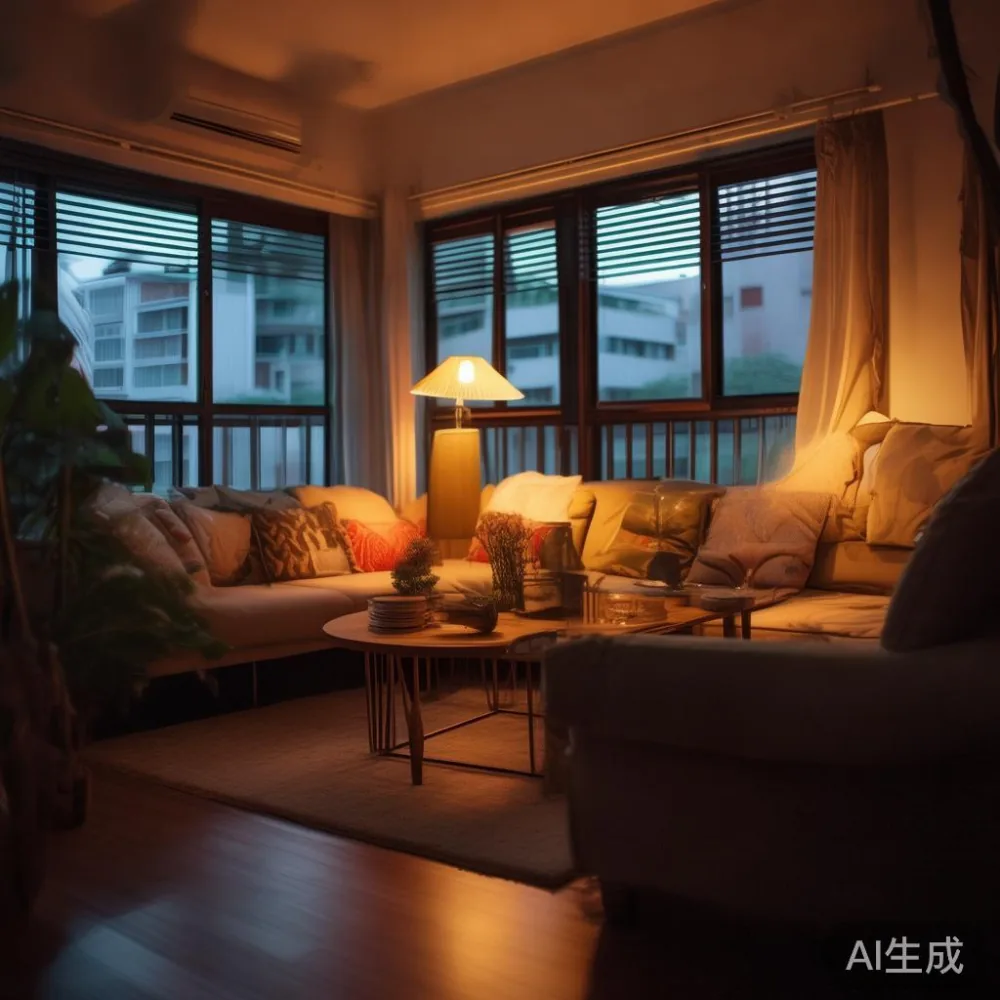
MIDHILL designs solid wood furniture for international use and backs its construction with a 10-year structural warranty. Established in 2008, the company exports to more than 15 countries, so its production approach must account for climate differences rather than assume every home resembles a dry European showroom. The same solid wood sofa, bed frame, dining table, wardrobe, nightstand or marble table may behave differently in Singapore’s conditions.
Why Singapore humidity changes solid wood furniture
Wood is hygroscopic: it naturally gains or releases moisture as the surrounding relative humidity changes. The response is not governed by one fixed limit. A 180 cm teak dining table can expand by several millimetres across its width when humidity rises sharply. A 150 cm solid oak bed frame may tighten around its joints as indoor air becomes drier. These movements are small compared with the size of the furniture, but repeated cycles can loosen screws, open glue lines or distort door panels.
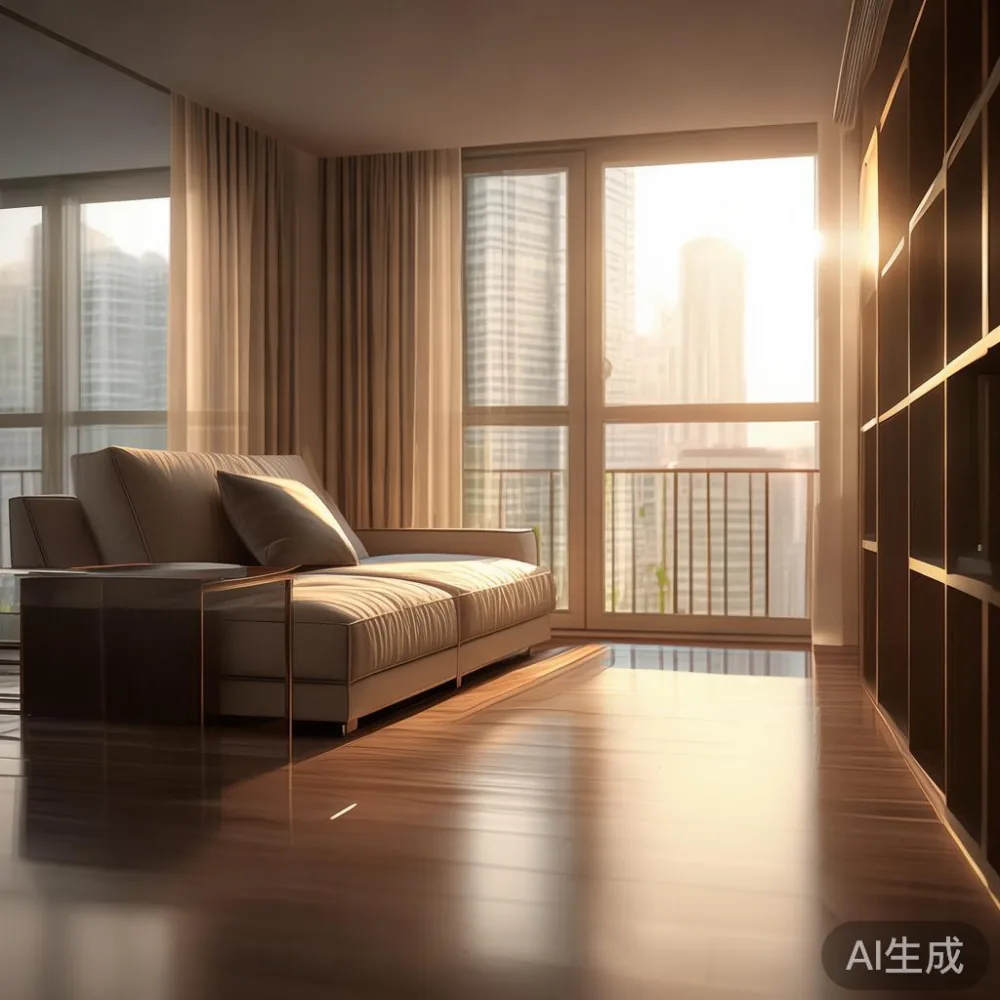
Singapore’s daily pattern matters. Outdoor relative humidity may sit around 75% during wet periods, while an air-conditioned bedroom can fall to approximately 45–55%. A wardrobe positioned near a balcony or bathroom experiences wider swings than a bookcase in the middle of an hdb livingroom. Air circulation helps, but constantly pushing cold air directly onto a surface accelerates drying and condensation risks elsewhere in the room.
Temperature also affects perception. At 29°C and 80% relative humidity, wood may feel damp even when no liquid is visible. At 23°C and 50% relative humidity, it may feel stable and comfortable. Keeping the living area around 22–27°C and, where practical, 45–65% relative humidity reduces repeated dimensional movement. A calibrated hygrometer costing about SGD 15–35 is useful for checking a bedroom or study, especially if a bed frame or wardrobe sits near an exterior wall.
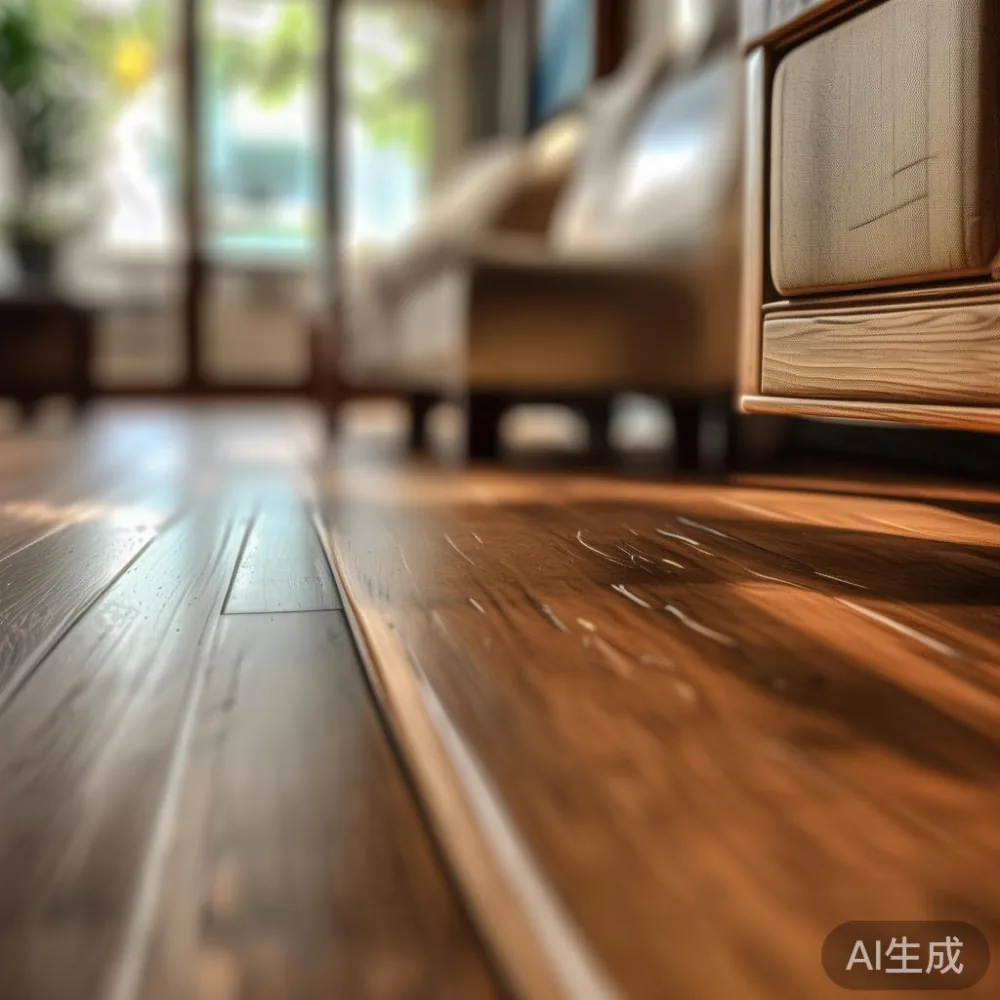
Humidity is not the only source of damage. Direct rain, leaking balcony joints, kitchen steam, wet cleaning and poor ventilation can raise local moisture levels far beyond normal room readings. In Singapore, inspect window seals and balcony drainage before blaming the furniture. Furniture should stand at least 10–15 cm from a wall where airflow permits, and floor-standing pieces should not be pushed tightly against skirting boards.
What should I do if solid wood furniture becomes damp in my HDB flat?
If a table feels damp, squeaks or has begun to swell, remove the immediate cause rather than applying heat. Wipe standing water away, open nearby windows only when outdoor conditions are drier, and run a fan across the surface. Use a dehumidifier if the room remains above roughly 65% relative humidity for extended periods. Moving a small nightstand away from a damp wall may be enough; moving a wardrobe 20–30 cm from the exterior wall can make a larger difference.
Never place a hair dryer, heat gun or hot iron directly on timber. Rapid heating can drive moisture out of one area while leaving the interior wet, increasing checking and warping risk. Let the piece return gradually to a stable room temperature over 24–72 hours. Tighten loosened fittings only after the wood has stabilised, because screws set during swollen wood can later exert pressure as the timber contracts.
For surface mould, use a lightly damp cloth with a small amount of mild soap and dry immediately. Avoid flooding grooves, routed edges and joint lines. If black spotting remains, or the surface feels soft, seek an assessment before sanding or refinishing. A 10-year structural warranty covers structural defects, but moisture damage caused by poor placement or neglected leaks should still be prevented through routine inspection.
One real example from my own experience helps explain the pattern. Last month, I visited a family’s 92 sqm HDB flat in Bedok and checked a 200 cm walnut-toned dining table beside an open balcony. A cheap digital meter read 82% near the table at 9 p.m., while the central living room measured 61%. The tabletop had developed a slight bow after repeated monsoon dampness. We moved it 25 cm inward, wiped the surface dry and used a small dehumidifier for 3 nights. The reading fell to 57%, and the bow disappeared within 4 days without chemical treatment. The underlying lesson was placement, not the wood species.
How do I keep a solid wood dining table stable during Singapore’s monsoon season?
Give the dining table enough space for air movement and use a stable indoor environment. Check the top every month, particularly from November to February, when Singapore’s inter-monsoon and northeast monsoon periods can produce prolonged dampness. Wipe spills within 10 minutes, use coasters and felt pads, and keep hot serving dishes off the timber. A dining table should not be repeatedly dragged across tiles; lift it or use furniture sliders rated for its weight.
Seasoning is misunderstood in a tropical climate. The wood supplied to a Singapore home should already have appropriate kiln drying and protective finishing. Applying “board oil” every week is not automatically better. Oil can enrich colour and help repel incidental moisture, but excess oil traps dirt and complicates future refinishing. Follow the care instructions for the specific finish, and test any product on a hidden area covering roughly 5 cm by 5 cm.
Solid timber may expand across the grain while remaining relatively stable along the grain. A 6 mm movement across a 120 cm tabletop is physically plausible under significant humidity changes. Small solid timber tops may need seasonal movement; oversized tops are especially vulnerable to cupping. Choose a dining table with a sound foundation, even support and an appropriate finish rather than assuming a thicker top eliminates all movement.
Marble requires different care. A marble table may add visual coolness to an hdb livingroom, but its porous surface needs prompt spill removal and a suitable sealer. Do not use acidic cleaners on marble, and keep standing water away from the edge. For timber dining pieces, the same care routine is simpler because the finish provides a more noticeable barrier against incidental marks.
Can high humidity ruin a solid wood bed frame or wardrobe?
It can contribute to deterioration, particularly when humidity is combined with poor airflow. A solid wood bed frame may develop joint movement, squeaks or a uneven feel if one side repeatedly gains moisture. For a queen bed, check the centre support and leg fixings every 3 months. Keep bedding dry and avoid placing the frame directly against a cold balcony wall. If the bed sits in a room used for sleep, maintaining roughly 45–60% relative humidity supports comfort as well as timber stability.
Wardrobes need ventilation around moving panels and drawer fronts. If doors begin to bind, compare the gap at the top and bottom before forcing them. A 2 mm gap that closes as humidity falls may indicate frame movement rather than a defective hinge. Do not plane or sand a door immediately; allow the climate to stabilise for several days, then adjust hinges if necessary.
This is also where French light luxury can influence proportion without creating a heavy room. Curved profiles, pale upholstery and restrained timber finishes work well in a compact Singapore home. The question “is French bed worth it” should not be answered by style alone. Check the frame material, centre support, slat spacing, finish and warranty. A French-inspired solid wood bed frame with a stable construction and low-maintenance surface can suit an HDB bedroom, while a decorative frame with weak support will not solve humidity problems.
Will a solid wood sofa develop mould in a humid HDB livingroom?
The frame may remain sound while the cushioning and textile covering show dampness first. Keep upholstery at least 30 cm from a balcony opening where possible, and leave some clearance beneath loose cushions so air can circulate. Remove seat covers during exceptionally wet periods if they are washable, and vacuum every 2 weeks using a brush attachment. Avoid pressing damp cushions into the frame.
Leather and performance fabrics have different moisture behaviour. Wipe leather with a barely damp cloth and condition it only according to the supplier’s instructions. Do not apply household oil directly. For fabric, spot-clean rather than saturate. A solid wood sofa with removable covers can be easier to maintain than one with fixed upholstery, but no cover system replaces indoor humidity control.
Style comparisons can distract from practical specifications. Searching for “European light luxury sofa vs Nordic sofa” helps define the visual brief, yet both categories can be built in tropical conditions. French light luxury tends to use generous curves, layered textiles and warm, restrained tones. American light luxury and post-modern light luxury often favour cleaner planes, tactile materials and graphic silhouettes. All three approaches can work in an hdb livingroom if the sofa’s dimensions suit the lift, corridor and room layout.
Measure before ordering. A sofa with a 228 cm packaged length may turn tightly at an HDB landing. Check the actual corridor width, lift door width and lift cabin depth, not only the advertised sofa dimensions. A 210 cm three-seat sofa may fit comfortably, while a 245 cm curved design may require a turning check. Allow 80–90 cm for the main circulation route, and keep the coffee table at least 35–45 cm from the seat for comfortable movement.
How should I transport and install large furniture in Tampines, Bedok and Punggol?
Singapore’s HDB access rules make early measurement worthwhile. Record the lift door width, internal depth and diagonal, the turning radius at landings, and the width of the shortest corridor. A 180 cm dining table can be carried vertically if the lift height allows, but its width and thickness still need checking. A 200 cm long dining table may fit along a lift wall diagonally; the calculation must use the real diagonal rather than an estimate.
For staircases, remove detachable legs and protect corners with blankets. Carry panels with 2 people when each exceeds roughly 20–25 kg, and use lifting straps rather than relying on door handles. Confirm the delivery date, assembly scope and damage-reporting period with the supplier. Local delivery commonly takes 7–14 days for in-stock configurations, while made-to-order pieces may require 4–8 weeks. These timings should be confirmed before purchase rather than treated as universal guarantees.
Delivery charges and tax should also be clear. Singapore’s prevailing GST is 9%; check whether a quoted SGD amount includes it. MIDHILL offers free shipping on orders over US$350, but international thresholds and conversion methods may differ from a purely local SGD checkout. Ask for the final Singapore delivery fee, assembly charge and any lift reservation cost in writing. A quotation of SGD 1,680 including GST and delivery is easier to compare than one that omits access charges.
Plan the installation sequence in a new HDB flat. Assemble the bed frame in the bedroom and the wardrobe near its final position, but position the dining table only after the floor is clean and dry. Use the supplied hardware, tighten fixings evenly, and check the wardrobe for level over a 120 cm span. Allow 10–20 mm at the top of freestanding tall furniture when the floor is uneven, provided the manufacturer’s installation guide permits it.
Which wood finish and design choices reduce humidity problems?
A durable factory finish helps slow moisture exchange, but it does not make furniture moisture-proof. Water-based polyurethane or lacquer can be balanced for appearance and maintenance, while hardwax oil leaves the grain more tactile and may require more attentive care. Ask for the exact finish, maintenance instructions and repair options. A finish that can be renewed locally is valuable in Singapore’s humid environment.
Choose joinery that accommodates natural movement. Mortise-and-tenon joints, properly fitted drawer runners and solid timber components generally outperform thin decorative panels that can distort. Look for rear ventilation in wardrobes, sensible shelf spacing and support beneath wide table tops. Avoid placing low nightstands directly beneath a window that opens during rain. A nightstand 20 cm above a tiled floor may also improve airflow in a compact bedroom.
For guest rooms, furniture must earn its footprint. Researching “European for guest room” style ideas can reveal useful planning methods, but verify dimensions before buying. A 120 cm daybed, a 40 cm nightstand and one slim wardrobe may serve a multipurpose room better than oversized pieces. For compact living areas, “French for small living room” guides often recommend light colours, vertical lines and slim profiles; these choices can make an hdb livingroom feel larger while keeping circulation practical.
Vintage-inspired finishes require the same care as new timber. If you come across a “top 10 Vintage furniture” list, assess the material, moisture signs and joinery rather than choosing by appearance. Old pieces may have been finished with unknown chemicals, and softened joints can fail under humid conditions. MIDHILL’s 14-day return policy offers a useful way to assess a new solid wood purchase in your own environment, provided the item is unused, protected and returned in its original packaging.
When planning a coordinated room, an Italian light luxury TV console can provide a pale architectural centre without overwhelming the space. Select a width around 160–180 cm for a typical HDB living room, but verify cable access, wall anchoring and drawer clearance. Pairing it with a solid wood sofa and a marble table creates a light-luxury composition without making humidity an afterthought.
What is a practical humidity care routine for Singapore homes?
Check the climate monthly and after heavy rain. Keep a hygrometer in the room where furniture is most vulnerable, ideally at cushion or tabletop height. Aim for roughly 45–65% relative humidity, with stable temperatures around 22–27°C. During prolonged wet weather, run a dehumidifier, close windows when rain is blowing in and dry any condensation on frames or skirting boards.
Wipe timber every 1–2 weeks with a soft, slightly damp cloth, then dry it. Replenish finish protection only as instructed. Inspect drawer runners, wardrobe hinges and table fixings every 3 months. Move dining tables and nightstands 10–25 cm from damp walls when feasible, and rotate floor-standing pieces occasionally so moisture exposure is distributed evenly. Avoid abrupt shifts between a 31°C balcony landing and a 22°C air-conditioned living room.
Service or replace damaged parts rather than hiding movement beneath long runners or heavy tablecloths. For valuable pieces, photograph joints and surfaces every 6 months so changes can be compared. A carefully chosen dining table, bed frame, wardrobe, nightstand, sofa or marble table should remain usable for years, but only when its material, placement and maintenance respect the climate around it.