How Humidity Affects Wood Furniture in Singapore HDB Flats and Condos
Singapore’s warm, humid climate can change the dimensions, surface and joints of solid wood furniture faster than many owners expect. In a typical Tampines, Bedok or Punggol home, indoor relative humidity may sit between 60% and 80% for much of the year. Doors left open during monsoon showers, air-conditioning running only at night and rooms without dedicated dehumidifiers can create local conditions that encourage swelling, mould and finish failure. The answer is not simply to buy furniture that avoids wood; it is to understand how moisture moves through a piece, choose suitable construction and maintain a stable indoor environment.
MIDHILL makes solid wood furniture for homes where restrained design and long-term care matter. Its 10-year structural warranty reflects a focus on joinery and load-bearing construction, while a lifetime refinishing service gives owners a practical route for maintaining colour and surface protection over 10 years or more. The following guidance applies to a solid wood sofa, bed frame, dining table, wardrobe, nightstand and marble table used in Singapore interiors.
Why does humidity affect solid wood furniture in Singapore?
Wood is hygroscopic: it gains moisture when the surrounding air is humid and loses moisture when the air becomes dry. In practical terms, a dining table may expand by 1–3 mm across its width during a humid period, while a drawer or door panel can move enough to catch on its frame. These are small numbers, but repeated cycles can loosen joints, open minor gaps and make flat panels feel uneven. Singapore’s relative humidity commonly reaches 70–85% outdoors, and the indoor figure can remain above 60% in a flat with frequent wet-weather entry.
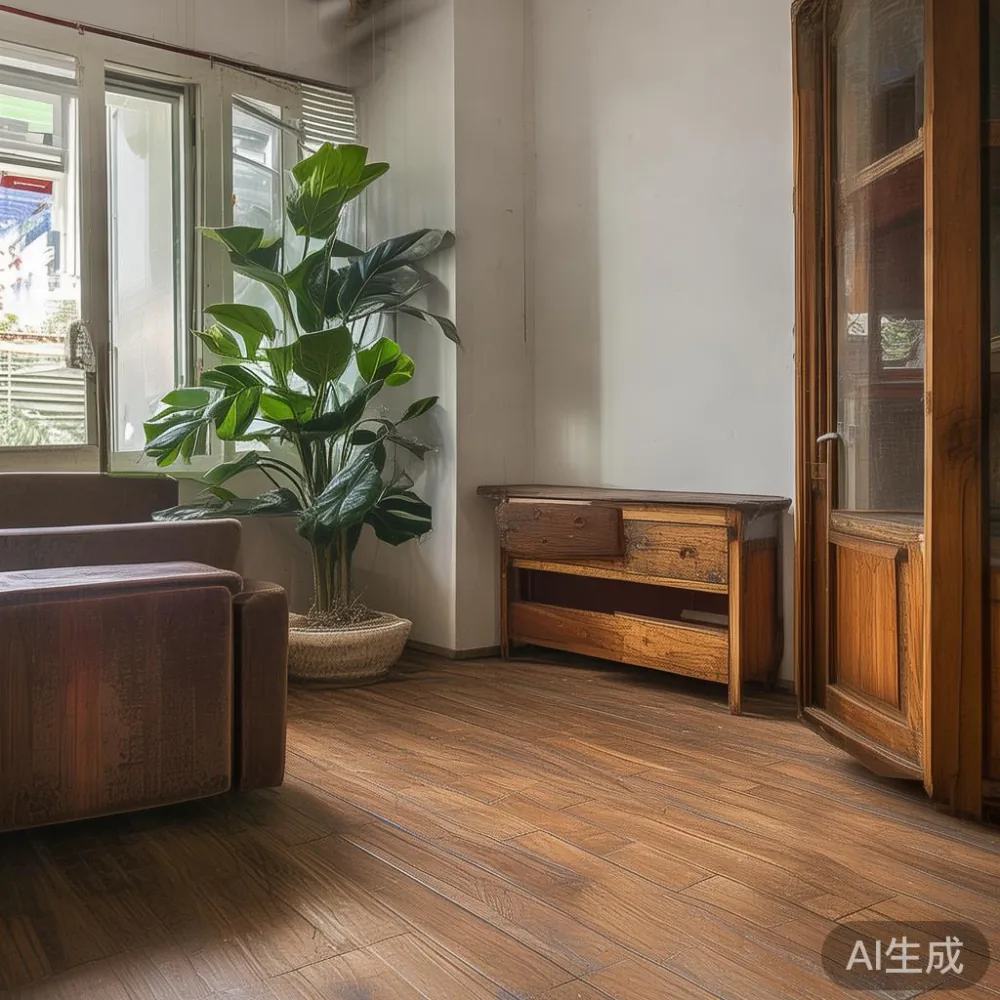
The risk is greater in a poorly ventilated HDB livingroom because warm air holds more moisture. It is also higher when furniture sits against an exterior wall, near a bathroom, beside an open balcony or directly beneath an air-conditioning vent. A marble table does not expand like timber, but its stone top, wooden base and metal fittings can respond differently to the same room. Likewise, upholstered components on a solid wood sofa can retain dampness around the frame even when the visible cushion feels dry.
Condensation is a separate concern. In a Bedok flat near the coast, a cabinet standing 5 cm from an air-conditioned wall may develop condensation if the surface temperature falls below the room’s dew point. In a Punggol HDB corridor, moving a wardrobe through a 90 cm wide common passage while protecting it from a downpour can add moisture before it reaches the unit.
Humidity does not automatically mean a solid wood piece has failed. Stable indoor conditions, protected placement and sensible care can reduce movement. The key is to treat furniture as part of the home’s environmental system rather than as an isolated object.
What relative humidity level should I keep in my HDB livingroom?
A useful target is 50–60% relative humidity, with temperature held near 23–27°C. This range reduces the amount of moisture wood exchanges while remaining practical for Singapore households. A digital hygrometer placed near the centre of the room and another near a frequently used wardrobe can reveal differences that a single reading misses. Check them at 8 a.m. and 9 p.m. over 7 days, especially during the northeast monsoon months from November to March.
A portable dehumidifier is useful in enclosed bedrooms and wardrobes. For example, a unit rated at 12 litres per day may maintain a moderate 45 m² bedroom, while a 20-litre model gives more capacity for a humid corner or continuously closed wardrobe. Place the appliance on a level surface, leave approximately 20–30 cm around the intake and outlet, and empty the tank before it stops operating. Clean the filter every 2–4 weeks during frequent use.
Air-conditioning helps because it cools the room and often removes moisture, but short cycling alone can cause daily wood movement. Running it for 8–12 hours with doors and windows closed gives the room more time to settle. Dry air can also be a problem: relative humidity below 40% may cause shrinkage, while constant air-conditioning may leave wood too dry for several hours and then too humid during breaks. In an HDB livingroom used by 3–5 residents, a hygrometer is a low-cost control measure compared with repairing swelling joints or replacing mould-affected panels.
Do not place a solid wood dining table immediately beside a window where rain-driven humidity can reach it. Maintain at least 30 cm from an open window or balcony door, and use curtains during heavy rain. For a bed frame against an exterior wall, leave a 5–10 cm ventilation gap where possible.
How do I move a solid wood wardrobe or dining table into a lift and corridor?
Access is part of humidity protection because a damaged seal or water-marked panel can introduce moisture before installation. Measure the lift door, lift car, landing and apartment doorway before ordering. In older HDB blocks, a lift opening may be only 80–90 cm wide and the car may be around 110–140 cm deep. Newer blocks and most private condos provide more generous access, but turning corners can still determine whether a tall wardrobe can be delivered assembled.
Ask for an unassembled or knock-down format where necessary. A dining table with legs and a top weighing 35–60 kg can usually be carried by 2 people safely with the top separated. A wardrobe may weigh 80–150 kg when assembled, making professional handling sensible. Confirm that MIDHILL’s delivery team can remove protective packaging, carry the furniture through the corridor and place it in the intended room. A delivery visit typically takes 45–90 minutes for a standard dining set or bed frame, depending on access and installation.
Singapore’s GST is normally 9% and is reflected in the final checkout price. Furniture orders of SGD 350 or more qualify for free shipping under MIDHILL’s stated delivery policy, while the 14-day return window allows an owner to assess the piece in the actual room. However, custom sizing and personalised finishes may carry different terms, so confirm these details before purchase.
Keep packaging dry during the move. If rain begins, cover the load with a waterproof sheet, stand panels upright where practical and dry any damp packaging before unpacking. Allow acclimatisation after arrival: leave the dining table, wardrobe or nightstand unwrapped in a ventilated room for 24–72 hours. This lets the timber adjust gradually to local humidity instead of being sealed while it releases factory moisture.
Which furniture finishes handle tropical humidity most effectively?
The finish protects the surface, but the underlying moisture management still matters. A water-based matte coating is generally easier to repair than a thick lacquer because small scratches can be feathered without rebuilding the whole panel. Pencil-thin lacquer may show moisture-related colour change more readily, while a hardwax oil offers a natural tactile finish but needs more frequent renewal if a surface is repeatedly exposed to water.
For a solid wood dining table used daily, wipe spills within 2–3 minutes and avoid standing glasses that leave rings overnight. Use a damp cloth followed by a dry cloth; do not soak the top. For a bed frame, check the headboard and lower edges every 3 months for lifting finish or trapped condensation. For a wardrobe, inspect the back panels and corners where wardrobe units meet external walls.
A marble table needs a different routine. Neutralise drinks such as red wine, juice or vinegar promptly, because acidic liquid can etch the stone. Wipe with a soft cloth and keep wooden supports away from damp mops. If the tabletop includes natural veins, this pattern is not a moisture defect; the finish should remain consistent along the edges.
Upholstery also benefits from deliberate ventilation. Vacuum a solid wood sofa every 2 weeks, lift seat cushions monthly and keep textiles at least 10 cm from a wall where cleaning is possible. If foam or fabric smells musty after rain, remove the loose covers and dry them fully before returning them.
Designers often search for options using phrases such as Italian light luxury with storage, but material performance should be checked beside appearance. A concealed drawer, lift-up bed base or side table can reduce visible clutter in an HDB livingroom without placing storage directly against a damp exterior wall.
How should I prevent mould and white spotting on a solid wood bed frame?
White spotting often comes from mineral residue as water evaporates, while black or green speckling needs closer attention because it may indicate mould. Clean a suspicious area with a lightly damp cloth and dry it immediately. Increase ventilation, reduce humidity and inspect nearby surfaces. Do not use bleach on an uncoated timber or unknown finish; it can discolour the wood and damage the protective layer.
Keep the bed frame 10–15 cm from the wall if space permits, particularly on an external wall. Avoid storing damp clothes or bedding under the bed. A moisture-absorbing tray can help in a confined area, but it must be replaced as it collects water. For a wardrobe, add a 1–2 cm gap from the wall and use moisture-absorbing pouches or a compact dehumidifier if the interior remains above 65% humidity.
Maintain the finish with care products recommended by the supplier and test them on a concealed area first. MIDHILL’s lifetime refinishing service can restore worn surfaces after years of tropical use, reducing the need to replace an entire solid wood bed frame when the structure remains sound.
How do I style an HDB livingroom with solid wood furniture without trapping humidity?
Light-luxury styling works well in HDB livingroom layouts because pale woods, balanced proportions and restrained detailing can make a 65–85 m² flat feel composed. French light luxury often introduces curved profiles, upholstered seating and a softer palette; American light luxury favours generous forms, darker woods and clear visual symmetry. Both approaches can suit Singapore apartments, provided pieces are sized to the room and airflow is not blocked.
For a compact living room, choose a solid wood sofa with a depth of around 90–100 cm, leaving 75–90 cm of clear circulation space. Keep the sofa 15–20 cm from the wall and avoid pushing its back and arms into a condensation-prone corner. A coffee table should sit about 40–45 cm from the seat, with 30–35 cm between the table edge and a walkway.
Wardrobes can be visually integrated without standing flush against a corridor wall. A low nightstand with a drawer, measuring roughly 45–55 cm wide, is useful beside a solid wood bed frame. For dining zones, a table around 140–180 cm long fits many HDB floor plans; chairs need approximately 60 cm of table edge space each, with 90 cm behind them where possible.
Anyone comparing how to choose American sofa for an apartment should check seat depth, frame material, cushion support and the clearance behind the piece. Those looking for a best Vintage sofa for 2026 should also consider humidity-resistant finish options and removable covers. Searches for how to style American wardrobe in apartment often focus on colour matching, but the practical priority is a 5 cm wall gap and unobstructed doors. A query about how to style French sofa in bedroom should include airflow around the base, while browsing top 10 Nordic furniture ideas can be adapted through pale oak, light ash and simple profiles suited to a bright tropical interior.
What should I do when a solid wood dining table shows swelling, gaps or sticking drawers?
Small movement often resolves when indoor humidity becomes stable. Measure the affected area with a metal rule, photograph the joint and record the room’s hygrometer reading. If the gap is less than 1–2 mm, maintain 50–60% humidity for 7–14 days before taking action. For a drawer that catches, identify the rubbing point, clean the runner and adjust it only within the manufacturer’s guidance.
Do not plane or sand a swollen tabletop immediately. Freshly planed wood can shrink later as humidity changes. Likewise, tightening every joint aggressively can create stress that becomes visible during the next seasonal cycle. The useful intervention is environmental control, followed by inspection after 48–72 hours.
Persistent movement, deep splits or failed joints warrant a professional assessment. Contact the supplier with clear photographs, dimensions and humidity records. MIDHILL’s structural warranty covers qualifying structural issues for 10 years, and the lifetime refinishing option can address surface wear. Keeping proof of purchase, delivery details and maintenance records makes any claim easier to assess.
How often should I maintain solid wood furniture in a humid climate?
A simple schedule prevents small changes from becoming damage. Check the hygrometer every morning for 1 week each month, especially during wet weather. Dust with a soft cloth every 2 weeks, clean finger marks promptly and inspect table edges, wardrobe corners and bed-frame joints every 3 months. Inspect beneath removable sofa cushions and inside closed wardrobes every 6 months.
Clean the air-conditioning filter every 4–6 weeks if it becomes dusty, and service the unit according to its manufacturer’s instructions. Keep room doors open across the flat when practical so moisture does not remain concentrated in one HDB bedroom. A room-level reading should ideally remain between 50% and 60%, while short local spikes are less concerning if furniture has good airflow.
Solid wood furniture suits Singapore life when selection, delivery and maintenance are handled as one connected process. Measure the lift before choosing an oversized wardrobe, allow a newly delivered dining table to acclimatise for up to 72 hours, protect the finish from standing water and control humidity before visible damage appears. With those habits, a solid wood sofa, bed frame, dining table, wardrobe, nightstand or marble table can retain its structure and appearance for many years of daily use.