Humidity, HDB Living Rooms, and Why Your Solid Wood Sofa Needs More Than a Throw Pillow
I still remember walking into a four-room flat in Tampines last month with my colleague, a wood-finishing supervisor who has spent sixteen years watching timber behave in equatorial weather. The owner had bought a solid wood sofa set from an online seller about eight months earlier. The armrest had bowed outward by roughly 4 mm, the drawer faces on the side cabinet had cupped inward, and a tiny line of mould was creeping along the back panel where it met the air-con vent. The flat's humidity was reading 82 percent at 10 a.m. The wood, simply put, was doing what wood does in Singapore. It was working.
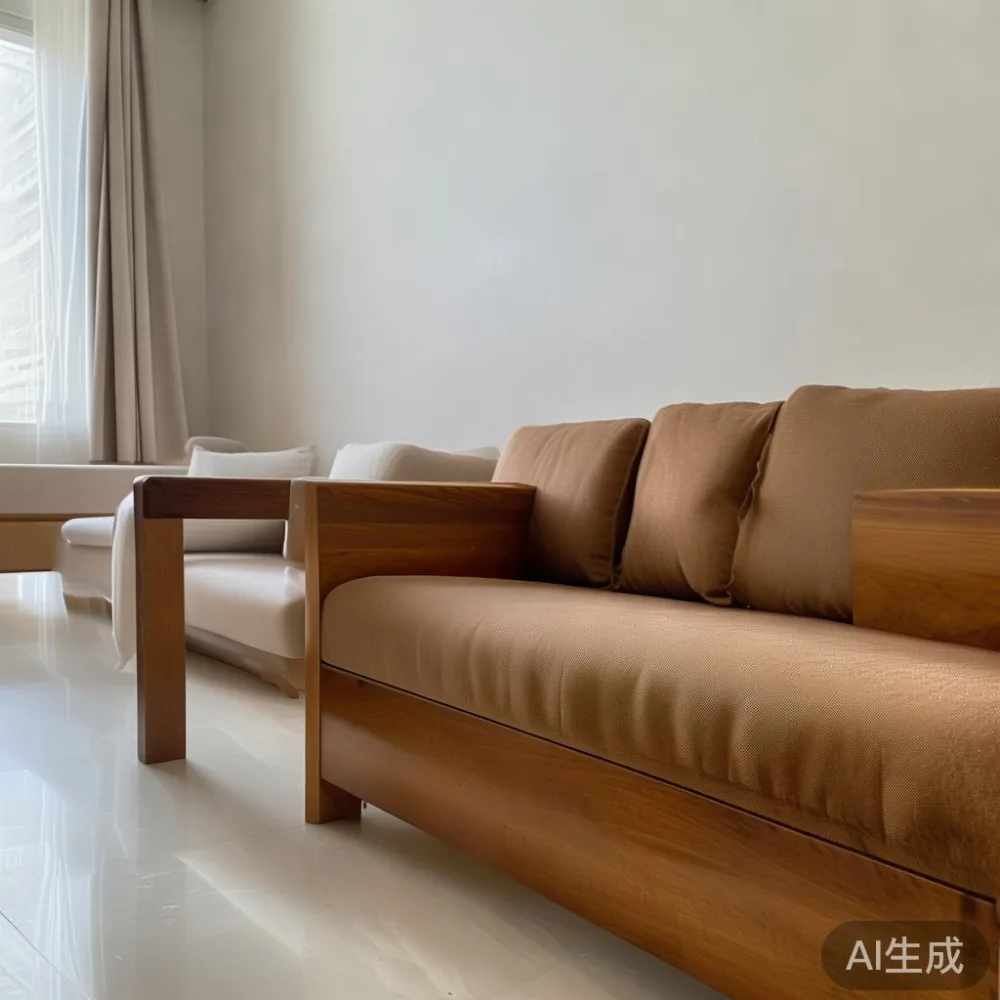
That visit started a longer conversation between us about how humidity shapes every piece in an hdb livingroom, from the dining table where you eat cai png to the bed frame you flop onto after a 12-hour shift. This is not a piece warning you away from solid wood. The opposite. Solid wood, finished correctly and matched to the right HDB layout, is one of the most forgiving materials you can buy for a tropical home. The trick is understanding what humidity actually does to timber, and what a Foshan-trained maker like MIDHILL does at the factory level to keep that timber calm once it lands in your living room in Bedok, Punggol, or Toa Payoh.
What does humidity actually do to a solid wood sofa in Singapore?
Think of wood as a stack of microscopic straws running along the grain. When the air around those straws is wet, the straws swell sideways; when the air dries, they shrink. Over a normal Singapore day, the relative humidity inside an air-conditioned hdb livingroom can swing from roughly 65 percent in the evening (windows closed, AC off) to about 40 percent at 2 a.m. (AC running at 23 degrees). That 25-point swing, day after day, is what makes an untreated solid wood sofa armrest creep outward by 3 to 5 mm every six months.
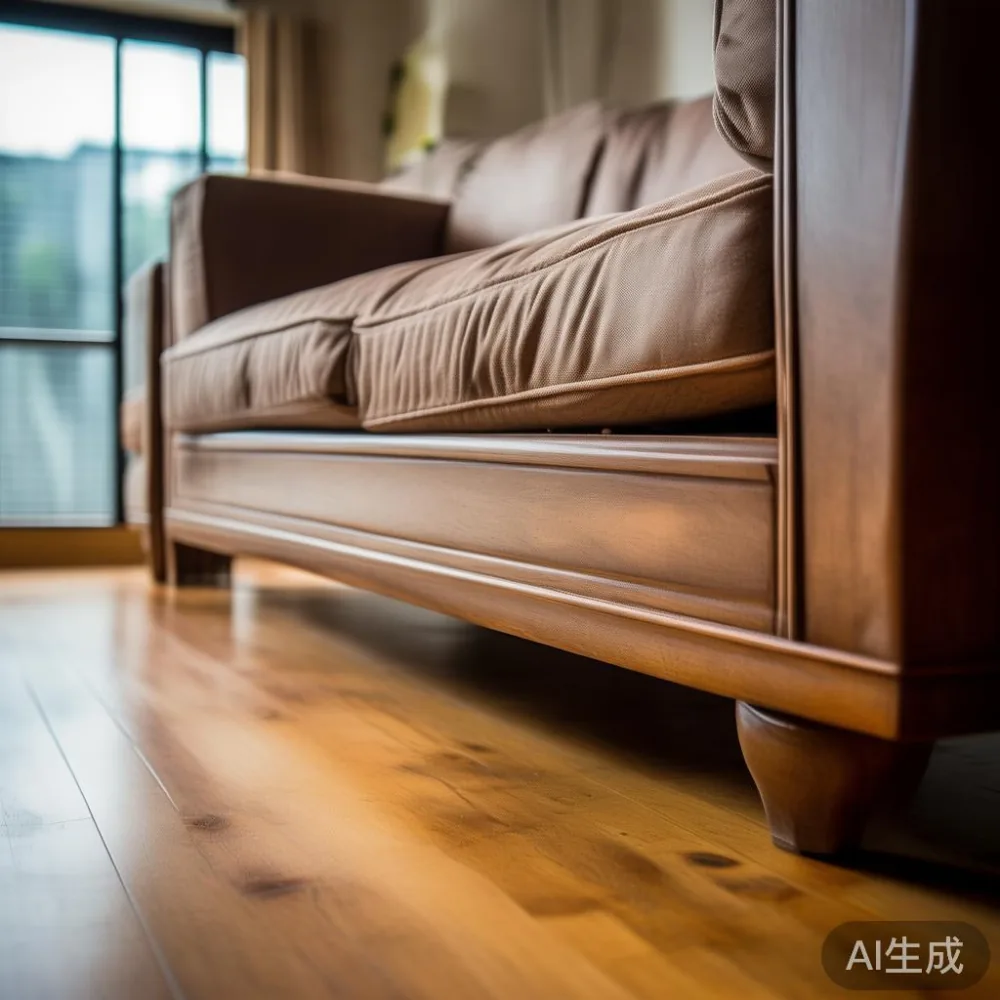
The most affected parts are always the largest flat surfaces and any joint that crosses the grain: the seat platform, the side panels of a wardrobe, the wide top of a dining table, the lid of a storage nightstand. End-grain cuts (the cut ends of boards) absorb and release moisture roughly ten times faster than long-grain faces, which is why you will sometimes see checking or hairline splits on the ends of a bed frame rail while the middle stays smooth. None of this means the piece is defective. It means the wood is alive.
How thick should the wood be, and how heavy should a real piece feel?
Last month I visited the MIDHILL showroom in Foshan and picked up the corner sample of an American light luxury dining table. The tabletop was 38 mm thick, the apron 28 mm, and the legs a hefty 70 mm square. The whole tabletop, 1.6 m long, weighed about 42 kg. That weight is your friend in the tropics. Heavier tops mean fewer micro-movements, fewer cupping events, and far less chance of the table "dancing" when you slide a chair across it. By contrast, the 18 mm plywood-and-veneer dining sets you see at S$299 on Carousell weigh under 15 kg for the same size. They feel light because they are light, and that lightness is exactly what humidity exploits.
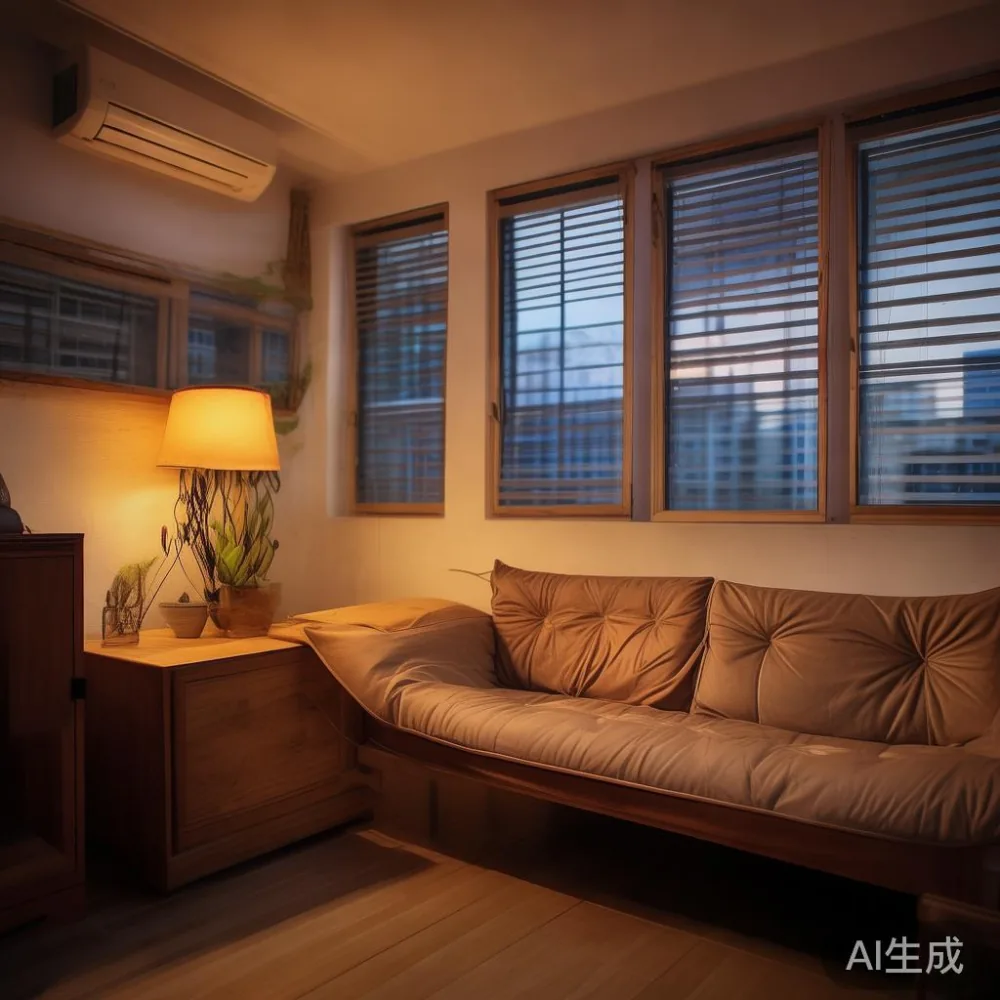
For an hdb livingroom, sensible benchmarks are: dining table top 30 mm to 40 mm solid wood, bed frame side rails 25 mm to 35 mm, wardrobe side panels 22 mm to 30 mm, nightstand top 18 mm to 25 mm. Marble tables, by the way, are a wonderful companion piece in a tropical hdb livingroom because marble does not move with humidity at all; a 120 cm round marble table weighing roughly 65 kg will sit next to your solid wood sofa and quietly balance its expansion-and-contraction story.
Will my HDB lift and corridor even let a real piece in?
This is the question almost nobody asks until the delivery truck arrives. A standard HDB lift door in a block like 138A Tampines Street 11 measures about 80 cm wide by 200 cm tall, and the cabin runs roughly 1.1 m deep by 1.4 m wide, with a 630 kg weight limit on the older models and around 850 kg on the newer ones. A king-size solid wood bed frame, fully assembled, will not fit. It simply will not. But a king-size frame that bolts together in the bedroom in three pieces, with the headboard under 90 cm wide and each side rail under 35 kg, will glide up the lift in two trips and down the corridor with 8 cm to spare on either side.
This is exactly why experienced makers like MIDHILL, shipping from Foshan since 2008 to more than fifteen countries, design their bigger pieces (wardrobes over 1.8 m, dining tables over 1.6 m, sectional sofa frames) to break down into flat-pack modules that a single delivery crew can reassemble in under 25 minutes. Always check the assembled dimensions, the package dimensions, and the number of cartons before you click pay. If the seller cannot give you all three in cm, walk away.
How do I style a assembly difficulty in a modern Singapore home?
The single best way to handle assembly difficulty in a modern Singapore home is to design your room around flat-pack modular joinery, so every large piece arrives in segments under 90 cm long and under 40 kg, slots through the HDB lift without tilting, and bolts together inside the bedroom or living room in under 30 minutes with one hex key.
Styling that choice well is mostly about matching the wood tone to your floor and your ceiling height, not about hiding the joints. In a 90 sqm HDB flat with a 2.8 m ceiling, a post-modern light luxury dining table in light oak pairs cleanly with off-white walls and a single pendant lamp; a French light luxury bed frame in walnut wants darker linen, a low rug, and warm 2700 K bedside lighting. Keep 80 cm to 100 cm of walking space around every major piece, and let the air-con airflow stay at least 30 cm away from the back of any wardrobe or solid wood sofa so humidity does not pool behind the wood.
How much should I budget in SGD for a tropical-ready set?
Realistic, in-factory Foshan pricing landed in Singapore, with GST and door delivery, for an hdb livingroom set looks like the following:
- Solid wood sofa (three-seater frame in ash or walnut): S$1,650 to S$2,400.
- Six-seater dining table with six chairs, 1.6 m to 1.8 m: S$2,100 to S$3,200.
- King-size bed frame with headboard: S$1,400 to S$2,150.
- Two-door wardrobe, 180 cm tall: S$1,800 to S$2,600.
- Pair of nightstands: S$520 to S$780.
- 120 cm round marble table: S$1,250 to S$1,950.
Add roughly 9 percent GST on the CIF value, plus S$120 to S$220 for a two-man HDB delivery with assembly, plus S$40 per floor if there is no lift access. Anything significantly under those numbers is either veneer, MDF, or rubberwood dressed up as solid hardwood, and it will not survive three equatorial wet seasons without cupping, mould, or joint failure. MIDHILL, for reference, prices right inside that band and backs the frames with a ten-year structural warranty, lifetime refinishing, free shipping above US$350, and a fourteen-day return window, which matters when you are buying a S$2,000 piece you cannot touch before it arrives.
What should I do in the first thirty days after delivery?
Days one through seven are the most important. Keep the air-con running between 23 and 25 degrees for the first full week, ideally overnight. Do not place the solid wood sofa or the bed frame directly against the wall; leave a 3 cm to 5 cm gap behind it so air can move and so the back panel does not trap moisture. Wipe every surface once with a barely damp microfibre cloth, then a dry one. Avoid the Facebook "olive oil and vinegar" tricks; in 80 percent humidity they feed the mould you are trying to prevent.
Days eight through thirty, run a small dehumidifier in the hdb livingroom set to 55 percent RH. Set it on a timer so it cycles two hours on, two hours off through the night. Place it roughly 1.5 m from any large timber piece so the airflow is gentle. If you own a wardrobe, leave both doors open for 30 minutes each morning while you boil water for coffee; the steam and the open doors together stabilise the interior humidity. These habits cost about S$6 to S$10 a month in electricity and add roughly five years to the life of a well-finished solid wood piece.
Which finishes actually survive a tropical hdb livingroom?
Not all finishes are equal in this climate. Conversion varnishes and high-quality water-based polyurethanes (two-part, not single-part) form a film that breathes slightly and resists moisture migration far better than the wax-oil finishes you see on Scandinavian pieces. Wax-oil finishes are beautiful in a 50 percent RH climate; in Singapore, they need re-coating every six to nine months or the wood will grey and check.
For a dining table, ask whether the top has been sealed on the underside as well as the top. Unsealed undersides absorb moisture from below (especially over a wet-mopped floor) and cause the top to cup upward, a phenomenon you will recognise the first time you set a glass of water and it gently rolls to the centre. Good makers seal all six sides. For a wardrobe or bathroom-adjacent nightstand, ask whether the backing is a solid wood panel or a thin plywood sheet; solid back panels resist racking and humidity creep far better.
Are there quick fixes for furniture that has already moved?
Yes, and most are cheaper than replacement. Cupping on a dining table top under 3 mm across a 1.6 m span usually relaxes back over two to three weeks once humidity stabilises. Hairline checks on the ends of bed frame rails can be filled with a matching coloured wax stick (S$9 to S$16) and sealed. Sticky drawers on a wardrobe are almost always humidity swelling; pull the drawer out, plane 0.5 mm off the bottom edge with a hand plane, and rub a candle stub along the runners. Do not, under any circumstance, sand and re-finish a moving piece while it is still moving; you will sand it flat and then it will cup back the other way within a month.
For mould spots on a solid wood sofa back panel, wipe with a cloth dampened in 1 part white vinegar to 4 parts water, dry immediately, then run the dehumidifier for 48 hours. If the mould returns within a week, the issue is behind the panel, not on it, and you should call the maker. A reputable maker like MIDHILL will offer lifetime refinishing on frames bought through them, and that kind of aftercare is the difference between a piece that lasts eight years and one that lasts thirty.
What about the wider Southeast Asian picture, and how does it compare?
Singapore sits at the moderate end of Southeast Asia's humidity curve. Kuala Lumpur averages 80 percent RH year-round, Jakarta 82 percent, Ho Chi Minh City 78 percent, and Bangkok 73 percent. Coastal condos in the east of Singapore (Pasir Ris, Loyang) tend to run 5 to 8 percent higher than inland HDB blocks in Punggol or Sengkang because of the sea breeze carrying salt and water vapour. Inland, on higher floors above the 12th, the relative humidity inside an air-conditioned hdb livingroom can drop to 35 percent on a dry February afternoon, which is its own problem: timber that swings from 80 percent to 35 percent develops deeper, wider checks than timber that swings gently between 55 and 70.
The international furniture trade knows this. Pieces designed for the Gulf, where summer humidity sits at 25 to 35 percent but air-conditioning pushes interiors to 18 to 22 percent, are built for very different movement than pieces designed for Singapore. A buyer who imports a piece marketed as American small space uae and drops it straight into a Tampines flat without re-acclimatising the wood is asking for 3 to 6 mm of movement in every panel within the first month. The fix is simple: leave the piece in its packaging for five to seven days inside the air-conditioned room, open the cartons on day three to let air start circulating, and only unbox fully on day seven.
How long should a well-made solid wood set actually last here?
With sensible care, a solid wood sofa frame, a dining table, a bed frame, a wardrobe, and a pair of nightstands from a maker that kiln-dries to 8 to 10 percent moisture content and seals all six sides will easily give you 20 to 30 years of daily service in a Singapore hdb livingroom. The finish will need refreshing around year eight to twelve (S$280 to S$450 per piece for a sand-and-recoat), the upholstery on the sofa will want re-tying or replacement around year ten, and the marble table will outlast everything in the room and probably the next room as well.
If you keep the humidity between 50 and 60 percent RH, keep the pieces out of direct afternoon sun (use a 3 percent UV sheers on the window, not full blackout curtains that trap moisture), and address small movements early, you will hand these pieces to your children. That is the quiet promise of solid wood in the tropics. It does not stay still. It works, season after season, holding your books, your cai fan containers, your laptops, and your Sunday afternoon naps, and it asks for very little in return beyond a stable room and a sensible cloth now and then.