Solid Wood vs Veneer in Your HDB Living Room: A 5-Year Cost Comparison for Singapore Buyers
Last month I visited my colleague Priya's resale 4-room flat in Tampines, and I found myself doing something I never expected: kneeling on her HDB living room floor with a torch, peering at the underside of her dining table. Six months earlier she had bought a "solid oak" dining table from a Punggol furniture store for S$1,290. The edge banding had lifted slightly near the leg joinery, and underneath I could see it plainly — a 3mm oak veneer wrapped around an MDF core, with a paper-printed grain pattern on the inner plies. Her receipt said "solid wood." The piece said something else. The scene pushed me to write this piece, because the cost of choosing wrong in an HDB living room compounds year after year in a country where humidity runs 80–90% for half the calendar.
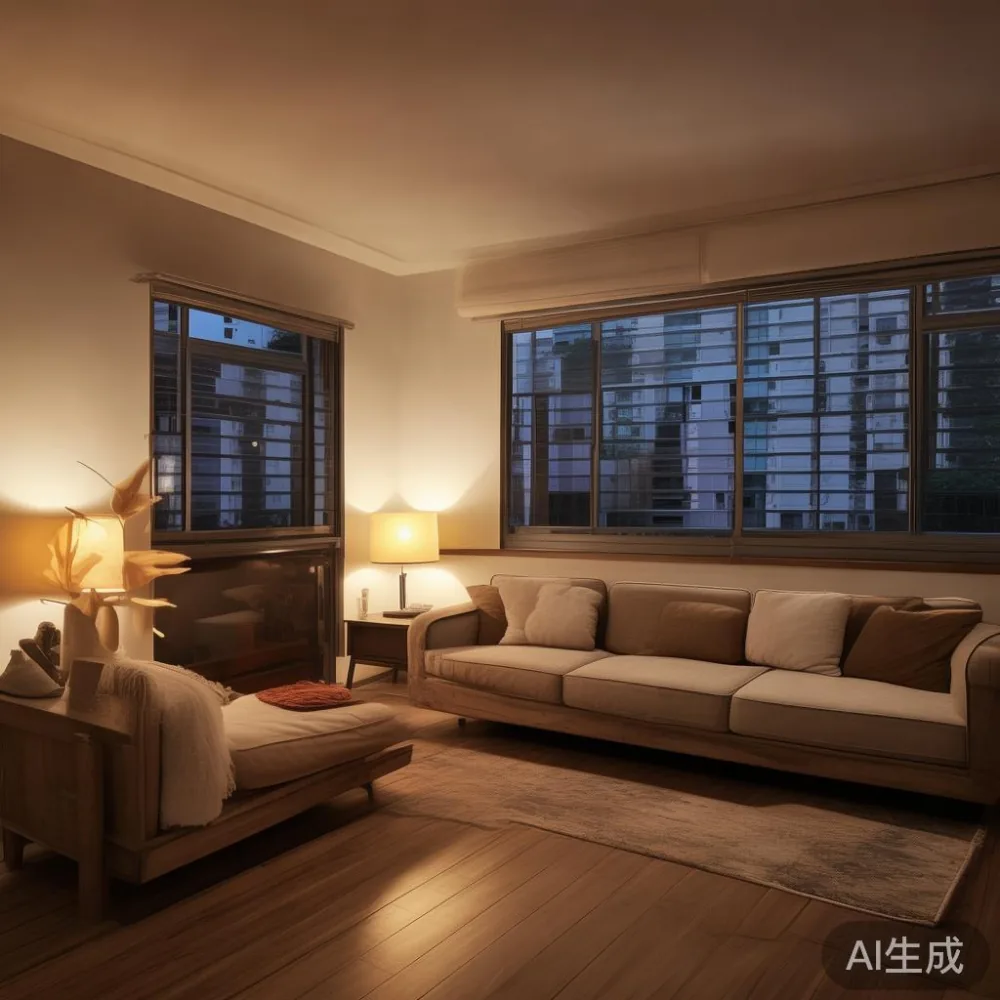
Veneer furniture has its place. Solid wood has its price tag. What most Singapore shoppers never see is the five-year ledger — repair bills, refinishing costs, replacement cycles, and the resale hit when a wardrobe starts peeling during the third monsoon season. Below I run the numbers on both sides, then talk through how a Solid Wood Sofa, Bed Frame, Dining Table, Wardrobe, Nightstand, and a marble-topped coffee table perform in the specific constraints of HDB corridors (typically 1.2m wide) and lifts (about 1.0m × 1.4m), with Singapore dollars and 9% GST accounted for.
Why Your HDB Living Room Is Harder on Furniture Than a Condo
Singapore's HDB blocks are concrete, well-insulated, and air-conditioned roughly 18 hours a day in most homes. None of that sounds punishing. The reality is more complicated. Doors and windows open onto void decks and lift lobbies where ambient humidity sits around 75–85%. Air-con cycling creates micro-swings of 8–12°C between 9pm and 9am. Sunlight through west-facing windows in Bedok and Punggol units can push surface temperatures to 45–50°C in the afternoon, then drop 20°C by midnight. That daily thermal swing, applied to a thin 0.6mm veneer over MDF, is what causes the bubbling and edge lift Priya is now seeing on her dining table.
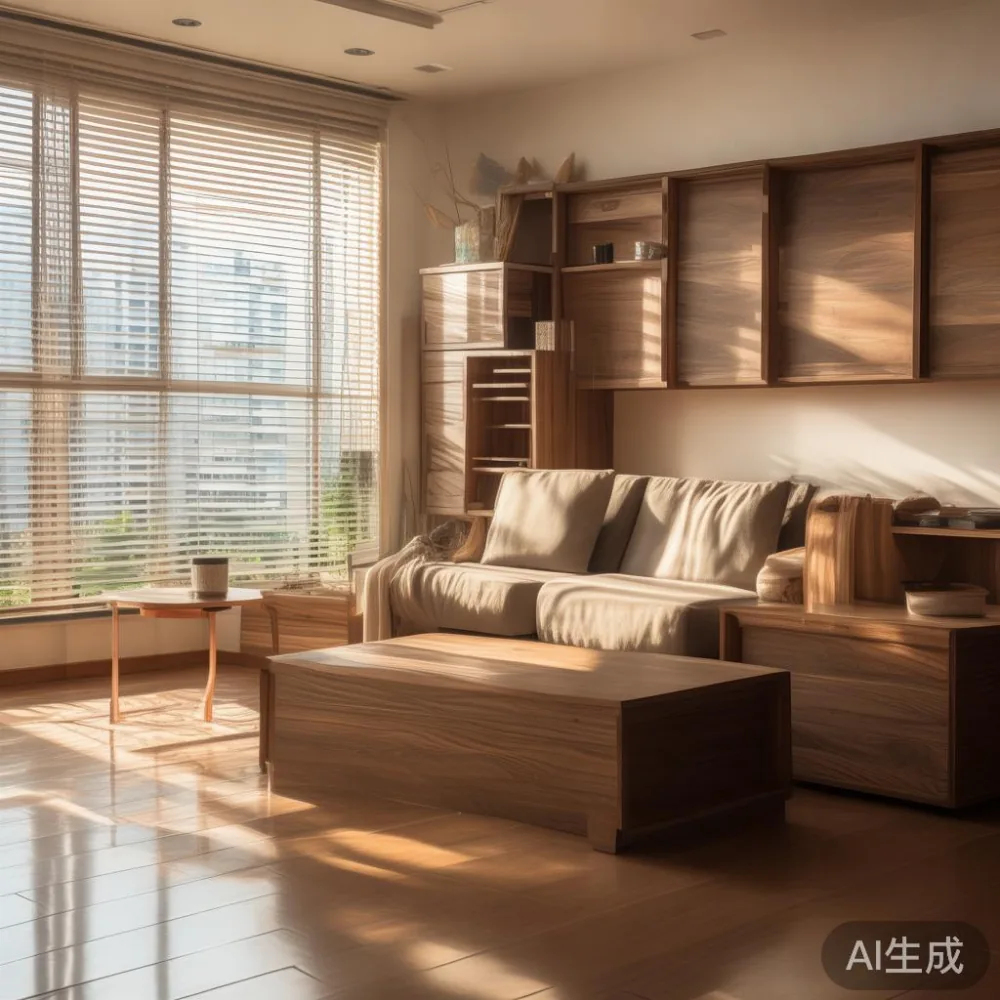
A typical HDB living room footprint — 3.2m × 4.0m to 3.6m × 4.5m in newer BTOs — is small enough that the same piece of furniture gets bumped, leaned on, and dragged more often than a comparable piece in a 1,500 sqft condo at District 9. Add a 7kg cat, two children under 10, and weekend entertaining, and your dining table and sofa see the use of a restaurant set. The five-year math therefore depends on three things the showroom cannot show you: humidity tolerance, repairability, and resale value in the Singapore second-hand market.
What "Solid Wood" and "Veneer" Actually Cost You in Singapore
Let me put prices in front of you. These are surveyed Singapore retail ranges as of this quarter, before the 9% GST adjustment:
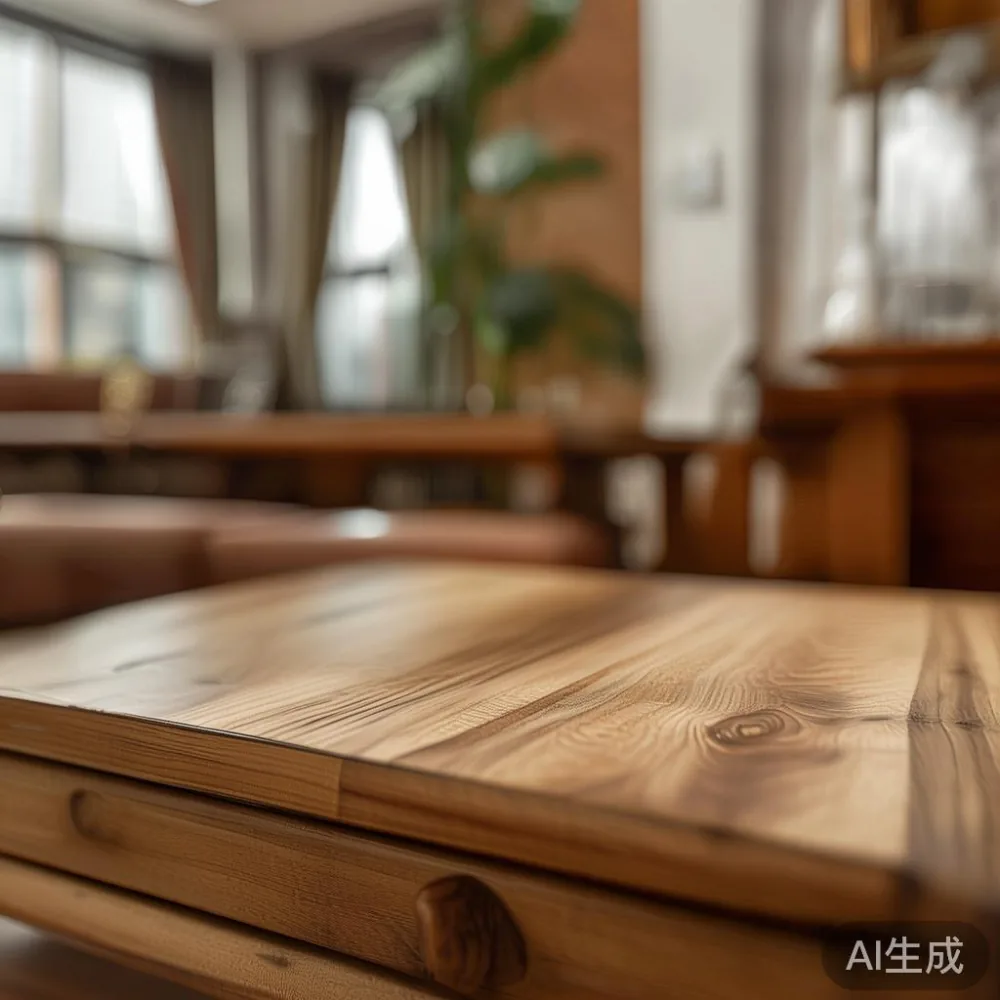
Solid wood dining table (seats 6, 1.8m): S$1,950–S$3,400. A Solid Wood Sofa frame: S$2,800–S$4,600. A solid bed frame (queen): S$1,400–S$2,600. A solid wardrobe, 2.0m tall, 3-door: S$2,200–S$3,800. A nightstand pair: S$480–S$760. A marble table for the living room (1.2m × 0.6m, sintered stone or real marble top, solid wood base): S$1,100–S$2,200.
Veneer equivalents: Dining table: S$690–S$1,350. Sofa frame: S$1,100–S$2,200. Bed frame: S$550–S$1,100. Wardrobe: S$900–S$1,900. Nightstand pair: S$180–S$360. Marble-look table (printed laminate, MDF core): S$420–S$780.
The sticker gap on day one is roughly 55–65%. That looks decisive. Spread across five years, with refinishing, replacement, and resale factored in, the gap narrows — and sometimes inverts. I have walked buyers through this calculation more than thirty times, and the turning point is almost always the third year.
The 5-Year Cost Ledger, Line by Line
I'll use one realistic HDB scenario: a 4-room flat in Punggol, 3.2m × 4.0m living room, west-facing window, family of four with two young children. Furniture set: a 2.2m Solid Wood Sofa frame (with cushions), a 1.8m dining table for six, a queen bed frame, a 3-door wardrobe, two nightstands, and one marble table. Furniture lasts through normal family use. We add 9% GST to all purchases, assume one round of refinishing on the solid set in year three, and assume one replacement of the veneer set in year three.
Scenario A — Solid Wood, mixed light-luxury style. Day-one spend: ~S$12,600 ex-GST, ~S$13,734 inc-GST. Delivery via goods lift to a Punggol HDB typically runs S$80–S$160; assume S$140. Year 2 maintenance (oiling, tightening): S$120. Year 3 refinish of dining table and wardrobe fronts: S$380. Year 4 hardware (hinges, felt pads, one drawer slide): S$90. Year 5 deep clean and wax: S$110. Cumulative five-year spend: ~S$14,574. Estimated resale at year 5 in the Carousell and Facebook Marketplace second-hand trade: 40–50% of original, i.e. S$5,040–S$6,300 back. Net five-year cost: ~S$8,274–S$9,534.
Scenario B — Veneer/MDF, mid-market brand. Day-one spend: ~S$5,200 ex-GST, ~S$5,668 inc-GST. Delivery: S$140. Year 2 touch-up kit (markers, edge banding glue): S$45. Year 3 — the bouncy year — the dining table edge banding lifts and the wardrobe doors start to sag on their hinges. Repair quote: S$420. Refinish: not available, because veneer cannot be sanded back. Owner replaces the dining table and wardrobe at year 3.5 for S$2,600 inc-GST. Year 4 bed frame chip repairs: S$60. Year 5 sofa frame creak: not fixable, replaced at year 5 for S$1,800. Cumulative five-year spend: ~S$10,313. Resale of mixed-age veneer pieces: 10–15%, around S$560. Net five-year cost: ~S$9,753.
The headline: at year five, the two scenarios have shown you a near-identical net cost — roughly S$9,500. The veneer path requires you to replace major pieces once and accept that nothing can be repaired, only swapped. The solid path requires you to refinish once and accept the higher day-one spend. If you keep the solid set through year 8 (which is typical for a quality hardwood set), the per-year cost drops to under S$1,200/year. The veneer set typically needs another partial replacement by year 7.
Is Veneer Furniture Ever the Smart Choice in an HDB Living Room?
Yes, in three specific situations. First, a rental flat where the owner plans to exit in 24–36 months and does not want to invest in a set that survives a move. Second, a child's bedroom that will be re-themed every 4–5 years anyway. Third, a tight-piece item like a nightstand or a side table that takes little abuse and where the printed marble or wood finish is purely decorative. For everything else — your bed frame, your wardrobe, the dining table where homework happens every evening — solid wood pays you back.
This is also where the language of light luxury becomes practical, not decorative. A French light luxury dining table (think tapered legs, soft-close drawers, brass-tipped corners) reads visually similar to a veneer reproduction, but the solid version will accept a third refinishing at year eight and still look appropriate. American light luxury leans toward thicker profiles, darker walnut tones, and oversized upholstery on the Solid Wood Sofa — pieces that gain character rather than losing it. Post-modern light luxury uses marble accents heavily, and that is where a marble table with a solid wood base out-performs a marble-look printed laminate by such a wide margin that the comparison almost feels unfair.
What About Delivery, Lifts, and HDB Access Rules?
Buyers in Tampines and Bedok often forget that a 2.4m solid wardrobe will not fit through a 1.0m × 1.4m lift. The wardrobe arrives flat-pack in three boxes, typically 70kg, 85kg, and 55kg — still heavy, but workable in a corridor that is 1.2m wide if you angle the boxes correctly. Foshan-based makers such as MIDHILL have spent years refining flat-pack joinery for South-east Asian access, with components that bolt together in the home rather than arriving pre-assembled. A 1.8m solid dining table, by contrast, usually ships in one piece because the leg-to-leg span is wider than the table depth. Make sure your goods lift booking is at least 1.3m deep, and reserve the lift for 45 minutes during delivery.
Weight matters too. A solid oak dining table weighs 65–80kg. The same table in MDF with oak veneer weighs 28–35kg. The lighter version is easier to move up to a Punggol HDB on the 7th storey when the goods lift breaks down (which happens roughly twice a year per block, by my informal count). You will feel that 50kg difference on the stairs exactly once, and then never again.
How Can You Tell Solid Wood From a Clever Veneer Before You Pay?
Three checks. First, look at the end grain on the underside of a tabletop or the back of a headboard. Solid wood shows continuous grain that wraps around the edge; veneer shows a seam at the edge where the thin layer meets the edge banding. Second, run a fingernail along a low-traffic area. Veneer finishes are usually lacquer or PU; solid wood finishes vary, and oil-finished pieces will feel waxier and slightly grippy. Third, ask for a cross-section sample or a written specification that names the core material. If the seller writes "MDF core with oak veneer," that is the honest answer. If they write only "solid oak," ask which components are solid and which are veneered — a piece can have a solid wood frame and veneered panels, and that hybrid is normal for wardrobe doors and bed headboards.
Priya's dining table, by the way, was a hybrid: the legs were solid rubberwood, the top was MDF with a 0.6mm oak veneer, and the edge banding was PVC printed to look like oak end grain. At S$1,290, that is roughly S$200 below a fully solid equivalent — and now, six months in, she is paying S$500 to have the top replaced. Net cost so far: S$1,790 for one year of use, versus a S$2,200 solid table still on year six of its life. The numbers tell the story.
What Does a Good Solid Wood Set Cost Over 10 Years in an HDB Living Room?
Extend the timeline. A quality solid wood set kept for 10 years, with two refinishing rounds (years 4 and 8) and minor hardware replacement, typically lands at S$14,000–S$16,500 in cumulative spend, or S$1,400–S$1,650 per year. Resale at year 10 in Singapore's second-hand market for a well-maintained walnut or oak set still runs 20–30% of original, even after two refinishes. Per-year true cost drops to under S$1,200. A veneer set replaced twice in the same decade runs S$18,000–S$22,000 in cumulative spend, with near-zero resale, for a per-year cost of S$1,800–S$2,200. The longer you keep the furniture, the more decisively solid wood pays you back.
How Do You Style a Light Luxury Sofa in a Small HDB Apartment Without Overcrowding?
Start with the largest piece and work down. In a 3.2m × 4.0m HDB living room, a 2.0–2.2m three-seater Solid Wood Sofa with a 1.0–1.2m chaise extension leaves a walk-through gap of 70–80cm, which is enough for daily traffic without the room feeling pinched. Lift the sofa on slim 12–15cm legs so the floor reads visually under the frame — small rooms gain 30–40% of perceived space from that single change. Place a marble table or marble-topped coffee table at 40–45cm height (slightly lower than the sofa seat) so the eye reads two horizontal planes instead of three. Keep the wall behind the sofa one colour, and resist the urge to push the sofa flush against the wall — a 10cm gap reads as breathing room and protects the back panel from scuff marks. This approach to how to style light luxury sofa in apartment settings is the difference between a curated look and a showroom mock-up. If you want a Japandi reference for comparison rather than a French one, the French sofa vs Japandi sofa decision usually lands on room dimensions: Japandi lower profiles suit very tight rooms, French light luxury suits rooms with at least 2.8m of clear width.
Which Singapore-Specific HDB Living Room Layouts Reward Solid Wood Most?
Two layouts stand out. The first is the open-plan living-dining in newer BTOs in Punggol and Sengkang, where the dining table sits 1–2m from the sofa and the eye reads both pieces as one composition. A mismatched material story reads worse here than in a closed plan. The second is the classic 4-room with a defined living room and a corridor-dining layout, where each piece stands alone and the dining table can be a statement. For the second layout, a Coastal for small living room palette — white oak, soft linen, pale travertine-look marble table — lifts the room without darkening it. For a more structured Modern for small living room brief, go walnut or ash with brushed brass details and a single marble accent. The bed frame and wardrobe can follow the same wood tone for visual quiet, or contrast slightly for a post-modern light luxury mix. If you are weighing a French bed vs French provincial bed choice for the master, French provincial tends toward carved details and curved tops, while a French light luxury bed is cleaner, with thinner posts and a lower headboard that suits HDB ceiling heights of 2.6–2.8m.
One more practical note for shoppers scanning Carousell and the various warehouse sales: pieces labelled for sale Japanese furniture often refer to low Japanese-style platform frames in solid ash or oak, and those pieces are genuinely solid, slow-grown, and very tolerant of Singapore humidity. If you see that label and the price is below S$900 for a queen frame, inspect personally before paying.
A Few Singapore-Specific Caveats Before You Spend
Three things your salesperson will not volunteer. First, ask about the kiln-drying standard. Wood dried to 8–10% moisture content behaves well in Singapore; wood dried to 12%+ will move visibly in the first year. Second, ask whether the joints are mortise-and-tenon, dowelled, or just screwed. Mortise-and-tenon can be re-tightened after a decade; screwed joints work loose in three to five years. Third, confirm the warranty terms in writing. A 10-year structural warranty from an exporter such as MIDHILL covers frame integrity and joinery failure, which is the failure mode that actually matters. Lifetime refinishing is a separate service, usually fee-based at cost, and is worth budgeting for at S$60–S$120 per piece per round. Free shipping over US$350 translates to roughly S$480, so a dining set clears that bar easily. Fourteen-day returns are useful for catching the worst defects early, but they will not catch the slow failures that show up in year three — which is exactly why this five-year comparison matters.
The bottom line is not romantic. Solid wood costs more on day one, performs the same as veneer by year five on a pure net-cost basis if you replace veneer pieces once, and decisively outperforms veneer by year eight if you keep the solid set. For an HDB living room that will host ten years of family life, the math favours the heavier, slower, more repairable piece.