How Humidity in Southeast Asia Affects Wood Furniture in Your HDB Living Room
My colleague in Tampines bought a beautiful solid oak dining table two years ago. By last month, the top had cupped 3 mm along one edge and a hairline crack ran across the breadboard end. He lives on the 12th floor of an HDB block roughly 800 m from the Straits of Johor. He had done nothing wrong with the table. He had simply put solid wood into one of the most humid indoor climates a homeowner will encounter anywhere in the world, and he had not accounted for it. His experience is the starting point for this guide.
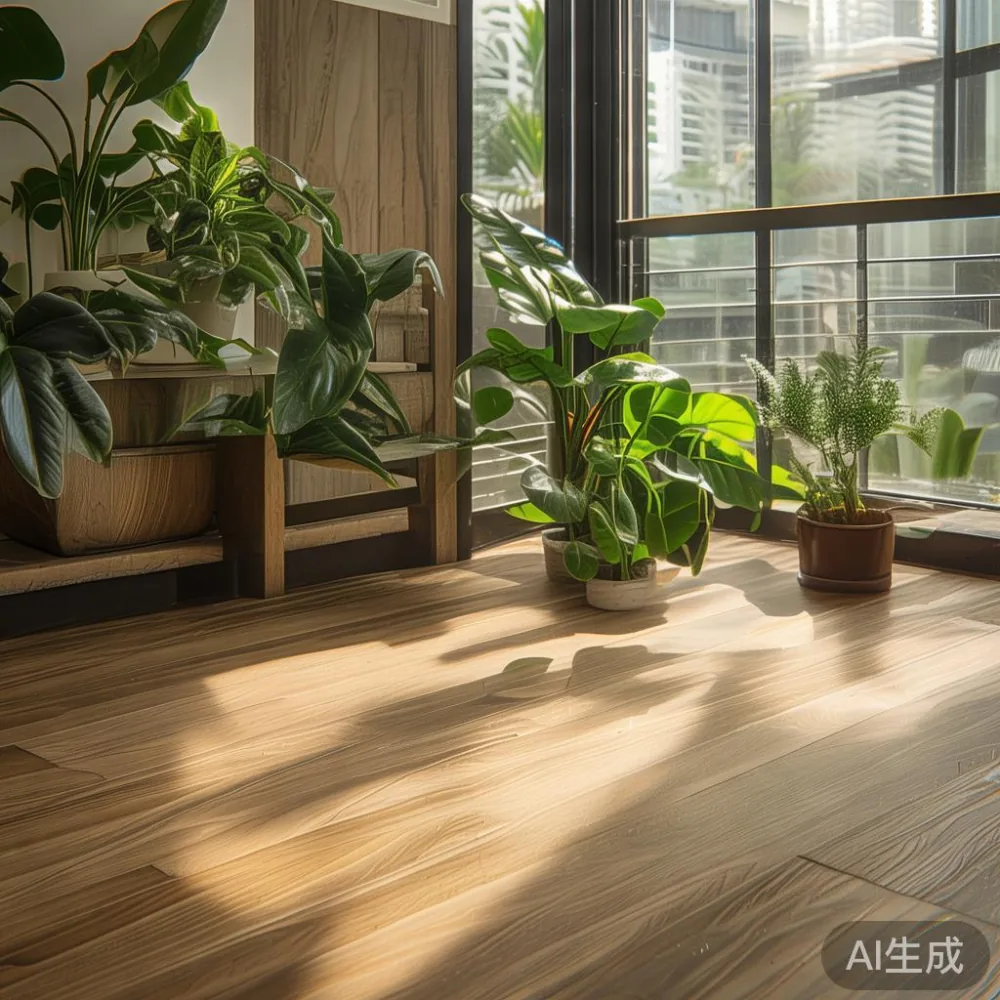
Singapore sits in a belt where the average year-round relative humidity hovers between 78% and 86%. Indoor RH in a typical non-aircon Tampines or Bedok flat settles between 65% and 80% once you factor in cooking steam, laundry drying on racks, and the body humidity of four sleeping people in a 95 sqm unit. Solid wood furniture is hygroscopic: it absorbs and releases moisture until it reaches equilibrium with its surroundings. When the surrounding humidity shifts, the wood shifts with it. Understanding that single fact solves 80% of the problems people blame on the furniture itself.
Why does Singapore's humidity cause solid wood to move, crack, and stick?
Solid wood moves along three measurable axes: tangentially (across the grain, the direction that moves most), radially (along the growth rings, about half as much), and longitudinally (along the length, so little it is usually ignored). A 200 cm long solid wood dining table top made from a single slab can change width by 6 to 10 mm between Singapore's dry season (February, sometimes 55% indoor RH) and wet season (December, often 85% indoor RH). That is not a defect. That is wood doing what wood does. The defect is buying a table with breadboard ends that are glued rather than pinned, or a wardrobe with a fixed back panel screwed into a solid side, and then watching the back panel buckle when the side tries to grow.
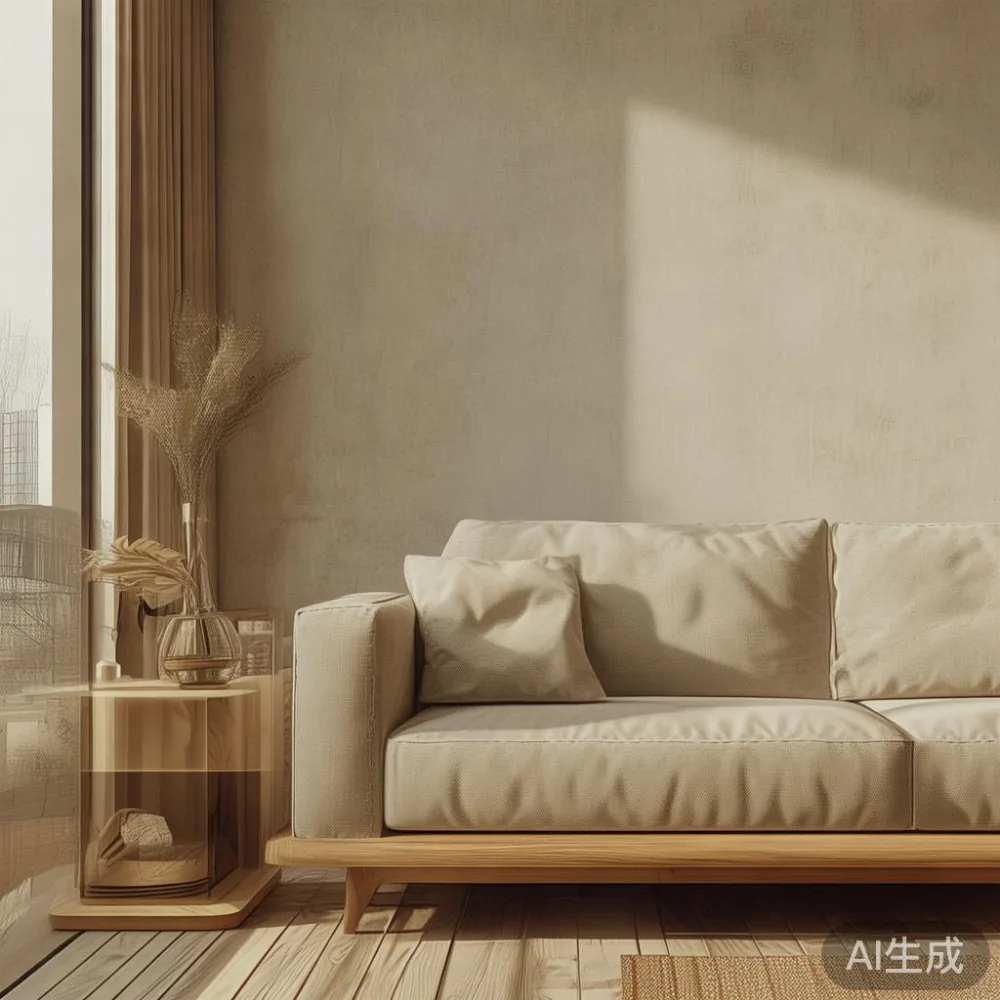
The wood species used in HDB-grade furniture behave differently. Rubberwood, the most common in mid-priced pieces sold across Southeast Asia, moves about 4.2% tangentially and 2.6% radially. White oak, popular in American light luxury solid wood sofa frames and dining tables, moves 4.4% and 2.2%. Teak, the traditional choice for chests and wardrobes, moves 2.5% and 1.5% — roughly half the movement of rubberwood for the same humidity swing. That is why a 180 cm teak coffee table tolerates a Bedok corridor delivery far better than a 180 cm rubberwood one once the air-conditioning cycles off overnight.
What humidity level should I keep my HDB living room at to protect wood furniture?
Target 55% relative humidity, plus or minus 5%. That range keeps solid wood within roughly 1.5% of its manufactured moisture content, which is the band furniture makers kiln-dry to before assembly. Below 45%, you invite shrinkage cracks along the grain and joints that loosen at the corners of bed frames and wardrobes. Above 65% on a sustained basis, you invite swelling, musty smells in the back of cabinets, and the kind of fungal staining that no amount of coasters will prevent.
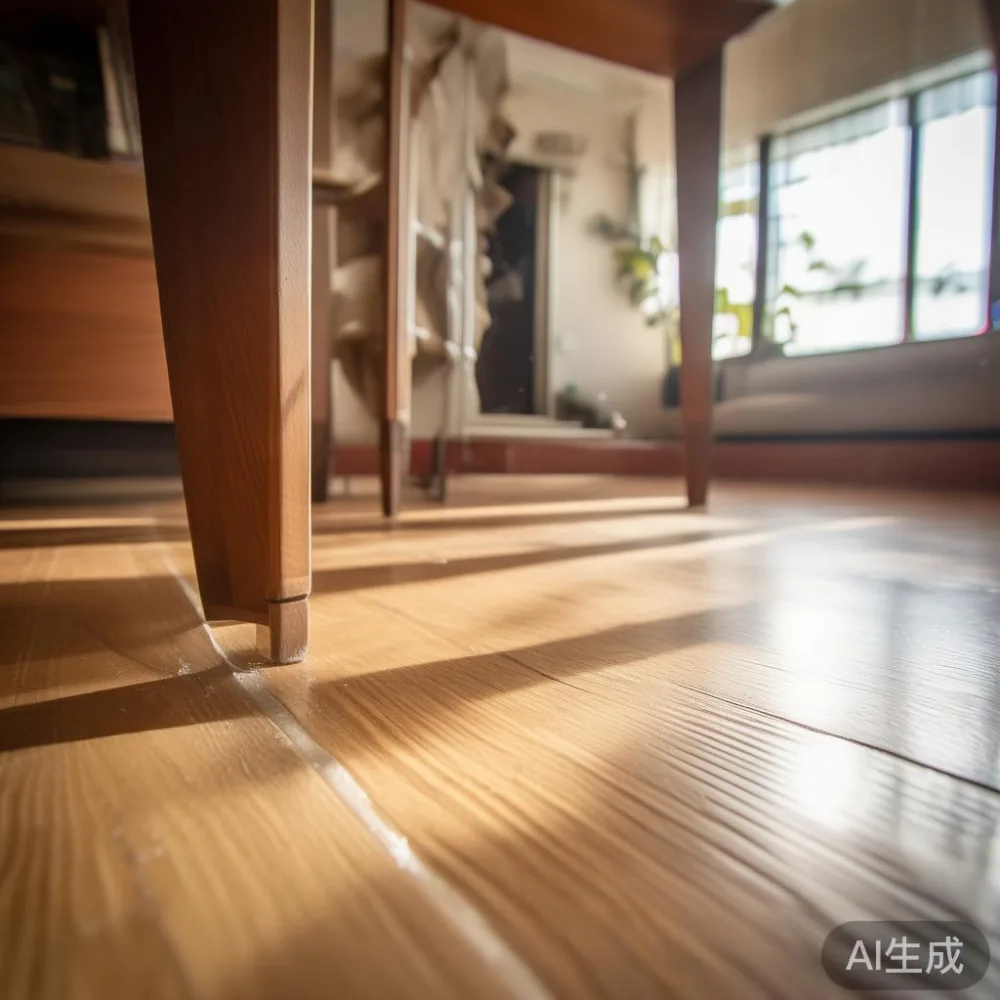
A calibrated digital hygrometer costs SGD 18 to SGD 35 at any Tiong Bahru or Vivo shop, and one placed on a bookshelf near your solid wood dining table will tell you more in a week than any warranty card. If your flat routinely reads above 70%, run the aircon longer, add a small dehumidifier rated at 8 to 12 L/day for a 100 sqm HDB living room, and never point a fan directly at an exposed wood surface, because surface drying causes one face to shrink faster than the other and the panel cups.
How do I choose a rattan furniture for a study?
Choose a rattan piece with a kiln-dried hardwood inner frame, a moisture content below 12%, and a woven skin that flexes under your thumb rather than cracking. Rattan is a vine, not a solid wood, so the rules are inverted: it wants humidity above 50% to stay supple, hates direct sun that dries the outer skin to brittleness, and needs at least 10 cm clearance from the wall so air can circulate behind the panel. For a study in a Punggol HDB where the window faces west, pick a piece with a removable cushion cover so you can rotate the cushion weekly and even out UV exposure on the frame.
When you are evaluating any rattan study piece in a Jurong or Tai Seng showroom, press the woven skin with your thumbnail. A healthy piece will dimple and recover; a dry, brittle one will flake. Ask the seller for the inner-frame species — ash, mahogany, or rubberwood are all acceptable — and the kiln-dried percentage. Anything above 14% moisture content in the frame is asking for trouble within a Singapore year.
Will my HDB lift and corridor fit a solid wood sofa or bed frame I order online?
Measure first, order second. Standard HDB passenger lifts in blocks built after 2000 measure 1.1 m wide by 1.4 m deep with a 630 kg load rating; older blocks lift closer to 1.0 m by 1.3 m. Service lifts in newer condos at Punggol and Sengkang run to 1.5 m by 2.1 m. A solid wood sofa frame in three seater configuration typically ships in a box 220 cm long by 95 cm wide by 65 cm tall — that fits any lift. A king-size bed frame with headboard usually needs two boxes of 210 cm by 45 cm by 35 cm each, plus the headboard at 200 cm by 110 cm by 12 cm, which will not fit through a standard lift if the headboard is over 95 cm wide. Always check the headboard orientation; many European-style and post-modern light luxury designs ship the headboard upright, and an upright headboard over 105 cm tall will not clear a 2.1 m lift ceiling with a 15 cm ceiling plenum.
Corridor widths in most HDB blocks run 1.2 m to 1.5 m, with 90-degree turns every 6 to 8 m. A wardrobe over 200 cm long and 60 cm deep needs to be tilted onto its side panel to clear these turns, and the delivery team must know in advance. Reputable exporters such as MIDHILL pack wardrobes, dining tables, and bed frames with this exact geometry in mind, and confirm corridor turns with the building management before the truck rolls.
How much should I budget in SGD for a humidity-tolerant solid wood set for an HDB living room?
For a typical 4-room HDB living room in Tampines or Bedok, a sensible humidity-tolerant set breaks down roughly as follows: a three-seater solid wood sofa frame (cushions sold separately in many configurations) between SGD 1,800 and SGD 3,200; a 180 cm to 200 cm solid wood dining table with a marble top for living room styling in the adjoining space, between SGD 2,400 and SGD 4,800 depending on whether you choose Carrara or engineered marble; a queen-size solid wood bed frame between SGD 1,200 and SGD 2,200; a two-door wardrobe between SGD 1,600 and SGD 3,000; and a pair of nightstands around SGD 380 to SGD 600 each. A complete five-piece package from a single exporter typically lands between SGD 7,500 and SGD 12,800 landed in Singapore, which compares favorably with locally retailed equivalents in the SGD 14,000 to SGD 22,000 range once you factor in a 9% GST on imported furniture above the S$400 threshold.
On top of the unit cost, budget SGD 280 to SGD 450 for a quality dehumidifier, SGD 60 for two digital hygrometers, and SGD 120 to SGD 200 per piece for optional lifetime refinishing, which several Foshan makers — including MIDHILL — include or offer at a flat fee within the first 10 years. Free shipping usually kicks in at order values above US$350 (about SGD 480), which most full living room sets clear easily. Build in a 14-day return window so you can test the furniture in your actual HDB living room humidity before committing.
What daily habits actually extend the life of solid wood in a Singapore HDB flat?
Three habits cover most of it. First, keep a hygrometer visible. People adjust what they can see. Second, never place solid wood furniture directly against an exterior wall. A 5 cm to 10 cm air gap behind a wardrobe or dresser lets the back panel breathe and prevents the condensation that otherwise soaks into the unfinished back and travels into the side panels. Third, rotate any wooden surface that gets uneven sunlight. A dining table left under a north-facing window for six months will cup one way; flipping the table 180 degrees every season keeps the moisture gradient symmetric.
Beyond these three, refinish high-touch areas every 18 to 24 months with a hard wax oil rather than a polyurethane. Hard wax oil breathes with the wood; polyurethane seals it, traps moisture underneath, and leads to the cloudy white patches you sometimes see on dining tables in Punggol BTO flats where the owners used a generic surface spray. A 500 ml tin of quality hard wax oil runs SGD 35 to SGD 60 and treats a six-seater dining table twice over.
How do I tell if a wood furniture piece is actually kiln-dried before I pay for it?
Ask for the kiln-dried certificate. Any serious Foshan exporter will provide one stamped by their quality control department, showing the moisture content percentage per batch. Acceptable range for solid wood furniture bound for Singapore is 8% to 12% for indoor pieces, 10% to 14% for outdoor pieces. If the seller cannot produce a certificate, walk away, regardless of price. You can also bring a pocket moisture meter to the showroom — a good pin-type meter costs SGD 45 to SGD 90 — and probe the underside of a table top or the back panel of a wardrobe. Readings above 14% mean the wood will shrink in your air-conditioned HDB living room and may never recover its flatness.
Weight is another quick proxy. A genuine kiln-dried solid wood dining table for six people in white oak weighs 55 kg to 75 kg; the same table in rubberwood weighs 38 kg to 50 kg. Anything noticeably lighter has either been hollowed out, made from MDF with a veneer, or simply not dried properly. For a marble top for living room styling, expect an additional 30 kg to 55 kg for the stone slab itself, which has implications for both lift loading and the structural frame underneath.
Should I worry about the 9% Singapore GST when importing solid wood furniture?
Yes, but only above the threshold. As of the current GST rules, goods imported into Singapore with a customs value above S$400 attract 9% GST, calculated on the CIF value (cost, insurance, freight). For a full living room set in the SGD 7,500 to SGD 12,800 range, that adds SGD 675 to SGD 1,152 to the landed cost. Most Foshan exporters, including MIDHILL, quote on a CIF Singapore basis with GST shown separately, so you know the exact figure before payment. Below S$400, the import is GST-absorbed by the courier under the overseas vendor registration scheme, which is why small accessories and a single nightstand can sometimes arrive duty-free while a full dining set cannot.
A practical tip: if you are ordering for an entire HDB living room in two phases, splitting the order across two shipments under S$400 each will not save you money — GST still applies once cumulative imports cross the personal relief threshold, and the administrative hassle is rarely worth the small saving. Order once, order complete, and let the export paperwork handle it cleanly.
What should I do in the first 30 days after my solid wood furniture arrives?
Leave the furniture in its packaging for 24 hours inside the HDB living room so the wood can acclimatize to your indoor humidity before it is exposed to direct airflow. Open the boxes, but do not strip the protective film from drawer slides or shelf pegs yet. After 24 hours, unwrap, position, and leave another 48 hours before placing any heavy objects on shelves or screwing in adjustable components. This two-step acclimatization matters more than people realize; a piece pulled directly from a 40-foot shipping container at 60% RH into a 78% RH Tampines flat will visibly swell within hours if unwrapped too fast.
After the first month, perform a torque check on every visible bolt, every drawer slide, and every adjustable shelf pin. Shipping vibration and the first swelling cycle together can loosen factory-tightened joints by 5% to 10%. A cordless drill with a torque clutch set to 4 Nm will bring everything back to spec in under an hour. This single hour, done once, prevents 90% of the wobble complaints people report in their first six months with a new solid wood sofa or bed frame.
Living with solid wood furniture in a Singapore HDB living room is not a battle against humidity. It is a negotiation. Keep the indoor relative humidity near 55%, give the wood room to breathe on every side, refinish the high-touch surfaces every other year, and choose pieces with kiln-dried certificates under 12% moisture content. Do those four things and the same solid wood sofa, bed frame, dining table, wardrobe, and nightstand that cost you a meaningful sum will still be in your family in 15 years — and will likely outlive the HDB flat itself.