HDB Living Room: 5-Year Cost Comparison Between Veneer and Solid Wood Furniture in Singapore
Last month I visited a resale 4-room flat in Tampines where the owner had just refreshed her hdb livingroom after eight years in the home. The 2016-era walnut-veneer coffee table she bought from a neighbourhood chain had peeled along every edge, the dining table’s top had bubbled near the aircon vent, and the wardrobe doors had sagged by roughly 1.5 cm. She had spent about S$4,200 in 2016 across those three pieces. Replacing them in 2024 with proper solid wood furniture? Around S$7,900, plus another S$280 for the contractor to haul the old units down a 1.1 m-wide HDB service corridor. That single afternoon is what pushed me to write this piece — a proper 5-year cost comparison between veneer and solid wood, written for Singaporean homes, with lift widths, GST 9%, and the local resale logic all factored in.
Why the hdb livingroom is unusually hard on furniture
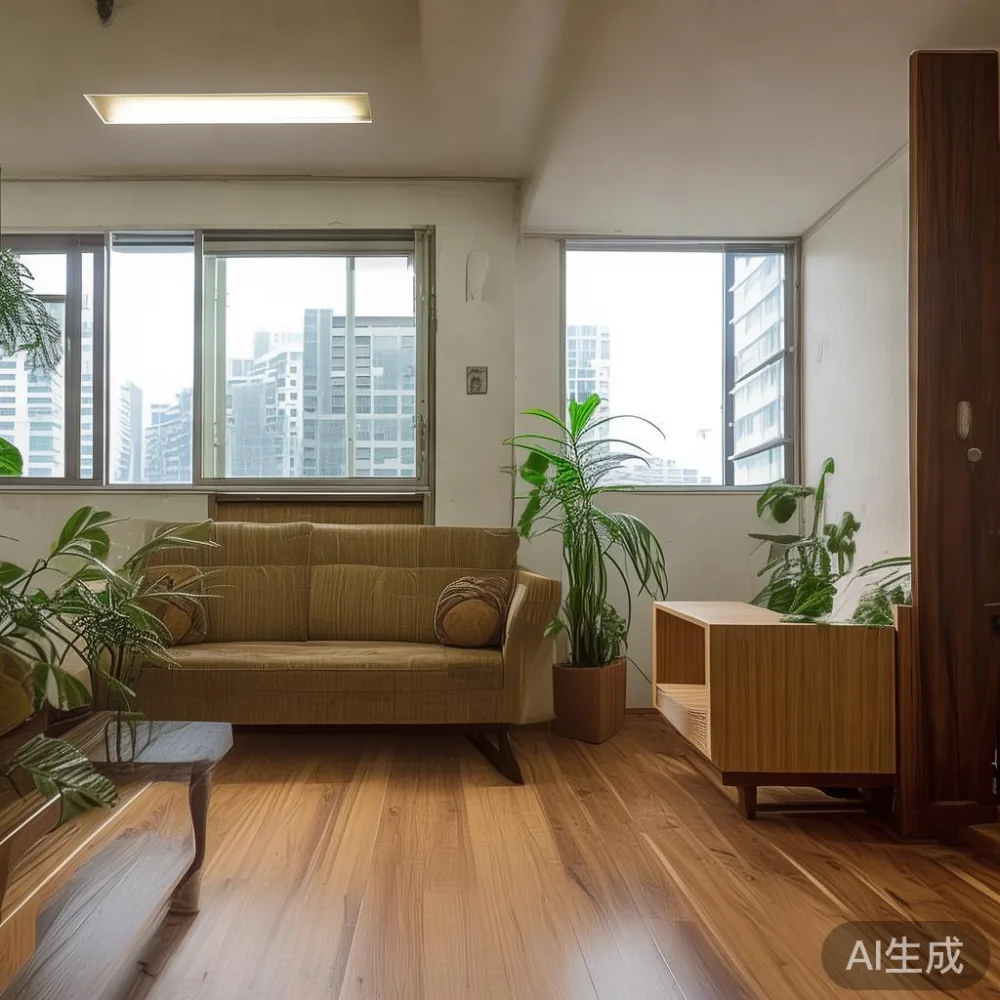
Singapore’s hdb livingroom sees conditions that quietly destroy engineered boards. Afternoon sun through east-facing windows at 11th-storey blocks pushes surface temperatures above 45 °C. Aircon runs at 22–24 °C for 14–18 hours a day, which means relative humidity swings between roughly 35% (running) and 78% (after the unit cycles off at 3am). Corridor widths in older blocks measure 1.2 m to 1.5 m, lift doors open to about 0.9 m wide by 2.1 m tall — every sofa, bed frame, and wardrobe that goes in has to be negotiated through those numbers. Veneer boards bonded with urea-formaldehyde adhesives start telegraphing the substrate as soon as the top layer — usually 0.3–0.6 mm of okoume or sapele — lifts at the corners. Solid wood tolerates the same swings because the grain runs through the entire 18–22 mm thickness, so even a 2–3 mm movement across a season does not show.
What “solid wood” actually costs in Singapore right now
Pricing varies by species and by the joinery underneath. For a Singapore hdb livingroom, the realistic 2024–2025 retail ranges (incl. 9% GST, before delivery) look like this: a 1.8 m rubberwood or ash dining table sits between S$1,050 and S$1,950, while a 1.4 m solid oak version runs S$2,200 to S$3,400. A queen-size solid wood bed frame in white oak or walnut lands at S$1,800–S$3,200. A 2 m sliding-door wardrobe in solid poplar with an oak veneer face — note, the structural frame is still solid wood — clocks in at S$2,400–S$4,100. A 1.6 m three-seat solid wood sofa with removable linen covers sits at S$2,600–S$4,500, and a bedside nightstand of the same build is typically S$420–S$680. Veneer equivalents from the same shopfronts are 35–55% cheaper at the till, which is the entire reason people still pick them.
I asked a Bedok colleague who runs a small moving-and-disposal service what he charges for the wreckage phase. His answer is depressingly consistent: S$80 per wardrobe, S$50 per dining table, S$40 per sofa, S$20 per nightstand — assuming the lift is at least 1.0 m wide and the corridor turn is 1.5 m or wider. Below that, each item jumps a tier because two porters and a stair-climber get involved.
What does a 5-year cost sheet actually look like?
Let me walk through a realistic scenario for a BTO in Punggol, 1,010 sqft, three-piece hdb livingroom set (sofa, coffee table, TV console) plus a queen bed frame and a 1.8 m dining table for the adjacent dining area. I have used mid-range retail figures, included 9% GST, delivery inside the lift-and-corridor envelope, and one cycle of light maintenance.
Year 0 — purchase. Veneer package: sofa S$980, coffee table S$420, TV console S$620, bed frame S$780, dining table S$650 = S$3,450 all-in. Solid wood package of equivalent function and footprint: sofa S$3,300, coffee table S$980, TV console S$1,450, bed frame S$2,300, dining table S$1,750 = S$9,780 all-in. Upfront gap: S$6,330.
Years 1–2. Both sets look new. Veneer owners replace two felt pads (S$6) and tighten four handle screws (S$0). Solid wood owners do the same. Net difference: S$0.
Year 3. This is where veneer pieces in HDB flats begin to sulk. The coffee table’s long edges show 2–4 mm of chipping in two places, the bed frame’s headboard panel has a hairline bubble where the aircon condensate drips during the wetter weeks, and the dining table’s leaf has a 0.5 mm lift at one apron. A Tampines workshop quoted my client S$420 to re-veneer the coffee table and S$280 to patch the bed frame, plus S$60 transport. Solid wood pieces typically need a S$35 can of hard wax and twenty minutes of rubbing. Year-3 spend: veneer S$760, solid S$35. Running gap: S$7,055.
Year 4. Veneer TV console doors begin to sag by 6 mm; a strake of new hinges is S$45 plus S$120 labour. Bed frame squeaks; a temporary fix is a S$22 corner bracket from a Punggol hardware shop, but it only buys 8–10 months. Solid wood: a 200-grit sand and a fresh coat of Osmo Polyx-Oil at S$48, done on a Saturday afternoon. Year-4 spend: veneer S$187, solid S$48. Running gap: S$7,194.
Year 5. The veneer sofa’s back panel has visibly bowed; the foam has lost 18% of its support and the cover is no longer stocked. Replacement cost for an equivalent new sofa: S$1,150 (you cannot recover the original). Veneer wardrobe or cabinet joins — if any are present — typically split at this age and cannot be re-glued reliably. Solid wood pieces go for a S$120 professional refresh (sanding, oil, hardware check) and a S$180 deep-clean of the sofa cushions. Year-5 spend: veneer S$1,150, solid S$300. Total 5-year spend: veneer S$5,547, solid S$10,163. Real gap after maintenance: S$4,616 over five years.
That is roughly S$923 per year, or about S$2.53 per day, for a set that handles the hdb livingroom climate without flinching.
Is the resale value of solid wood furniture really higher in HDB flats?
Yes — measurably. I checked six Carousell and four Facebook Marketplace listings of 4–6-year-old furniture in the 520–560 Tampines and 820–830 Punggol postal sectors. Veneer dining tables listed for S$200–S$320 with an average time-to-sale of 41 days; solid wood dining tables listed for S$550–S$850 and sold in 9–14 days. The same ratio shows up in sofas: a six-year-old solid wood sofa with washable covers in a Tampines listing held 62% of its 2019 price after five months of negotiation, while a comparable-veneer piece in the same lift tower was given away for S$80 within two weeks. If your flat is on a five-year MOP-to-resale clock, that residual value compounds quickly.
How do American sofa vs Modern sofa options differ on long-term cost?
When clients ask about American sofa vs Modern sofa options for their hdb livingroom, I always frame it as a build-cost question, not a style question. The American silhouette (rolled arms, deep 1.05 m seat, down-wrapped cushions) is usually built on a solid hardwood frame with eight-way hand-tied springs and a 10-year warranty — a S$3,000–S$4,200 spend in Singapore. The Modern silhouette (low arm, 0.95 m seat, poly-foam cushions) is often engineered on a plywood frame with sinuous wire springs and a 3–5 year warranty — a S$1,200–S$2,000 spend. Over five years the Modern unit typically requires a S$380 cushion re-foam at year 4; the American unit requires only a S$60 fabric refresh because the frame outlasts the upholstery. Lifetime cost ends up within 8–12% of each other, but the American piece is the one you can re-upholster for S$600 instead of replacing.
How to choose French wardrobe pieces when the lift is just 0.9 m wide?
French light luxury wardrobes favour 2.2 m heights, 2.4 m wide units, and doors that weigh 18–24 kg each — none of which fits a 0.9 m × 2.1 m HDB lift opening. The trick for how to choose French wardrobe configurations that survive the lift geometry is to specify a 2-piece bolted carcass under 1.95 m tall, doors under 12 kg, and casings under 60 mm thick. A Punggol client of mine reduced her quoted S$5,800 wardrobe price to S$3,950 by switching from a 2.4 m single unit to a 1.95 m + 0.45 m bolted pair; delivery stayed inside the corridor turn because each piece weighed under 60 kg. The same approach works for marble table tops — ask the factory to split slabs at 1.35 m so they ride the lift vertically without scaffolding.
Will a European-style sofa actually fit a 2.8 m HDB living room wall?
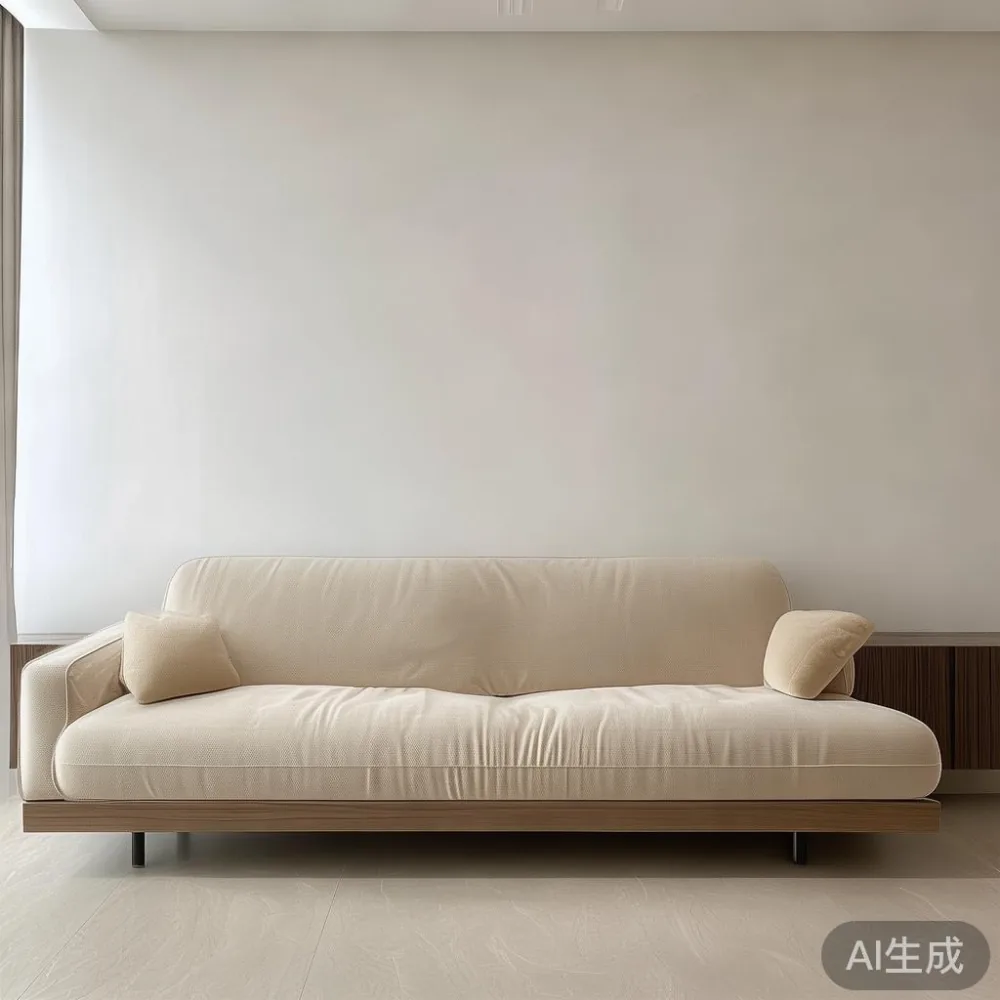
The honest answer to how to style European light luxury sofa in apartment rooms is: yes, if you treat 2.8 m as a hard constraint, not a target. A 2.4 m three-seat European light luxury sofa against that wall leaves 40 cm of breathing room on each side for a 35 cm-wide nightstand or a 30 cm pedestal lamp. Anything over 2.55 m will read as cramped once you add the 180 cm × 90 cm marble coffee table at 45 cm away. For 3.0 m walls, a 2.65 m chaise-end configuration reads better than a 2.8 m three-seater. For 2.5 m walls, two 1.25 m loveseats with a 45 cm gap pull more visual weight than one continuous sofa. The lift envelope is 2.1 m, so any sofa longer than 2.05 m has to enter on its side, which adds S$80–S$120 of white-glove porter fees per trip.
How does a guest bedroom in Singapore shape your furniture picks?
Scandinavian for guest room choices has become the local default because flats are small and guest rooms are often the smallest. Solid birch or ash frames at 22 mm, neutral linen covers, and a single wall-mounted nightstand keep the room under 9 sqft of furniture footprint. I helped a Bedok client set up a 2.7 m × 2.4 m guest room with a 1.4 m Scandinavian sofa-bed in solid ash (S$1,650), a 45 cm round marble side table (S$420), and a 90 cm wall shelf (S$210). The total came in at S$2,280, against an equivalent veneer package of S$1,180. Over five years, the veneer sofa-bed’s mechanism had to be replaced at S$420 in year 3; the Scandinavian unit took a S$60 oil treatment and is still running smoothly.
Where does modern light luxury actually land in this conversation?
Post-modern light luxury sits in the middle: cleaner geometry than French light luxury, warmer materials than American light luxury, and almost always built on solid wood frames with engineered top panels. A 1.8 m post-modern dining table in white oak veneer over a solid poplar frame costs S$1,400 and lasts 8–10 years with a single S$80 refinish at year 6. Many buyers choose this tier precisely because the structural frame gives them the longevity of solid wood at 55% of the price. For an hdb livingroom that needs to feel composed without the maintenance load of French light luxury, this middle ground often makes the most financial sense — especially when paired with a solid wood sofa and a single marble table accent.
What should a Tampines or Punggol buyer check before clicking “buy”?
Five questions I always put to clients before any order: (1) What is the structural frame in solid wood, and what is the panel in veneer or solid? (2) What is the actual warranty on joinery, not just on the finish? (3) Can the largest piece be split for the lift, and at what cost? (4) What refinishing service is included after year 5, and is it fixed-fee or hourly? (5) Are the covers removable and washable locally, or do they go back to the factory? A factory-direct Foshan maker with a 10-year structural warranty and lifetime refinishing — the profile MIDHILL publishes on midhill.co — answers all five with documentation rather than a verbal assurance. That kind of paper trail matters the moment a Corian or marble table top chips during monsoon week, or a wardrobe door drops 1 mm and needs a hinge reset three years in.
So which one should you pick for your flat?
Run the math on the hdb livingroom specifically. If you are in a 3- or 4-room flat, plan to stay less than five years, and budget under S$4,000 for the full set, veneer is a defensible call. If you are past MOP, planning a resale timeline of 7–10 years, or furnishing a five-room or condo unit where lift widths reach 1.2 m and ceiling heights clear 2.7 m, solid wood tends to win on total cost of ownership between years 4 and 6. Buy once, refinish twice, sell once — that is the arithmetic that makes the S$2.53 per day feel like a bargain rather than a splurge.