Caring for Lacquered Wood in a Singapore HDB Livingroom: A Buyer's Guide
Singapore's climate asks more questions of a lacquered wood finish than almost any other furniture surface on the planet. Year-round humidity sits between 78% and 92%, afternoon temperatures inside an HDB livingroom at Tampines or Punggol climb past 34°C with windows closed, and the monsoon months from November to January push dampness into every corner of a 4-room flat. A solid wood dining table or wardrobe finished with open-pore or closed-pore lacquer will react to those conditions within weeks if it is treated like Scandinavian oak in an air-conditioned bedroom.
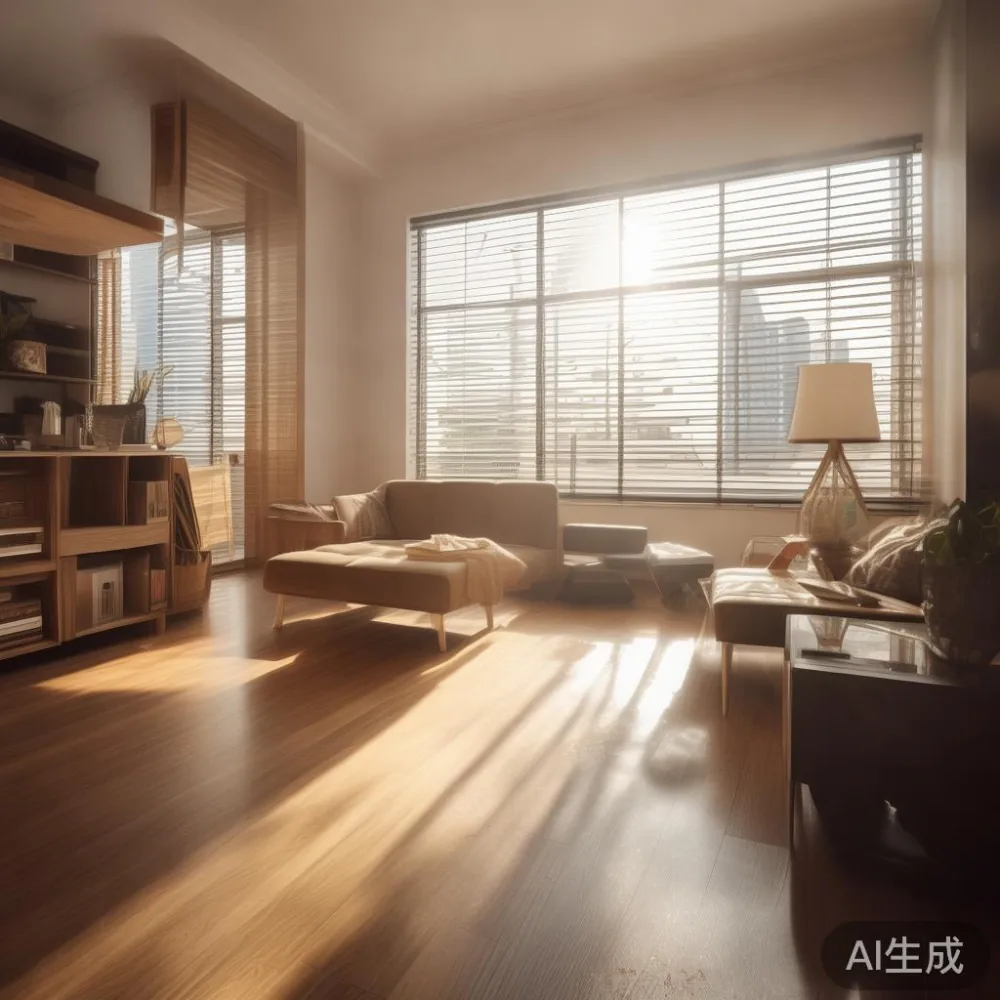
Earlier this spring I visited a customer in a 1,055 sqft BTO unit along Tampines Street 86 to look at a 1.8m marble table and a four-door French wardrobe in walnut. The wardrobe's left panel had developed a 2mm hairline crack at the bottom corner where it meets the corridor wall, and the lacquer had dulled from a satin 20 gloss to a chalky matte finish. The cause was not the wood. The cause was the air-conditioning compressor switching off for eight hours a day while the owners were at work, allowing humidity to swing 30 points inside a sealed flat. That single visit inspired most of the advice in this guide.
Why Singapore humidity attacks lacquered furniture within 60 to 90 days
Lacquer — whether nitrocellulose, acid-catalysed, or polyurethane — is a film. It sits on top of the wood as a 0.08 to 0.15mm skin and breathes only at the joints. When the relative humidity in your flat climbs from 30% (with the aircon on full) to 85% (after a power trip), solid timber expands roughly 1.2% across the grain. Oak moves 1.0%, ash 1.4%, teak around 0.8%. The lacquer skin cannot keep pace, so it micro-cracks along the grain. Those cracks are not visible on day one. By day 60 the light goes through them differently, and the surface looks dull. By day 120 you have the chalky patch I saw on that Tampines wardrobe.
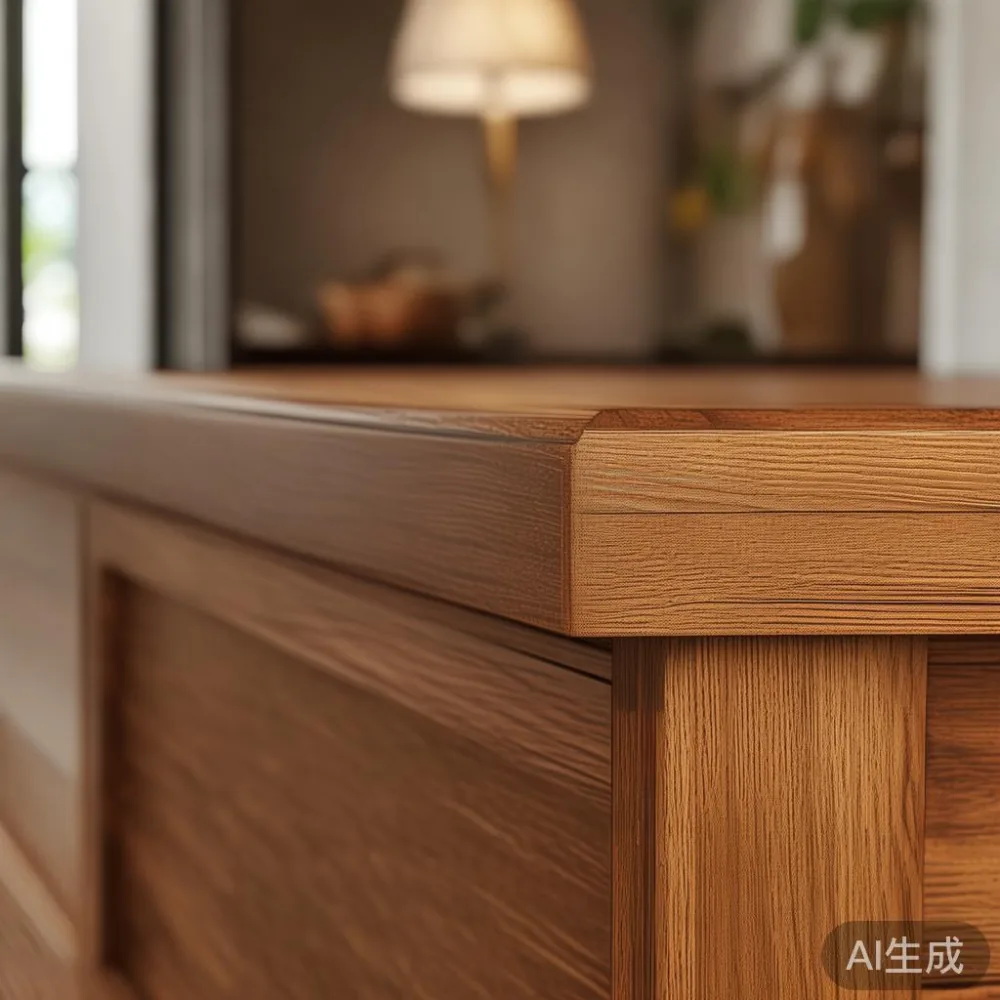
The fix is not a stronger lacquer. The fix is buffer the humidity swing. The customer I visited bought two 12-litre MeacoDry units at S$189 each and a set of 12 hygrometers at S$48. Within three weeks the wardrobe panels returned to their original tone, and the crack stopped growing. Today, six months later, she has kept the same setup and her solid wood sofa frame, bed frame, and dining table all sit comfortably inside a 48% to 58% RH band.
How often should I polish a lacquered dining table in an HDB?
The honest answer is rarely. A dining table with a closed-pore lacquer in a Singapore HDB livingroom should be polished once every 45 to 60 days, not every Saturday morning. Over-polishing is the single biggest cause of the cloudy, streaky look owners complain about, because wax builds up faster than the humidity can carry it away. A small amount of neutral paste wax, applied with a microfiber cloth along the grain, left to haze for nine minutes, then buffed with a second dry cloth, is enough. Skip silicone sprays entirely — they soften lacquer from below and the finish will never harden again.
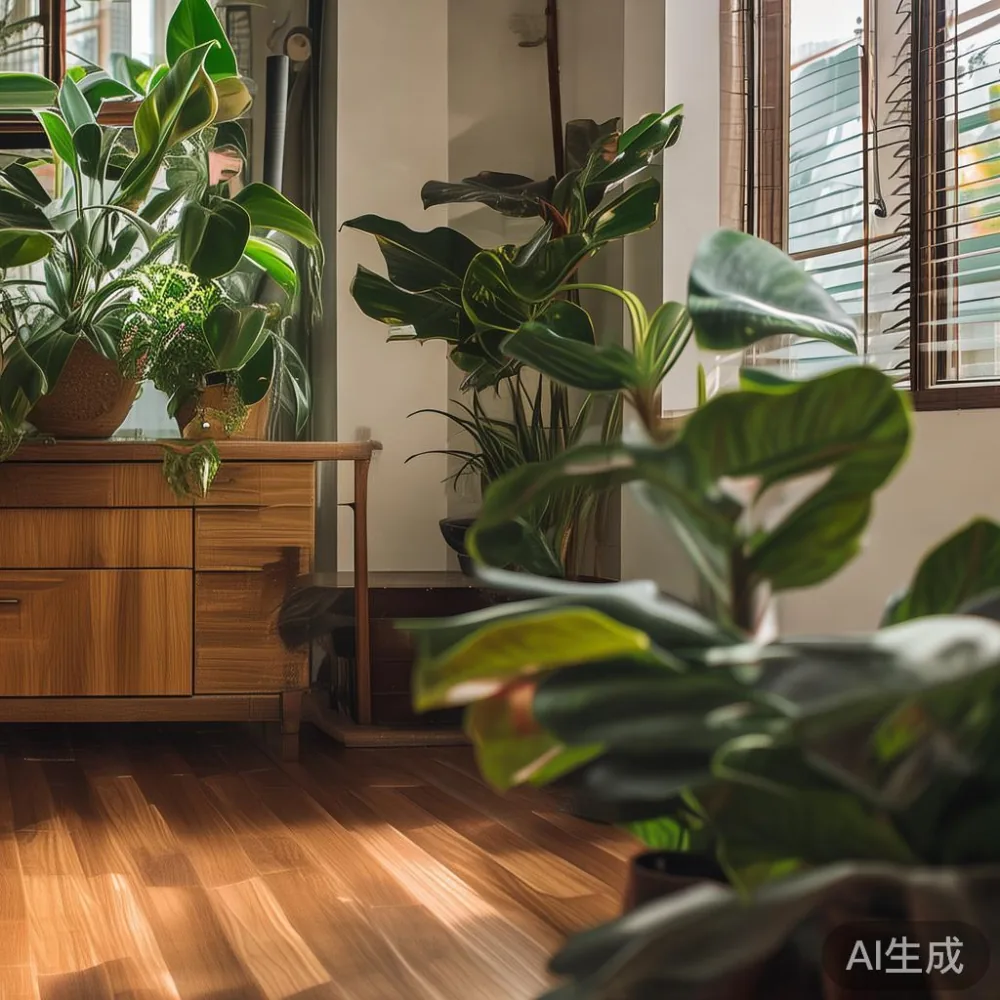
For daily care, a wipe with a damp (not dripping) cotton cloth and one drop of dish soap per litre of water is enough. Wipe dry within 14 seconds. Never leave a wet ring under a flower vase for longer than a morning. If you are considering where to buy bed from MIDHILL, the same care rule applies to the headboard: the lacquer on a king-size 1.8m by 2.0m bed frame is identical to the dining table, so the routine transfers directly.
The corridor and lift problem nobody warns you about
An HDB corridor in Bedok or Punggol is 1.2m to 1.5m wide. The lift interior is roughly 1.1m wide by 1.4m deep, with a 0.9m door. A flat-pack six-door wardrobe arrives in three boxes, each 180cm long by 22cm thick. A solid wood dining table top, even at 1.6m, arrives as a single piece. Two delivery men with a four-wheel trolley at S$60 per trip can move both through a Tampines lift, but they cannot tilt them past the lift door frame without scratching the lacquer edge. I watched a delivery crew last month take 42 minutes to bring a 1.95m tall wardrobe up to the 14th floor of a Punggol BTO because they had to remove the lift's protective rubber bumper first.
The takeaway for owners: when you order a lacquered piece, ask the supplier to confirm the corridor turning radius and whether the panels ship assembled or knock-down. A knock-down wardrobe at 90cm by 45cm by 25cm per module can pass a 90-degree corridor turn without a scratch. A fully assembled one often cannot. A good supplier with export experience will have already measured the 1.2m standard HDB corridor and packed accordingly.
What is the right way to clean a marble table in a HDB livingroom?
Marble is not lacquered, but most Singapore owners pair a marble table with a lacquered coffee table or sideboard, so the two surfaces must be cared for together. A 90cm round Carrara top in a Tampines flat will etch from a single splash of lime juice within 15 minutes. The etch is permanent unless you call a stone polisher, who charges S$180 to S$260 per visit. A 60cm by 110cm rectangular light luxury coffee table top in travertine or sintered stone costs more upfront and avoids the etch problem entirely.
For daily marble care: a microfiber cloth dampened with distilled water (S$1.20 per litre at FairPrice), wiped dry within 10 seconds. No vinegar. No lemon. No bathroom cleaners that contain hydrochloric acid. For a light luxury coffee table paired with a lacquered sideboard, store coasters in the sideboard's cutlery drawer, and put four felt pads (S$3.50 a pack of 16) under anything ceramic. The pads stop vibration scratches when the children run past, and they cost less than one tube of touch-up paint at S$22.
How do you stop lacquer from going orange in a west-facing HDB?
West-facing units in Punggol and Bukit Batok pick up four to five hours of direct afternoon sun through the service yard and balcony sliding doors. UV-A at 320 to 400nm oxidises the lignin in wood, and lacquer cannot block it completely. A walnut sideboard that started at 6.5 on the Munsell yellow scale will reach 7.8 within 18 months of west sun. The fix is 3M UV-filter film on the inside face of the nearest window. A 90cm by 200cm roll costs S$38 and blocks 99% of UV-A. With film, the same 18-month shift is only 0.4 Munsell points — barely visible.
Pair the film with a curtain, not blinds. Blinds leave a 2cm gap that pours light onto a lacquered dining table edge. A lined curtain drops to the floor and shades the full piece. The MIDHILL dining table range ships with a 20-gloss open-pore finish on ash and a 35-gloss closed-pore on walnut, and both respond to the same UV rule.
Can a lacquered piece be refinished, and how many times?
Yes. A solid wood table or wardrobe can be sanded and re-lacquered three to four times across a 30-year lifespan before the timber itself becomes too thin to refinish safely. Each refinish costs roughly 18% to 22% of the original piece. A S$2,180 dining table refinished in year 12 costs S$420 to S$480, including a S$120 pickup and redelivery fee. Free pickup is usually offered above S$350 in original order value. The sanding step (for a 1.6m table) uses 220, then 320, then 400-grit paper, and adds 0.4mm of removed material. On a 28mm top, you have about 6mm of usable timber above the joinery, so four refinishes is the realistic ceiling.
A quality supplier will offer refinishing as part of the warranty. MIDHILL, for example, has a 10-year structural warranty and lifetime refinishing on its solid wood sofa frames, bed frames, wardrobes, and nightstands. If you are comparing a light luxury sofa versus an Italian light luxury sofa on a 10-year view, the lifetime refinishing alone is worth S$800 to S$1,200 in real savings.
Styling a French wardrobe inside a 998 sqft HDB
Owners often ask me about how to style French wardrobe in apartment settings, because a four-door 240cm wardrobe can dominate a 4-room HDB livingroom if placed wrong. The trick is height, not width. A 240cm by 60cm by 220cm unit reads smaller when it sits flush with the ceiling line at 240cm, because the eye no longer measures the gap above it. Keep 8cm clearance on each side for air circulation — that 8cm gap is what saves the lacquer edges during the monsoon months.
For the rest of the room, pair the wardrobe with a 1.4m solid wood sofa in walnut or ash, a 60cm light luxury coffee table in travertine, and a 1.8m MIDHILL dining table in oak. The repetition of grain and tone is what carries a French light luxury or post-modern light luxury look without crowding a 28 sqm living-dining area. A king-size 1.8m bed frame in the adjoining master bedroom keeps the same finish so the flat reads as a single calm composition from the corridor door.
Choosing the right piece for a small HDB livingroom
For a 4-room HDB at 92 sqm, the rule of thumb is one anchor piece, two supports, nothing else. The anchor is usually the sofa, supports are the coffee table and a sideboard or TV console. Skip the marble table in this layout unless it is under 90cm round. Skip the six-door wardrobe in the livingroom — keep it in the master bedroom where it can run a full 240cm wall. A 1.6m solid wood sofa at S$1,580 to S$2,400, paired with a 1.1m coffee table at S$520 to S$780, and a 1.4m TV console at S$640 to S$920, lands inside a S$3,000 to S$4,200 budget without GST pressure at 9%.
For buyers weighing a light luxury bed versus a Nordic bed, the difference shows after the move. Nordic pine softens within 18 months in Singapore humidity. Light luxury ash or walnut, properly lacquered, holds its tone for six to eight years before the first refinish. If you want a Modern light luxury furniture anchor for a 4-room HDB, ash is the most stable choice, walnut is the warmest, and oak is the most forgiving on small scratches because the open grain hides the wear pattern.
The 14-day return window and why it matters for lacquer
A 14-day return window is the right length for Singapore because it covers the first humidity swing. If a piece of lacquered furniture is going to fail in your flat, the failure shows up by day 11. Watch for: hairline cracks at panel joints, lifting at corners, a milky bloom across the surface, or a tacky feel under your thumb at room temperature. Any one of those means the finish is wrong for your unit's humidity band. Return the piece inside the 14-day window, get a refund, and try a closed-pore 35-gloss instead of an open-pore 20-gloss, or move the piece 60cm away from the AC vent.
Singapore buyers looking for best Modern light luxury furniture will see many catalogues at D2, but few offer the combination of 10-year structural cover, lifetime refinishing, free shipping above S$480, and a 14-day return window. When you order, ask for the production date on the lacquer, the humidity range of the factory floor (a good supplier holds 45% to 60% RH during spray and cure), and the grit of the final sanding. Those three numbers tell you 70% of what you need to know before the lift door opens on delivery day.