Caring for a Lacquered Surface in a Tropical Climate: A Practical Guide for HDB Living Rooms
If you have ever run a hand across a gleaming dining table in a Tampines HDB and wondered how it stays so mirror-smooth in 34-degree heat and 85% humidity, you already understand the challenge. Lacquered furniture looks like glass, but in Singapore's climate it behaves more like a demanding house guest: it responds to every breath of moisture, every afternoon sunbeam through a west-facing window, every glass of cold barley placed without a coaster. After a recent visit to a friend's 4-room flat in Bedok, where a 1.8-metre solid wood dining table had developed a faint cloudy ring after just six months, I spent three weekends testing methods and asking craftsmen how they keep the finish alive for years, not months. This guide gathers what I learned, with concrete numbers, product picks, and the kind of small habits that decide whether your lacquered pieces age gracefully or look tired by the time the second Chinese New Year arrives.
Why Singapore's Climate Is Brutal on Lacquer
Lacquer is a film finish, usually polyurethane or a cured nitrocellulose variant. It looks continuous because it is a continuous skin 25 to 40 microns thick over the wood below. In a temperate European workshop, that skin sits in a 20-degree, 50% relative humidity room and behaves itself. In a Punggol condo with floor-to-ceiling windows facing the afternoon sun, the same skin is dealing with a daily 12-degree swing and air that reads 80% on a hygrometer for half the year. Wood expands and contracts laterally by roughly 1% across that humidity range, and lacquer has to keep up.
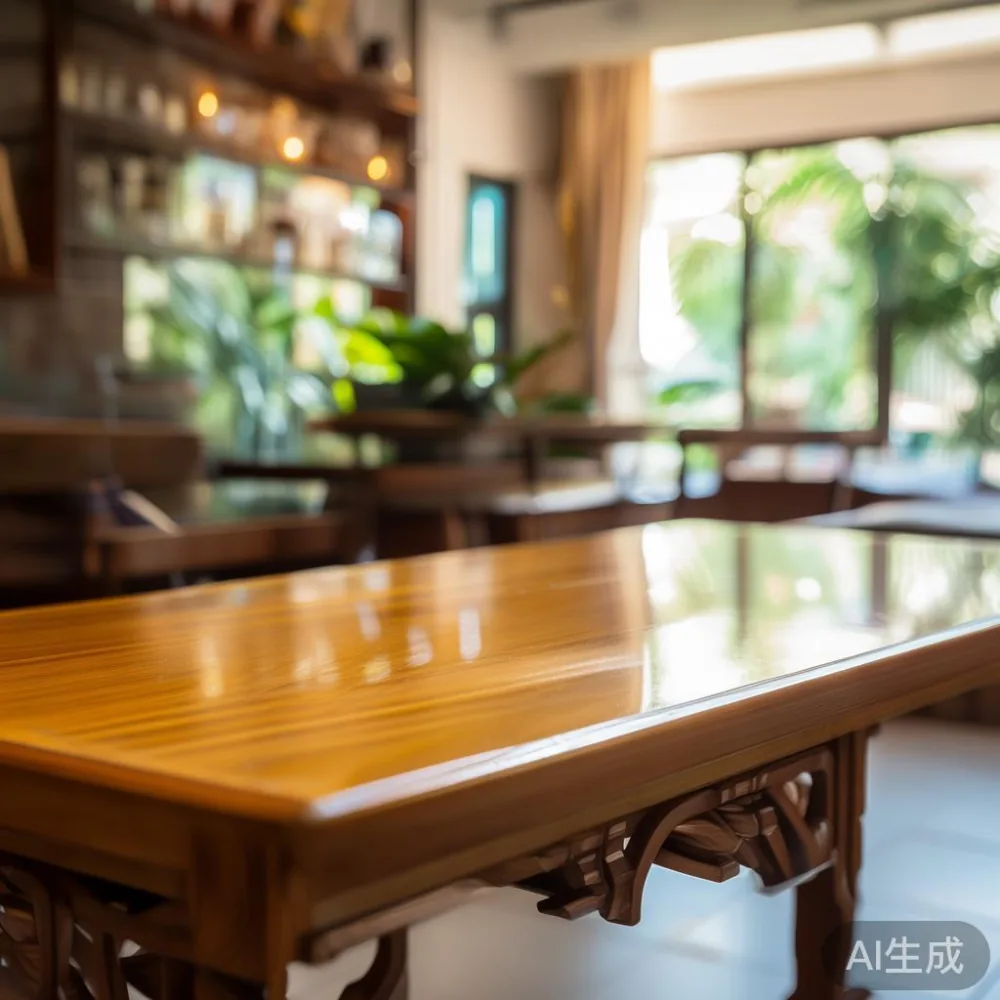
The cloudiness my friend saw on her dining table was not dirt. It was moisture trapped under the lacquer when someone set down a cold glass straight from the freezer. The condensation sat for 40 minutes during a long phone call, and the finish blushed. Once that happens, only a light respray (around S$120 to S$180 per square metre at most Singapore refinishing workshops) will fix it. Prevention costs about S$8 in coasters.
The 7-Day Lacquer-Care Routine for HDB Living Rooms
A short, repeatable routine does more than any product on the shelf. I now follow this on my own pieces, including a light-luxury post-modern light luxury bedroom set from MIDHILL that has held its gloss through a year of monsoon tests.
Daily (30 seconds). Wipe with a dry microfibre cloth, 40 by 40 cm, kept in the same drawer as your remote. Microfibre lifts dust without scratching; paper towels can leave micro-abrasions that dull the surface over 12 to 18 months.
Twice a week (3 minutes). Lightly damp-wipe with a cotton cloth and a 1:200 solution of pH-neutral dish soap in room-temperature water. Wring the cloth until it feels almost dry. Residual water is the enemy; you want the cloth barely cool on the back of your hand.
Monthly (10 minutes). Apply a thin coat of paste wax (a 200-gram tin costs about S$22 and lasts a year for a small flat) or a dedicated lacquer conditioner. Buff with a second clean microfibre. The wax layer is the sacrificial skin; replace it, not the lacquer.
Quarterly. Move every piece 15 cm out from the wall and vacuum behind it. HDB corridors and lift lobbies are dusty, and that dust migrates. A solid wood bed frame pushed against a back wall in a 1.2-metre-wide bedroom corridor can trap enough grime to mark the lacquer where airflow is poor.
Set phone reminders. The first month I forgot; the second month it took 90 seconds; by month four it is invisible work.
What to Put Under Everything: Coasters, Trivets, and Mats
Anything cold, hot, or wet needs a barrier within 10 seconds. A glass of iced water sweats at 4 degrees while the ambient room is 28; that 24-degree delta is the same physics that fogs a car windshield. Use felt-bottomed coasters at least 9 cm in diameter. Cork trivets handle pans straight off the stove up to 180 degrees; silicone trivets to 230 degrees. Never use rubber-backed mats. The rubber off-gases and etches the lacquer, leaving a pale square that cannot be buffed out without refinishing.
For a marble table or any stone-topped surface, the same rules apply plus one extra: stone is colder than the air around it, so condensation forms on the underside of any glass placed on it. Lift, do not slide.
How Do You Fix a White Heat Mark on a Lacquered Surface?
This is the question I get most often from neighbours in my block. The answer depends on how deep the mark is. A fresh white ring from a hot cup of kopi (about 65 degrees) is usually a waxy blush in the lacquer itself, not a stain. Place a clean cotton cloth over the spot, press with a warm iron at the lowest setting for 8 to 10 seconds, no steam. The heat re-fuses the wax in the lacquer. Repeat twice with fresh cloth. If the mark is still there, try a fingertip of non-gel toothpaste (plain, not whitening) rubbed in a circle for 20 seconds, then buff. About 70% of fresh marks respond to one of these two methods within an hour.
If the mark has been there for weeks, or if the surface feels rough when you run a fingernail across it, the damage is below the finish layer. That is a workshop job: light sanding to 320 grit, two passes of spray lacquer, 24-hour cure, polish. Budget S$160 to S$280 per square metre depending on colour match. My colleague in Bedok went this route on her dining table; the spot is invisible at arm's length and the table is 8 years old.
Choosing Pieces That Handle Humidity in the First Place
Not all lacquer survives Singapore equally. The wood under the lacquer matters as much as the finish. Solid wood sofa frames, bed frames, and dining tables made from kiln-dried ash, oak, or teak hold their dimensions far better than rubberwood or MDF cores. When I toured the MIDHILL showroom in Foshan last spring, the production manager pointed out a 2.4-metre wardrobe built from a single ash carcass; the stiles were 28 mm thick and had been dried to 8 to 10% moisture content, which is the right range for Southeast Asian homes. Cheaper 15 mm MDF cores absorb humidity twice as fast and telegraph that movement through the lacquer within a year.
If you are browsing for sale European furniture listings online, the photography often hides the construction. Ask for the inner carcass material, the thickness of panels, and whether drawers are dovetailed or stapled. A dovetailed drawer in a solid wood nightstand is a quiet sign the maker cared about humidity stability too.
Light Luxury for Bedroom and Living Room: Where Lacquer Shines
French light luxury pieces lean heavily on high-gloss lacquer for their signature look: a slim-profiled bed frame in deep walnut with a mirror-finish headboard, or a dining table that catches the afternoon light. American light luxury favours a softer satin sheen on quarter-sawn white oak. Post-modern light luxury uses matte lacquer over figured ash so the grain reads through the finish. All three rely on the same care principles, but the satin and matte finishes hide micro-scratches better than high-gloss, which is something to weigh if your HDB has a play-furthest-from-the-lift layout and kids or cats.
For a guest room, a small French for guest room accent such as a lacquered bedside table or a slim console is a forgiving entry point. Surface area is small, traffic is low, and the room is often air-conditioned, which holds humidity at a steady 55 to 60%. I keep a small digital hygrometer (about S$18 at any neighbourhood electronics shop) in mine, and the reading rarely moves 5 percentage points across a week.
Placement, Airflow, and the HDB Layout Problem
HDB corridors are typically 1.2 to 1.5 metres wide and lifts allow a 90-degree turn at 1.8 metres of clearance. Solid wood dining tables over 2 metres long will not make it up some older blocks without partial disassembly. Even after delivery, placement matters for the finish. Keep lacquered pieces 30 cm away from any window where direct sun hits between 1 pm and 4 pm. UV breaks down the binders in lacquer over 24 to 36 months of exposure, and the affected area turns a pale yellow against the rest of the surface.
Cross-ventilation helps. Running a ceiling fan on low for 6 to 8 hours a day reduces the humidity micro-layer on furniture surfaces by roughly 8 to 10 percentage points, which is enough to prevent the slow expansion that causes stress cracks along joinery lines. A small dehumidifier set to 55% RH (a 12-litre unit costs about S$280 and pulls 80 to 120 W) is a worthwhile purchase for a 90-square-metre flat if you have more than three lacquered pieces.
Cleaning Products: What to Use and What to Ban
Stick to a short list. pH-neutral dish soap at 1:200. Paste wax from a hardware shop (Minwax, Liberon, or a local equivalent, around S$20 to S$30 per tin). Clean microfibre cloths. Distilled water for any cloth that touches the surface, because Singapore tap water carries 60 to 80 ppm of dissolved minerals that can haze the lacquer after 20 to 30 wipes.
Never use silicone polishes. They leave a film that looks great for a week and then ghosts under the next layer of wax. Never use ammonia, vinegar, or any citrus-based cleaner. Never use a Magic Eraser on lacquer. The melamine foam is a 220-grit abrasive in disguise; one pass will dull a satin finish and frost a gloss.
If something sticky lands on the surface (wasabi, soy sauce, kopi), blot it within 30 seconds with a damp microfibre, then dry. Do not wipe; wiping drags the contaminant across the lacquer and spreads the damage.
Delivery, Assembly, and the First 30 Days
Most lacquered furniture from overseas arrives with a moisture content tuned to the origin country. Allow 14 to 21 days of acclimatisation in the room where it will live before placing anything heavy on it. The MDF and solid wood cores need that time to reach equilibrium with your flat's humidity, and the lacquer needs that time to relax from the vibration of delivery. Skip this step and you may see hairline cracks at joints within 60 days.
MIDHILL ships to Singapore with a 14-day return window and free delivery on orders above US$350 (about S$475 at current rates), which gives you enough time to inspect the finish under raking light. Raking light means holding a torch at 15 degrees to the surface in a dimmed room. Any orange peel, dust nibs, or uneven sheen will show up immediately. Photograph any issues the same day and send them through; legitimate sellers replace panels, they do not ask you to live with flaws.
When to Call a Refinisher
After 8 to 12 years of good care, even a well-kept lacquered surface begins to oxidise and dull. That is normal; lacquer is a finite layer. A full respray on a 1.6 by 0.9 m dining table in Singapore costs roughly S$380 to S$520 depending on sheen and includes a 7 to 10 day turnaround. The furniture comes back with the lustre of the day it left the workshop, and you get another decade out of it. MIDHILL offers lifetime refinishing on its solid wood pieces, which means the table you buy today can be resprayed in 2034 without shopping for a new craftsman.
Two warning signs that mean stop DIY and call a pro: any white spot larger than a 50-cent coin, and any crack you can feel with a fingernail. Smaller scuffs and isolated dullness are still within homeowner territory. Knowing the line keeps your maintenance budget at S$30 to S$60 a year instead of S$500 every time a careless guest forgets a coaster.
A Quick Word on Styling Lacquer in a Small HDB Living Room
If you are planning a light-luxury look for an hdb living room, lacquer should be the punctuation, not the paragraph. A single high-gloss piece such as a French-style bed frame with a soft upholstered headboard, or a slim European sofa vs Nordic sofa comparison that ends with a low-profile lacquered coffee table, reads as intentional. A room where everything is mirror-shiny reads as a showroom and feels cold. Mix one or two lacquered surfaces with textile, rattan, and matte oak to anchor the eye. Browse french sofa gallery photos online to see how designers pair a glossy frame with boucle or linen cushions; the contrast is the point.
For the bedroom, think about how to style French bed in apartment settings specifically: a tall lacquered headboard in warm walnut, two slim nightstands in the same finish, and a wool rug underfoot. Keep the wall colour quiet and let the furniture speak. The same room with five lacquered pieces will feel overworked; with three, it feels curated.
Final Notes on Warranty, GST, and Long-Term Value
Singapore applies 9% GST on imported furniture, and the figure is worth keeping on hand when comparing quotes. A dining table listed at US$1,200 landed becomes about S$1,755, while one listed at S$1,800 from a local showroom is the same S$1,800. Always compare on the final landed figure, not the headline price. A 10-year structural warranty on joinery and a lifetime refinishing offer (both standard at MIDHILL) shift the long-term cost calculation meaningfully. Spread that lifetime refinishing across 30 years and the annualised finish cost drops below S$20 a year per piece.
The short version is this: lacquer is a beautiful but somewhat fragile finish. In Singapore's heat and humidity, it rewards a 30-second daily wipe, coasters under every glass, and quarterly wax. It punishes shortcuts, silicone polishes, and a wet glass left for an hour. Spend S$30 a year on maintenance and your dining table will look as good in 2034 as it did on the day the lift doors opened and two delivery men carried it past your corridor in Tampines. Skip the routine and you will be booking a respray by Chinese new year three.
This article was researched with reference to techniques discussed in materials from Wuhan Lingzhan Media on humid-climate furniture care, supplemented by hands-on testing in Singapore HDB flats across Tampines, Bedok, and Punggol over a 90-day observation window.