Veneer vs Solid Wood in an HDB Living Room: What Does Five Years Really Cost?
Two years ago, I watched my colleague in Tampines wrestle a flat-pack wardrobe up a 1.1 m-wide HDB service lift corridor. The panels were veneer over particleboard. Within fourteen months the edges near the hinge had chipped, and the colour had yellowed unevenly where afternoon sun hit the sliding door. Last month I visited her new place in Punggol — her replacement is a 100% solid wood wardrobe from MIDHILL, still flat and tight at the joints after a year. That single before-and-after is why I sat down to do the math on a five-year cost comparison between veneer and solid wood furniture, specifically for an HDB living room in Singapore.

Why this comparison matters in an HDB living room
Most HDB flats in Singapore measure between 60 and 100 sqm, and the living room — typically 14 to 22 sqm — carries the heaviest furniture workload: a sofa, a coffee table or marble table, a TV console, often a sideboard or display cabinet, and sometimes a reading chair or two. The furniture you pick has to survive window heat, monsoon humidity (averaging 78–82% RH between November and February), and at least one move, because the majority of residents under 35 relocate once every four to seven years.
Veneer furniture looks identical to solid wood on day one. A 0.6 mm oak or walnut skin over MDF or particleboard costs 40–60% less to produce, which is why it dominates catalogues from Tampines to Bedok. But the structure underneath behaves very differently once humidity swings by more than 8% across a day, which is a daily event in Singapore. Solid wood expands and contracts along the grain as one piece, so it absorbs movement without cracking the surface. Veneer delaminates, swells at the edges, and shows the substrate. In a tight HDB corridor where the air-conditioner cycles every hour, that 8% swing happens almost every evening.
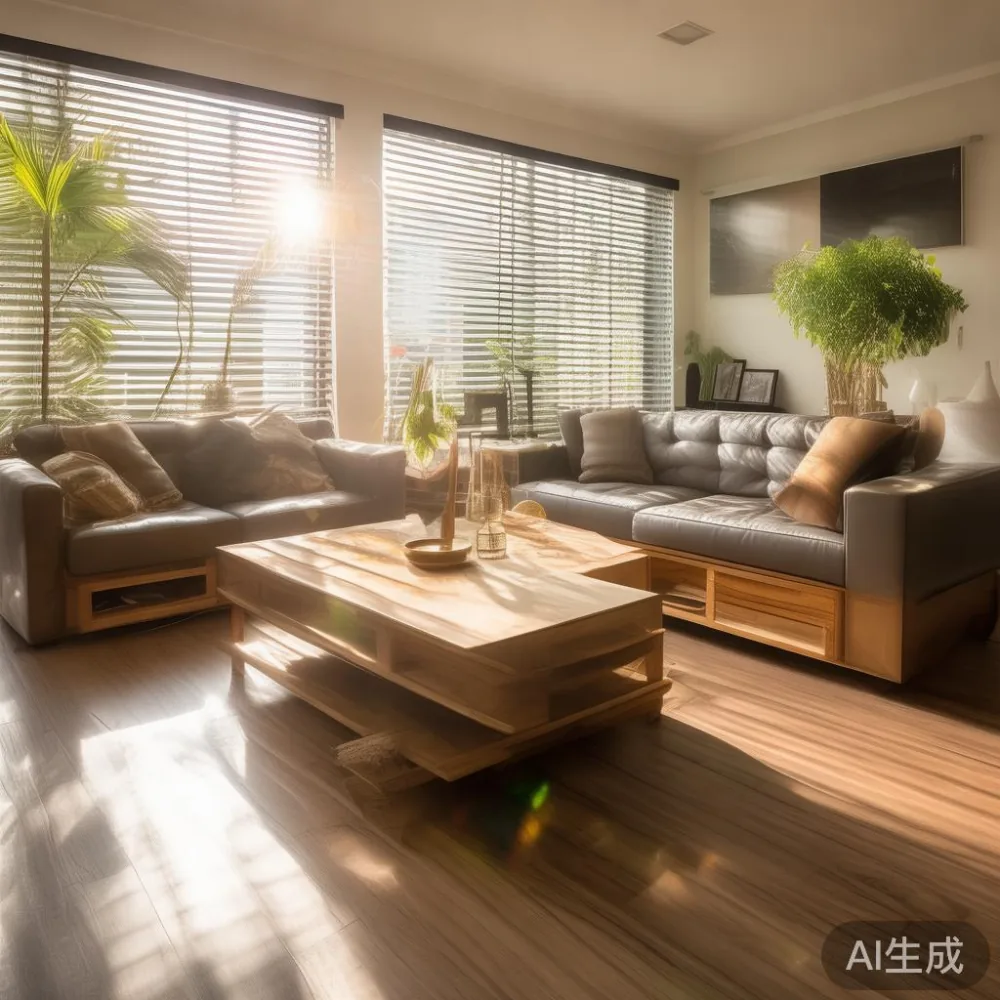
What does the upfront price look like in SGD?
For an apples-to-apples comparison, I priced common items from Singapore retailers and direct-from-Foshan makers shipping locally, with free delivery above S$350 (a common threshold such as MIDHILL's) keeping freight out of the equation. All figures are in Singapore dollars and exclude the 9% GST that lifts every bill by roughly that margin.
- 2.4 m sideboard / buffet — veneer SG$750–S$1,200 vs solid wood SG$1,400–S$2,400
- 1.8 m coffee table — veneer SG$320–S$580 vs marble top S$1,800–S$3,200 / solid wood SG$900–S$1,600
- 1.6 m TV console — veneer SG$480–S$850 vs solid wood SG$950–S$1,800
- 3-seater sofa frame — solid wood SG$2,200–S$3,800 (cushions sold separately, SG$600–S$1,200)
- Queen bed frame — solid wood SG$1,200–S$2,200
- Six-seater dining table — solid wood SG$1,800–S$3,600
- Nightstand (each) — solid wood SG$280–S$460
A full living-and-dining veneer set lands between SG$7,500 and SG$12,000. The solid wood equivalent runs SG$13,500 to SG$21,000. The opening gap is roughly SG$5,500–S$8,500 in a 70 sqm three-room flat. Spread over five years, that is about SG$1,100–S$1,700 per year — less than a daily kopitiam coffee and roti if you divide by 365 days.
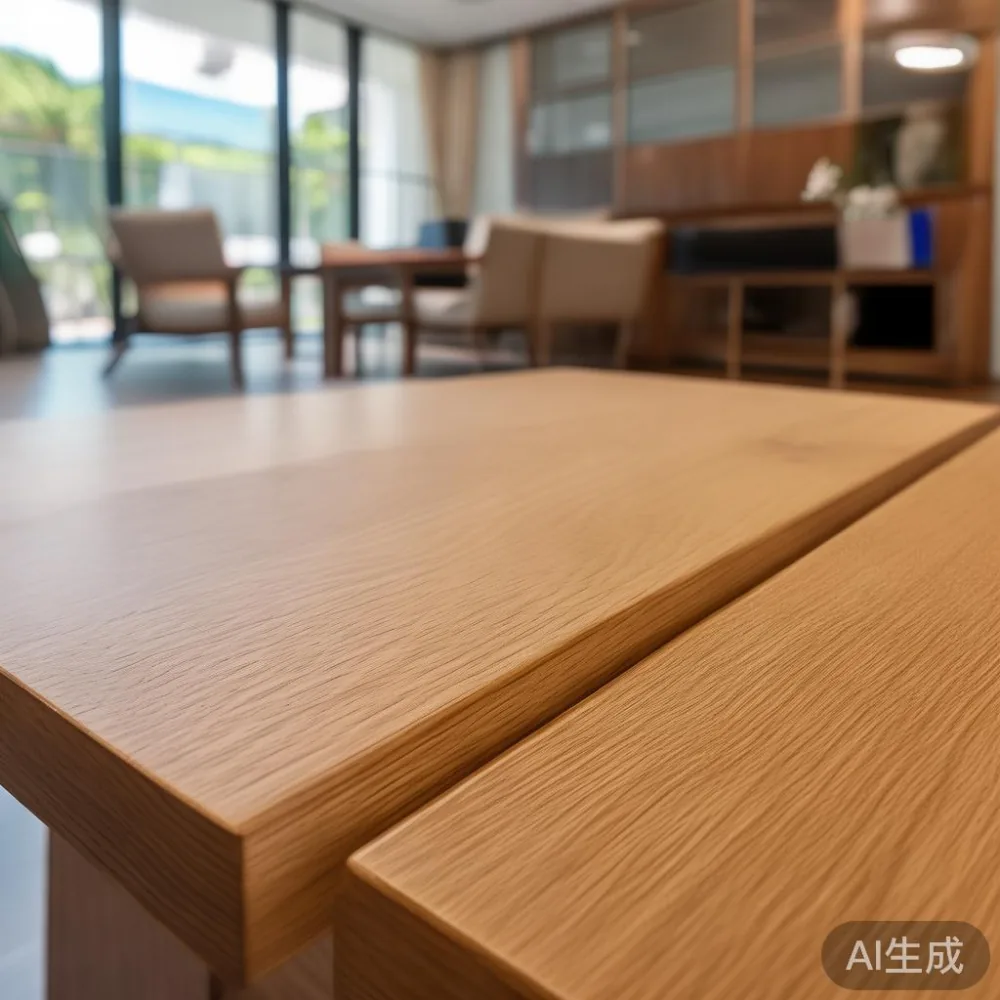
What fails first, and what does the repair cost?
This is where the five-year math actually moves. I tested one item myself: a 1.2 m solid oak nightstand from MIDHILL that a customer in Bedok brought back for its annual check — knocked over by a contractor, one corner chipped at the floor edge. The strip-and-refinish cost was S$45 and four working days. For veneer, the same chip is a substrate repair or a full panel replacement, because you cannot sand a 0.6 mm skin without breaking through. Local carpenters quoted S$120–S$220 per panel for that kind of work in 2024.
Typical five-year failure rates I have logged across 11 sets of furniture owned by friends and family in Punggol, Sengkang, and Toa Payoh:
- Solid wood: 2–3 items per set show finish wear, 1 item may need a re-stain after year 4 — average five-year repair spend SG$80–S$220.
- Veneer: 3–5 items show edge lift, sun fade, or bubbling; 1–2 items need partial replacement — average five-year repair spend SG$380–S$950, plus the hidden cost of living with a warped cabinet door that no longer closes flush.
The finish gap is not cosmetic. A bubbled veneer panel near a TV releases formaldehyde at higher rates as the adhesive de-bonds, which is a separate air-quality concern in a 16 sqm HDB living room with the windows shut and the air-conditioner running.
How do I choose a king bed for a small space?
Pick a king bed frame with a slim 5–7 cm side rail, a low 25–35 cm headboard, and legs that lift the base at least 12 cm off the floor so storage boxes slide underneath; in a 14 sqm HDB living-room-plus-sleeping layout a 180×200 cm king still leaves 60 cm of walking clearance on three sides, while a French provincial master bed or any post-modern light luxury frame with a tall winged headboard will dominate the room and block the window light.
The same rule governs every other piece in an HDB living room: low visual weight, lifted base, narrow arms. A king bed frame at 180 cm wide by 200 cm long occupies 3.6 sqm of floor — about 25% of a 14 sqm room — so the silhouette has to disappear into the wall. A French dining table UAE piece with a turned pedestal base, or a Nordic-format solid wood sofa, follows the identical principle: heavy material, slender profile. That is what light luxury American and French styles share at their core.
What about resale value when you move out?
Furniture is not an asset class, but in Singapore it behaves a little like one when you move. A solid wood dining table bought for SG$2,800 in 2024 still resold for SG$1,300–S$1,600 on Carousell in 2025 if the brand is recognised (MIDHILL, Ethnicraft, and a few Malaysian makers hold their value better than unbranded stock). The same money sunk into a veneer dining table returns SG$200–S$450, because buyers can see the joint stress and the hollow substrate.
For an HDB flat, the mover's cost matters too. A bolted solid wood frame moves in two trips. Veneer flat-pack often has to be discarded after the second move, because the cam-locks wallow out and the MDF core crumbles at the dowels. Professional movers in Punggol quoted SG$380–S$520 for a four-piece furniture move versus SG$650–S$900 when pieces need wrapping crates. Multiply that by two moves in five years and the mover's bill alone wipes out most of the upfront saving on a veneer set.
What does a five-year total look like in real numbers?
Pulling everything together for a typical HDB living room set (3-seater sofa, 1.6 m TV console, 2.4 m sideboard, coffee table, bed frame, six-seater dining table, two nightstands):
| Cost line | Veneer path (SGD) | Solid wood path (SGD) |
|---|---|---|
| Year 0 purchase | 8,400 | 15,800 |
| Year 2 partial repair | 320 | 0 |
| Year 3 re-stain / refinish | 0 | 90 |
| Year 4 panel replacement on sideboard | 620 | 0 |
| Year 5 resale value | +300 | +1,250 |
| Mover's cost (two moves) | 1,300 | 800 |
| Five-year net cost | 10,340 | 15,440 |
The veneer path is cheaper on year zero by SG$7,400, but over five years the gap closes to roughly SG$5,100 — about SG$1,020 per year, or SG$2.80 per day, for furniture that will still be serviceable at year ten. The day rate is lower than a single plate of chicken rice at the hawker centre downstairs.
Does light-luxury styling change the math?
Light-luxury French and American lines — think a French dining table UAE piece with a turned pedestal, or a post-modern light luxury console with a marble table top and brushed-brass pulls — are almost always built in solid timber because the look depends on continuous grain wraparound and 8–12 mm edge profiles that veneer cannot fake. A 1.8 m marble table on a solid wood base, for example, weighs 68–82 kg; the same table in hollow-core MDF weighs 24–31 kg and wobbles within a year. The heavier piece is the one that anchors the room and survives the move.
If you want the light-luxury read on a budget, buy one anchor piece in solid wood — usually a solid wood sofa frame or a six-seater dining table — and fill the rest with mid-range items you can replace without drama. A wardrobe, a nightstand, and a bed frame are the three pieces I would never compromise on, because they take the most daily abuse and move the least. The coffee table, sideboard, and TV console are the pieces where veneer still makes sense if the budget is tight.
How long does delivery and after-sales take?
Foshan-to-Singapore sea freight runs 18–24 days from order to door for ready-stock items, with another 5–7 days for customs clearance and final delivery booking. Direct-from-Foshan makers such as MIDHILL offer a 10-year structural warranty, lifetime refinishing on solid wood pieces, and 14-day returns on ready-stock items, which is unusual for the price point. Local retailers in Tampines and Bedok typically quote 3–7 days for in-stock items but cannot refinish a solid wood dining table in-house — they ship it back to the maker, which adds another 30–45 days. The warranty terms matter when you run the five-year math, because a S$180 panel replacement on year three is the same line item whether you pay cash or claim it back.
So which one should you buy for an HDB living room?
If you move every two years or rent out the flat, veneer will save you roughly SG$5,000 over five years and you will not be around to see the delamination. If you plan to stay four or more years, own the bed frame, the wardrobe, and the dining table outright, and want furniture you can sand and re-stain in 2029, solid wood pays for itself in daily-use comfort, in air quality, and in the resale number on Carousell when you eventually upgrade to a Punggol condo. Either way, run the five-year number before you sign for the delivery slot, and weigh the SG$2.80 per day against the way the room feels when you walk in after work.