How Humidity in Southeast Asia Affects Your HDB Living Room Wood Furniture
I learned this the hard way last March, when I visited my colleague Priya's new 4-room BTO in Punggol. Eighteen months earlier, she had bought a glossy walnut-toned TV console from a flash-sale brand on Carousell. By the time I sat on her sofa, the console's bottom panel had bowed 4 mm outward, the right door rubbed against the frame, and a faint white haze had crept across the finish. The unit had spent two wet seasons inside an HDB that stays around 78–82% relative humidity from June to September, and the engineered core inside simply could not keep up. Her next call was to a Foshan solid wood maker that exports to Singapore — the same factory group that supplies pieces to Tampines, Bedok, and Bukit Merah households through local ID firms. That afternoon, we measured the room with a thermo-hygrometer: 81% RH, 28°C. The furniture, in other words, was slowly breathing itself apart.
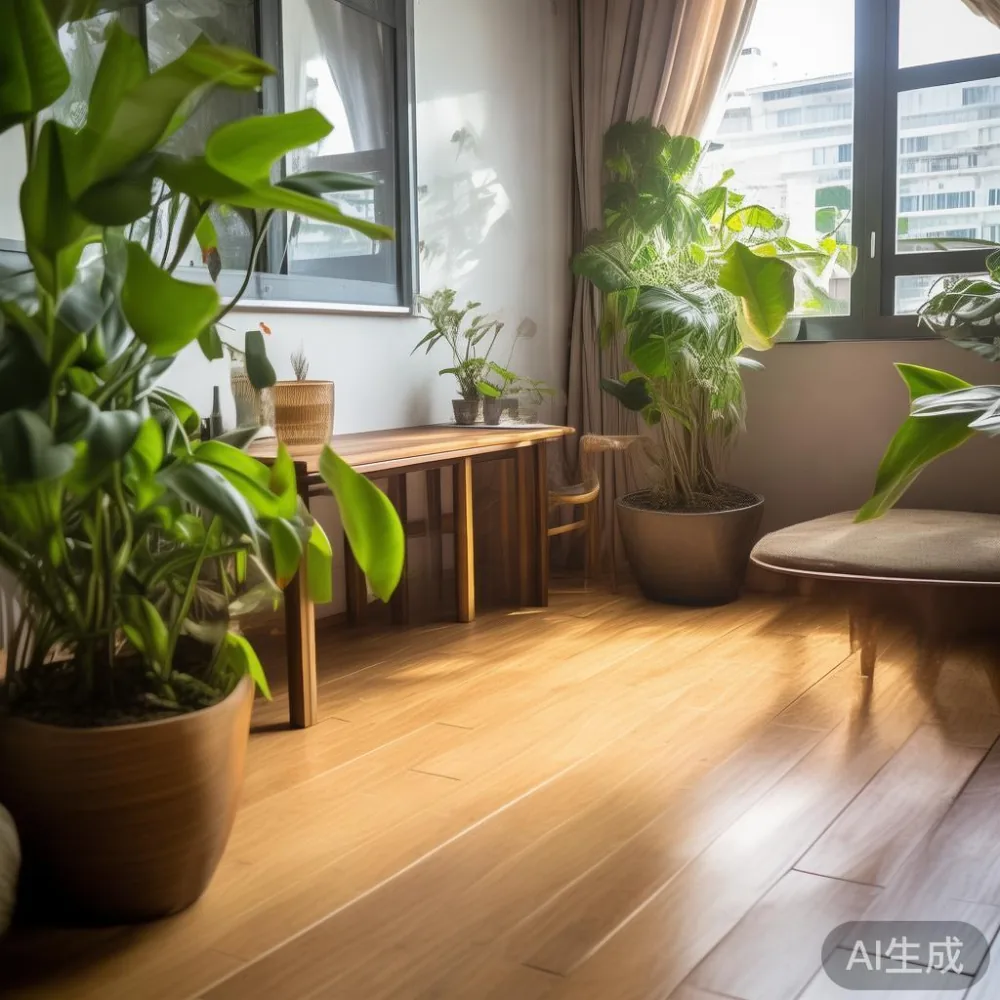
Humidity is the silent factor that decides whether a solid wood dining table or a French light luxury bed frame in your hdb living room survives five years or fifty. Southeast Asia's tropical climate is uniquely aggressive on wood: year-round relative humidity between 70% and 90%, monsoon spikes that push past 95% in October and November, and air-conditioned rooms that drop to 50% by 3 a.m. Wood is hygroscopic — it absorbs and releases moisture with every swing, expanding across the grain and contracting along it. A 180 cm oak dining table can move 6–8 mm across its width between a dry February afternoon and a wet August night. That movement does not damage solid wood if the construction accounts for it; it destroys anything that tries to fight it.
Below is a practical, locally-tested guide for anyone furnishing an HDB flat or a 60–80 sqm condo in Singapore — written with the corridors, lift doors, and GST receipts that define this market in mind.
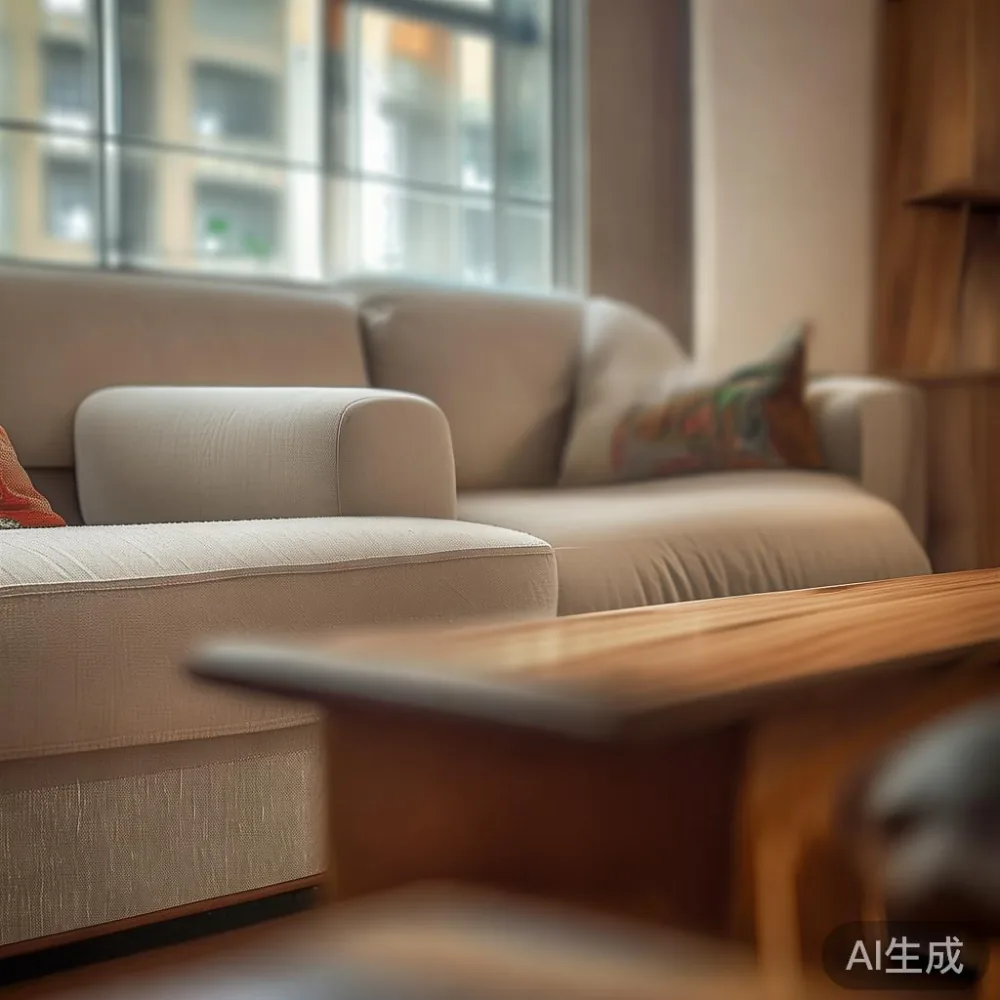
Why Singapore's climate is harder on wood than Europe or North America
Three numbers explain most of the damage I see in local homes. First, Singapore's mean annual relative humidity is 78.4%, measured at Changi across 30-year normals — roughly 15 percentage points higher than London or New York. Second, the diurnal swing inside an air-conditioned HDB living room can reach 30–40 percentage points in a single day: 85% at 7 a.m. when you open the balcony door to dry clothes, 48% by midnight after the Daikin has run for six hours. Third, the annual wood moisture content (MC) that importers quote on arrival in Singapore — usually 8–10% — sits far below the 14–18% equilibrium moisture content the timber will eventually reach once it sits in your flat. The timber is, quite literally, on a one-way trip toward swelling.
This is why a solid wood piece behaves differently here than the same SKU in a Berlin showroom. The kiln-dried oak in your bed frame was conditioned for a European winter; your HDB living room conditions it for a tropical one. Over 12 months, that oak will gain 4–6% MC and grow roughly 1% across the grain for every 4% MC change. A 200 cm wardrobe door will therefore move 4–5 mm side-to-side across the year — small on paper, enough to throw racked doors out of alignment if the carcass was built too tight.
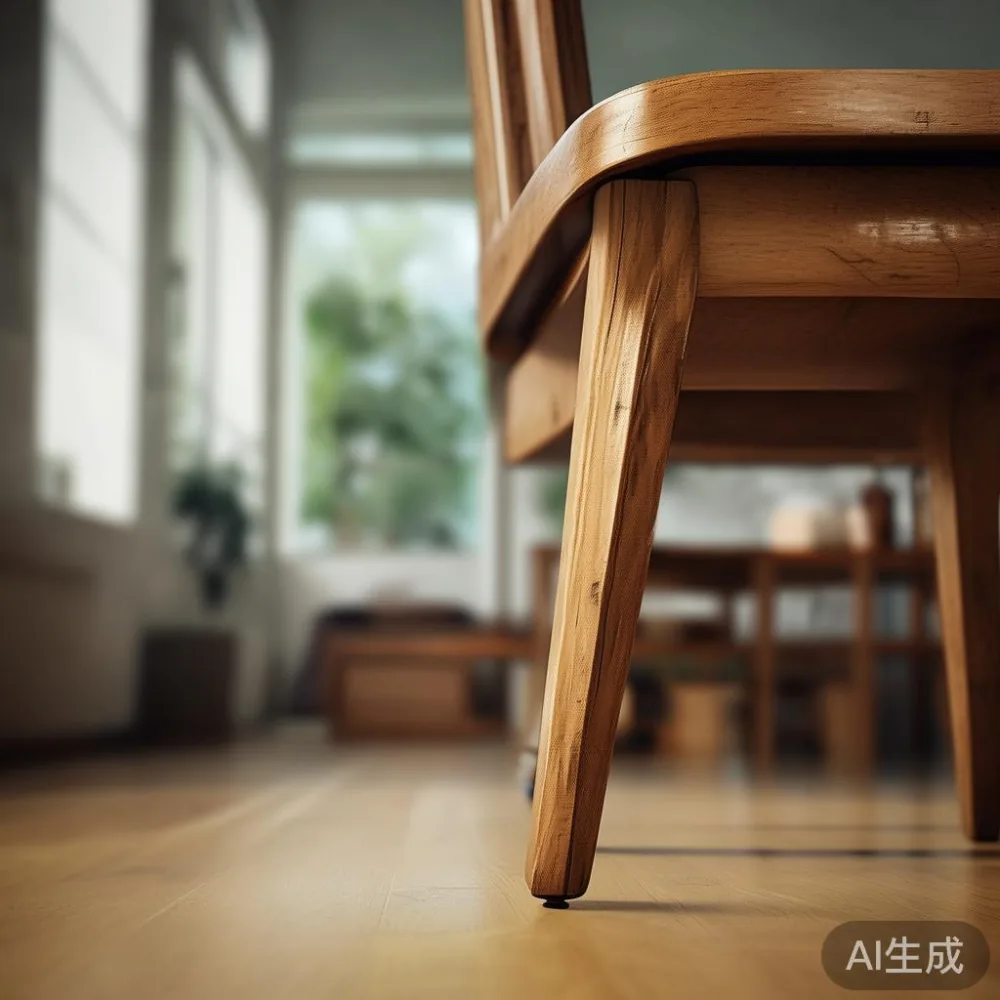
What actually happens inside the timber — and what you can see from the sofa
Wood moves anisotropically: tangential shrinkage (the direction of the growth rings, flat-sawn boards) is roughly twice as much as radial shrinkage (quartersawn, across the rings). A flat-sawn oak tabletop in your hdb living room can cup 3–5 mm from edge to center during the September monsoon, then flatten by Chinese New Year. Maple moves even more aggressively — about 9.2% tangential shrinkage from green to oven-dry versus 7.2% for red oak. Ash, beech, and rubberwood (a Southeast Asia native, often used in local joinery) sit in similar territory.
The visible signs, ranked by how often I see them in customer homes:
1. Cupping on solid tabletops — 2–6 mm concave dish across a 150–180 cm dining table. Almost always appears in August–October.
2. Sticking doors on wardrobes — typically the top corner of a 210 cm tall wardrobe rubbing against the frame in October, then a 3 mm gap by March.
3. Hairline checks on solid wood bed frames — short, 2–10 cm splits along the grain on headboards or footboards, caused by surface drying faster than the core.
4. White haze or "blush" on lacquered finishes — moisture trapped under polyurethane or NC lacquer, common on cheaper post-modern light luxury dining tables shipped from non-climate-controlled factories.
5. Mold at the back of nightstands — pushed against HDB walls that sweat during monsoon, especially on east-facing walls in Bedok and Tampines.
Is solid wood really safer than veneer and engineered panels?
Yes, with caveats. Solid wood moves — that is its nature — but it moves predictably and reversibly. A kiln-dried oak plank that cups in September will flatten in February if the construction allows it. Engineered panels (plywood, MDF with veneer, particleboard with melamine) move less in the panel direction, but they fail catastrophically when they do: delamination, swelling at the edges, blown-out screw holes, and — the one I see most often — sagging shelves inside a 60 cm wide wardrobe cubby after 24 months of humidity cycling.
Veneer over MDF is the worst performer for our climate if the seal is broken even slightly. I have seen a 4 cm bubble under a walnut-veneered bedside tabletop because a glass of water sat on it for six hours in a 78% RH room. Solid wood, by contrast, will darken, check, or warp — but it will not peel. For an hdb living room that doubles as a dining area and a homework zone, solid wood is the lower-risk choice over a 10-year horizon, even though it costs 30–60% more at the till.
Quality markers that actually matter in Singapore:
• Kiln-dried to 8–10% MC before manufacture, then re-conditioned in a humidity-controlled factory (ask for the moisture meter reading on arrival — any reputable exporter will share it).
• Mortise-and-tenon or doweled joinery on bed frames and wardrobes, not just Confirmat screws into MDF.
• Floating construction on tabletops — the planks attached with slotted clips or figure-8 fasteners to a sub-frame, so each board can expand independently.
• Wood finish with at least two coats of catalyzed lacquer or hard wax oil, not single-coat NC.
How do I care for a bed frame in humid weather?
Wipe the bed frame down with a dry microfiber cloth every two weeks, keep the room's relative humidity between 55% and 65% with a small dehumidifier, leave 10 cm of clearance behind the headboard, and never place the frame against an exterior HDB wall that sweats during the monsoon.
That sentence is the short answer. The longer version is what most local homeowners miss: the biggest threat to a solid wood bed frame is not the wood — it is the microclimate directly behind the headboard. HDB external walls in tower blocks run 1–2°C cooler than internal walls because of the concrete soffit and rebar ties, which means on a 28°C night at 80% RH, the wall surface can hit 92% RH even while the room reads 78%. That 1–2 m strip behind the bed becomes a mold farm.
Practical care routine for our climate:
• Daily: Run the air-conditioner or a dehumidifier (a 12 L/day Meaco or similar draws roughly 0.4 kWh and removes 8–10 L on a wet day) to hold 55–65% RH.
• Weekly: Wipe the headboard, footboard, and side rails with a dry cloth. Never use furniture polish that contains silicone — it traps moisture against the finish.
• Monthly: Pull the bed 10 cm off the wall, vacuum the back of the headboard, and air the gap for 30 minutes. Check the four corner brackets for any movement.
• Quarterly: Tighten the slat holders (usually 6–8 on a queen) and inspect the centre rail for any bowing.
• Annually: Book a professional inspection if the frame is under warranty. MIDHILL, for example, ships every bed frame with a 10-year structural warranty and offers a lifetime refinishing service — a meaningful safety net when a headboard develops a 5 cm check after year six.
What about a marble table or a marble-topped coffee table in the same room?
Marble is dimensionally stable, but it reacts differently to humidity. A 120 cm round marble tabletop in an hdb living room does not shrink or swell, but it does sweat — cold stone on a humid day pulls moisture from the air and leaves a thin condensation film that etches the polish over time. Travertine and white Carrara are the most vulnerable; honed finishes show water marks faster than polished ones. Always use coasters, never place wet mugs or flower vases directly on marble, and reseal the surface every 18 months with a penetrating stone sealer (around SGD 28 for 500 ml at HomeFix or Selffix DIY). Solid marble bases paired with solid wood frames are common in post-modern light luxury coffee tables — the wood can still move, so check the figure-8 fasteners under the stone once a year.
Can I really get a French light luxury solid wood sofa through a Singapore HDB doorway?
Yes, but measure first. Most HDB corridor turns are 1.2 m wide, lift doors are 0.9 m × 2.1 m, and the front door to your flat is typically 0.9 m × 2.1 m (3-panel slide-folding) or 1.0 m × 2.1 m (solid timber fire-rated). A French light luxury 3-seater solid wood sofa is usually 210–230 cm wide and 95 cm deep — it will not fit through a 0.9 m door on its longest side, but it will fit on its 95 cm depth. The legs almost always unscrew with an Allen key, dropping the height from 88 cm to 62 cm, which clears a 2.1 m door frame with 12 cm to spare. Order the assembly manual in advance, photograph the disassembly sequence, and budget 45 minutes for two people on move-in day.
For wardrobes, the same rule applies but the numbers are tighter. A 240 cm × 220 cm × 60 cm French wardrobe sg japan design will not fit through an HDB door assembled — it must be flat-packed and rebuilt in the bedroom. Budget 2.5–3 hours for two assemblists (SGD 120–180 in Singapore) and make sure the wardrobe backing panel is solid 12 mm plywood, not 3 mm hardboard, or it will warp away from the wall within 12 months.
Practical humidity numbers every Singapore homeowner should know
• Target indoor RH: 55–65%. Outside that range, wood moves and mold grows.
• Dehumidifier sizing: 12 L/day for a 90 sqm hdb living room; 8 L/day for a single bedroom.
• Wood moisture content on arrival: 8–10% (kiln-dried). Equilibrium MC in Singapore: 14–18% indoors, 18–22% near external walls.
• Expected seasonal movement across a 180 cm oak dining table: 4–6 mm tangential, 2–3 mm radial.
• Acceptable gap on a wardrobe door by month: 1–3 mm in October, 2–5 mm in March.
• Air-conditioner setpoint for stable wood: 24–26°C, fan speed low, with doors closed for at least 6 hours overnight.
• Cost of professional refinishing a 180 cm dining table in Singapore: SGD 280–450. Cost of replacing it: SGD 1,400–2,800. Lifetime refinishing, where the factory offers it (MIDHILL does, on every solid wood dining table, bed frame, and wardrobe they ship), turns that replacement cost into a one-time sunk cost over 30–40 years.
What I look for when I spec furniture for local projects
After 40+ site visits in the last two years across Tampines, Bedok, Punggol, and Tiong Bahru, my shortlist for any hdb living room is narrow. Solid wood bed frame in white oak or ash, kiln-dried and re-conditioned, with a floating slat system. Solid wood dining table in walnut or oak, 150–180 cm, with breadboard ends that allow movement. Solid wood nightstands (450–550 mm wide, 550–650 mm tall) that match the bed — the proportion matters more than people think. A marble coffee table with a sealed top and a solid wood sub-frame. A wardrobe with 18 mm birch ply carcase, solid wood doors, and soft-close hinges rated for 100,000 cycles.
I skip anything that arrives in a single carton over 35 kg (the HDB lift will accept it, but the corridor turn will not), anything without published moisture-meter readings, anything with melamine inside the drawers, and anything priced below SGD 1,200 for a queen bed frame — the margin below that number means engineered panels are hiding somewhere.
One last note on logistics, because Singapore buyers forget this until the truck arrives. Foshan-to-Singapore shipping by sea runs 7–10 days, by air 3–4 days. Customs clearance plus GST (9% on landed cost) plus delivery from the Jurong warehouse to your flat typically adds 4–6 working days. Free shipping over US$350 (about SGD 480) is standard among serious Foshan exporters, and 14-day returns on stocked SKUs are now common. MIDHILL, established in 2008 and shipping to 15+ countries, runs that exact playbook — which is why their pieces show up in so many local ID mood boards and in the show flats of new launches in the Outside Central Region.
Take care of the humidity, and the furniture takes care of you. That is the whole game.