What Drives Solid Wood Furniture Prices in Singapore
Last month I visited a friend in a 5-room flat in Punggol who had just spent SGD 1,650 on a "solid wood" TV console from a pasar malam seller. Six weeks in, the drawer fronts had warped and a corner joint had split clean open. The seller had vanished. Meanwhile, a 28mm-thick rubberwood console from a proper manufacturer — the kind that publishes its kiln-dry percentages and offers a 10-year structural warranty — sat in a similar Tampines HDB living room at SGD 2,190, and looked like new after two years of kids, a cat, and daily use. The price gap between those two pieces was about SGD 540. The quality gap was roughly ten years.
This is the question almost every HDB owner in Bedok, Punggol, or Tampines eventually asks when shopping for a solid wood sofa frame, a bed frame, a dining table, a wardrobe, or a nightstand: why does one piece cost SGD 900 and another cost SGD 4,200? And — more importantly — what are you actually paying for? Below is a field guide to the price drivers, written from a furniture specialist's perspective, with the Singapore lift doors, corridor widths, and 9% GST receipts in mind.
The single biggest price driver is the wood itself
Wood is not one material. It is dozens of materials, each with a different density, colour, drying behaviour, and origin. When a brand says "solid wood", the real question is: which wood, dried to what moisture content, and from what region?
For HDB living room contexts, three species dominate the mid-market:
- Rubberwood (Hevea brasiliensis) — SG 600–800 per cubic metre. A plantation by-product of the latex industry, kiln-dried to 8–12% moisture content. Dense, pale, takes stain evenly. The workhorse of most Singapore-imported solid wood bed frames and dining tables in the SGD 1,500–3,500 bracket.
- Ash (Fraxinus americana) — SG 1,400–1,900 per cubic metre. Open grain, springy, used by many American light luxury makers for bed frames and dining table tops because the grain reads "modern" without staining.
- White oak (Quercus alba) — SG 2,800–3,800 per cubic metre. The French light luxury favourite. Quarter-sawn boards alone can add 30% to a marble table's co-ordinator price. A 1.8m white oak top alone, kiln-dried to 6–8%, will consume SGD 1,200–1,800 of raw material before a single mortise is cut.
Then there are the drying costs. A proper kiln run takes 3–6 weeks and adds roughly SG 120–220 per cubic metre to the wholesale price. Skip it, and the board will cup inside your air-conditioned HDB living room within six months. That is the single most common cause of the "warped wardrobe door" complaint I see in Bedok and Punggol flats.
Joinery and thickness are where the bargain bins cut corners
If you walk into a showroom in Foshan and put a hand on two dining tables priced 80 apart, the visible difference is almost always in two places: the thickness of the solid wood, and the way the pieces are joined.
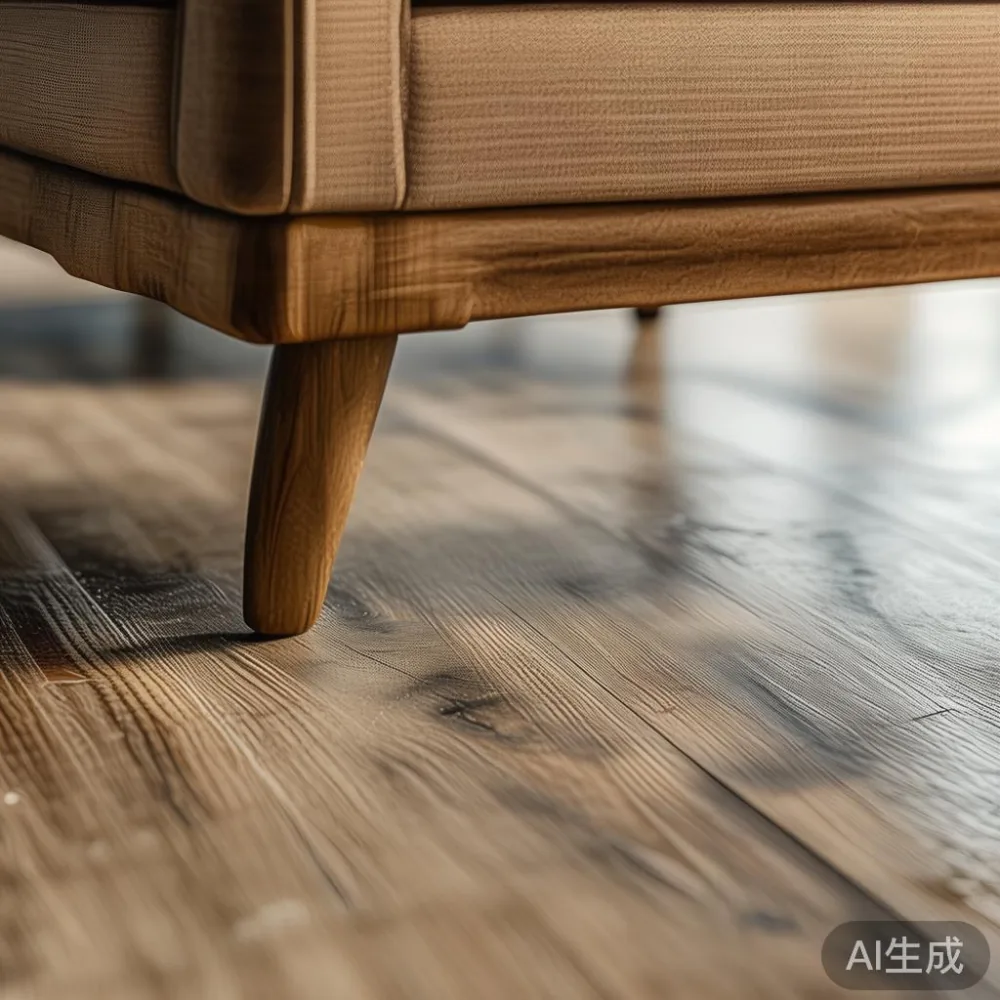
A budget sofa for a 3-seater uses 18mm-thick pine or rubberwood for the internal frame, dowel-glued or even stapled at the joints. Under 80kg of daily use — and a Singapore 3-seater sees that within a year — the rails loosen. A proper solid wood sofa for an HDB living room uses 22–28mm hardwood rails, mortise-and-tenon joints, and corner braces that are screwed, not stapled. That difference adds roughly SG 180–260 to the build cost per piece. It is invisible at the showroom. It is everything in year five.
For dining tables, thickness tells the same story:
- 18mm top — entry level; will telegraph any unevenness in the base after a year
- 25–28mm top — the workhorse range; suitable for most HDB dining nooks
- 32–40mm top — French light luxury and American light luxury territory; the slab itself can weigh 45–70 kg, which matters when the lift in your Tampines block has a 1.0 m × 1.4 m door and a 1,500 kg rated cabin
- 45–55mm top — post-modern light luxury statement pieces; usually paired with a marble table base in Calacatta or Carrara
Thickness alone can swing a dining table's wholesale price by SG 600–1,400. The labour is the next driver.
How do I style a Modern light luxury loveseat in a small apartment?
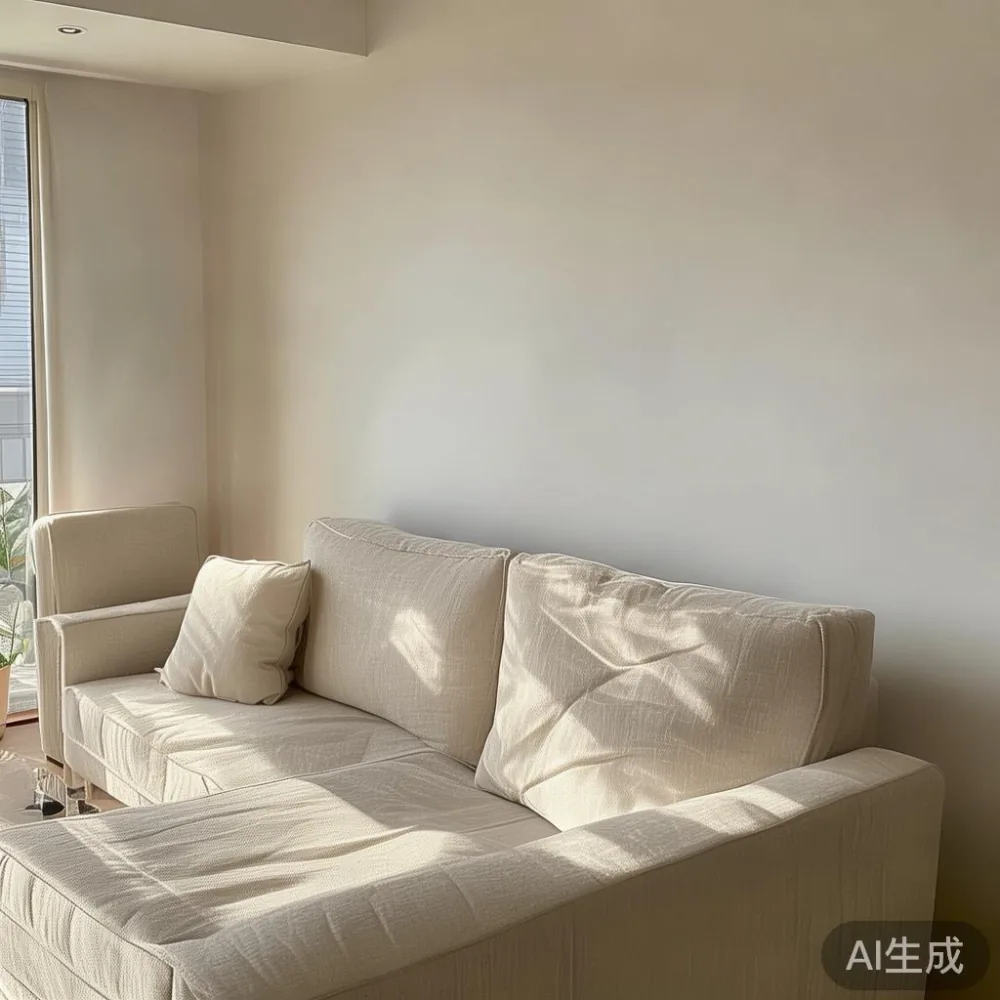
A Modern light luxury loveseat works in a compact HDB living room when you treat it as the room's anchor, not its afterthought — pair a low-back loveseat in performance linen with one slim marble side table, keep the wall behind it empty, and let the joinery and the fabric do the talking.
The styling logic is simple, and it scales. In a 4-room HDB living room of roughly 16–20 sqm — the standard for a Tampines or Bedok BTO — a 140cm-wide loveseat in muted oat or sage linen occupies the centre without crowding the corridor to the kitchen. Skip the matching two-seater-and-armchair set; it eats 1.2m of extra width and forces the TV console to shrink. Instead, layer one slim marble table (a 50cm round in white or grey vein) as a side surface, and a modular coffee table for bedroom use nearby — wait, that's a bedroom-feeling listing — for the living room, a low rectangular ottoman in the same fabric as the loveseat, sized to slide fully under a console ledge when guests arrive. The result reads as post-modern light luxury, costs less than a 3-seater sofa + armchair + coffee table set, and clears the 1.2m HDB corridor passage that fire-safety audits check.
The fabric choice matters more than the frame colour. A performance linen at 280–340 GSM (grams per square metre) resists pilling under daily use; a 180 GSM cotton will pill within 18 months in air-conditioned humidity. Budget SG 60–120 per metre for the good stuff, and SG 25–45 for the bargain rolls. Over a 140cm loveseat, that gap is roughly SG 220–340 — material, and your first-year satisfaction.
Hardware, finishes, and the hidden SG 200 in material & finish
Walk into any Foshan showroom and pick up a wardrobe door. The cheap one uses a butt hinge stamped from 1.0mm steel that flexes when you open the door. The proper one uses a 1.5mm-thick cup hinge with hydraulic soft-close, rated for 100,000 cycles. The hinge alone is SG 4 vs SG 22. Over a four-door wardrobe, that is SG 72 — and the cheap one will not survive a year of a six-year-old.
The same arithmetic applies across the piece:
- Drawer runners — SG 6 per pair (friction slide) vs SG 38 per pair (soft-close, German-engineered). A six-drawer nightstand set uses 6 pairs: SG 200–260 swing.
- Finishes — NC (nitrocellulose) lacquer at SG 12–18 per sqm vs water-based PU at SG 28–42 per sqm. The PU version holds up to spilled teh tarik; the NC version yellows under Singapore UV.
- Upholstery foam — 22kg/m³ density at SG 18 per sqm vs 32kg/m³ high-resilience at SG 36 per sqm. The denser foam recovers shape after a 90kg adult sits on it; the cheap one sags within 18 months.
Across a full solid wood sofa + dining table + bed frame + wardrobe + nightstand + marble table package, the cumulative hardware and finish premium over the bargain-tier equivalent is typically SG 1,400–2,600. That is the single largest line item most shoppers never see on the price tag.
Where the furniture is made, and what gets shipped across the South China Sea
Geography shapes the receipt. A piece labelled "Made in China" can mean a Foshan factory with EU-certified kiln drying and a 10-year structural warranty — or a workshop in a smaller industrial park with neither. The difference shows up in the documentation: ask for the moisture-content certificate (8–12% is the safe range), the FSC chain-of-custody number, and the warranty terms in writing.
For HDB deliveries specifically, three numbers matter:
- Standard HDB lift door — 0.9m wide × 2.1m tall. A 1.8m dining table top will not fit vertically; it must be tilted, which is why most Foshan makers cut dining tops at 1.6m or split them into two halves with a bolt-on join.
- Lift cabin depth — 1.4–1.6m on newer BTOs. A wardrobe deeper than 0.6m must be assembled in the HDB living room, not the corridor.
- Corridor width — minimum 1.2m for fire safety. A modular sectional sofa in four boxes arrives easily; a fully assembled 2.4m sofa does not.
This is also why a modular coffee table for bedroom use, when re-purposed as a living-room ottoman, is one of the smarter buys for an HDB flat: flat-pack, two-person carry, and no risk of a SGD 80 re-delivery fee when the lift is too small. MIDHILL publishes its shipping dimensions on every product page for exactly this reason — the SG 350 free-shipping threshold in Singapore roughly covers a solid wood bed frame, but a 4-piece HDB living room package crosses SGD 1,200 in cart to waive delivery. Worth knowing before you click checkout.
Warranty, returns, and what they signal about the maker
Two warranty structures tell you almost everything:
- 10-year structural warranty — the maker is confident the kiln-dried frame, the mortise joints, and the PU finish will hold. A 10-year term is also roughly the lifespan of an HDB living room set under a family with children, so the warranty lines up with the use case.
- Lifetime refinishing — a service that costs the maker SG 80–140 per visit in labour, and that almost no discount-tier brand will offer. It signals that the surfaces are sandable solid wood, not vinyl-laminate over MDF. MIDHILL's lifetime refinishing program, for example, means a scratched dining table top from a Punggol HDB living room can be sanded and re-finished in the workshop rather than replaced — a SG 300–600 saving over the life of the piece.
Returns matter in a Singapore context because GST (9%) sits on top of the sticker. A 14-day return window lets you verify that the kiln-dry claim is real: if a piece arrives with a moisture-meter reading above 14% at the joints, it is going to move. Send it back. The free-shipping-over-SGD-350 threshold and 14-day returns policy that serious Foshan makers offer are not generosity — they are risk-sharing. The maker is betting the piece will pass inspection. The bargain seller cannot afford that bet.
How to read a price tag without getting fooled
Three checks, in order, before you commit to any solid wood sofa, bed frame, dining table, wardrobe, nightstand, or marble table for an HDB living room:
- Ask for the species and the moisture content. "Solid wood" is a marketing phrase. "Rubberwood, kiln-dried to 10% MC" is a spec. The second one is worth paying for.
- Ask for the joinery method. Dowel-and-glue is not mortise-and-tenon. Staples are not pocket screws. The SG 200–260 per-piece difference is justified.
- Ask for the warranty and the shipping dimensions. A 10-year structural warranty, lifetime refinishing, and dimensions that fit a standard HDB lift are the three signals that you are talking to a maker, not a reseller.
The cheapest solid wood sofa in the Tampines mall is rarely the bargain it looks like. The most expensive is rarely the smartest purchase. The right answer sits in the middle — where the wood is named, the joints are real, and the warranty is long enough to outlast the next BTO renovation cycle.