Furniture Warranties: A Guide for HDB Livingrooms
Most furniture warranties look reassuring until a joint loosens, a drawer rail twists or a marble table arrives with a chipped edge. In a Singapore HDB flat or condo, even a small defect can be frustrating: replacement furniture must fit through the lift, the corridor and the home, while delivery to a high floor can take 7–14 days. A written warranty is useful only when you understand exactly what it covers, what it excludes and how claims are handled.

This guide explains how to read a solid wood furniture warranty, with practical checks for a solid wood sofa, bed frame, dining table, wardrobe, nightstand and marble table. It also considers access, GST and realistic timelines for Singapore homes in Tampines, Bedok and Punggol.
What does a 10-year structural warranty actually mean?
A 10-year structural warranty usually refers to defects in the load-bearing construction of eligible products. It may cover frame joints, certain structural hardware, bed supports or the stability of a dining table. It does not automatically mean every part is guaranteed for 10 years. Upholstery, finish, electrical components, moving parts and accidental damage often have separate terms.
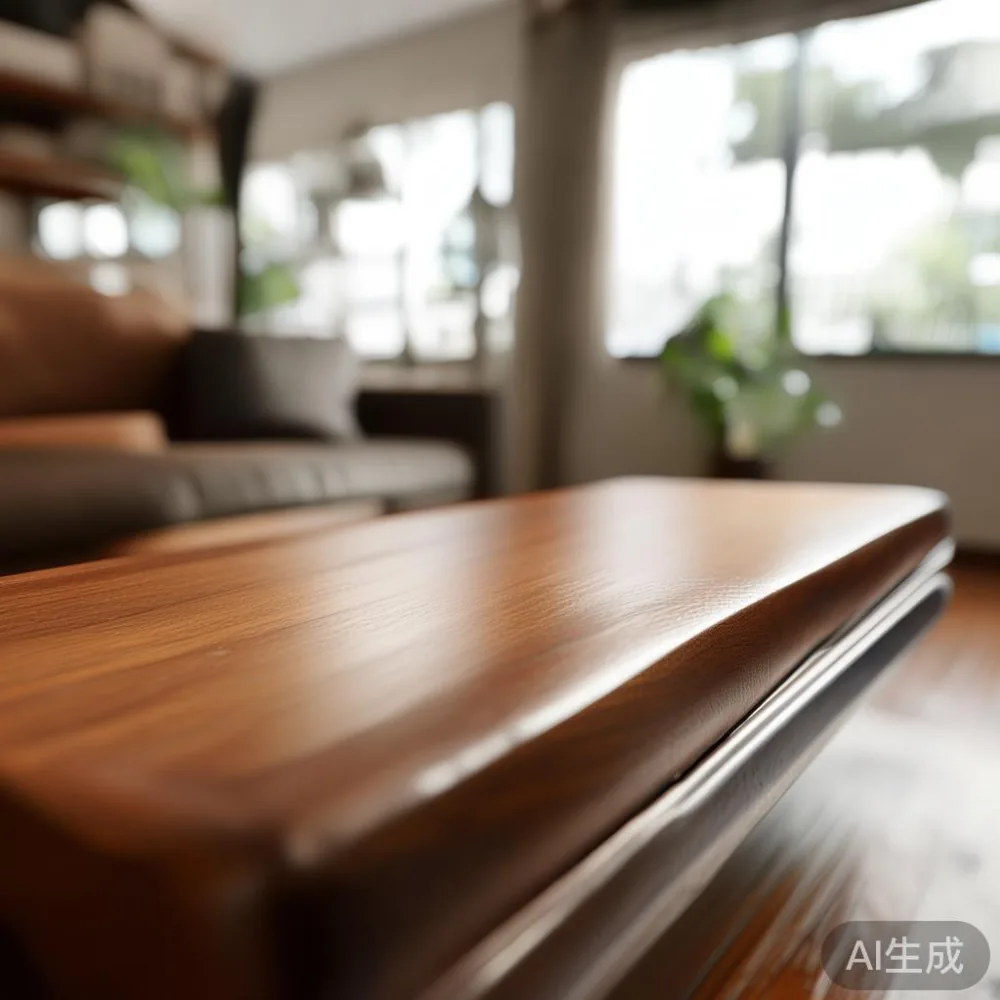
Check the product-specific document rather than relying on a headline. A solid wood bed frame may have a 10-year structural term, while its slats, drawer runners and surface finish could be covered for 1–3 years. A wardrobe may have a 10-year frame term, with hinges and runners governed by different conditions. The same period does not always apply to every component.
MIDHILL was established in 2008 and provides a 10-year structural warranty on eligible furniture, together with lifetime refinishing. That combination is valuable, but the warranty schedule should still be read closely. “Structural” can include qualifying timber defects and construction failures; scratches, ordinary colour changes and damage caused by unsuitable care may sit outside that scope.

Ask for the full warranty in writing before payment. Look for the legal entity providing it, the products covered, the commencement date, exclusions, claim evidence, repair or replacement procedures, and the treatment of freight, labour and GST. Singapore prices normally include GST, but a replacement quote should state whether tax is included rather than adding an unexplained charge later.
Does the warranty cover my exact materials and components?
Material names need precision. “Solid wood” generally means the named timber components are solid wood, but an item may also contain plywood, engineered board, metal, leather, fabric, foam, stone or other materials. A warranty may apply differently to each.
For a solid wood sofa, separate the timber frame from cushions, springs, fabric and stitching. For a dining table, check whether extension rails, leaves and joints count as structural parts. For a wardrobe, confirm whether the carcass, shelves, doors, hinges and drawer runners are covered. For a marble table, ask whether cracking, chipping, staining and natural veining are treated differently. Marble is a natural product, and the warranty cannot reasonably promise that every variation or accidental impact will be replaced.
Also check grade rules. Some documents refer to “commercial use,” “outdoor use” or “unusual loading.” A dining table rated for 80 kg is not intended to support several adults leaning on one end. A bed frame with a stated 120 kg limit has a different structural expectation from one rated at 250 kg. These figures should appear in the specifications, not only in a chat message.
Finish is another common source of confusion. Lifetime refinishing may be available for specified solid wood pieces, but it may not apply to marble, lacquer, upholstery, painted metal or composite panels. Confirm whether refinishing is included, chargeable, subject to colour availability or offered only under a service plan.
Will replacement furniture fit through my HDB lift and corridor?
A warranty is easier to use when the replacement can physically reach your home. Measure the lift car, lift door, landing, corridor turns, stairs and room entrance before ordering. In many Singapore developments, a lift car might measure roughly 110 cm wide and 140 cm deep, but shared or renovated lifts can differ. A sofa packed for transport may measure only 85–95 cm wide, yet a wardrobe carton may exceed 100 cm and remain impossible to turn at a corridor corner.
Ask the supplier for the packaged dimensions and weight of each replacement. A dining table may weigh 65 kg, a bed frame 55 kg and a solid wood sofa 75 kg. These are not unusual figures, and they affect both delivery handling and warranty service. Confirm whether delivery includes carrying the item upstairs or stopping at the lift lobby.
For claims, record any access conditions at the time of delivery. Photograph narrow turns, protective floor coverings and the item’s condition. If a replacement must be returned, clarify who pays for collection and whether the item must be wrapped in its original packaging.
Singapore HDB livingroom layouts often place the sofa against the main wall, with a dining table near the kitchen and a bed frame in the bedroom. That makes access planning part of furniture ownership, not a separate delivery detail. A warranty should not become a frustrating loop of repeated failed delivery attempts.
How long do repairs, replacements and refunds take?
Find out whether a claim is resolved through repair, replacement, store credit or refund. Some warranties permit the supplier to choose the remedy; others let the customer select within defined limits. A replacement may be like-for-like, but “like-for-like” should be defined by material, dimensions, finish and current availability.
Ask for target periods. A reasonable document may acknowledge a claim within 3 business days, inspect it within 7 days and complete an approved repair or replacement within 14–30 days. These are examples to negotiate, not universal legal deadlines. Singapore’s Consumer Protection (Fair Trading) Act generally requires suppliers to respond to representations made about goods, but a specific warranty claim can still involve inspection and evidence.
Shipping matters too. MIDHILL offers free shipping on orders above US$350, but the promotion threshold is stated in US dollars even though local furniture purchases here are normally priced in SGD. Ask whether the benefit is converted to SGD at checkout and how freight is handled during a warranty claim.
Also confirm what happens if a model is discontinued. A 10-year promise remains meaningful only if the supplier has a process for discontinued finishes or unavailable components. Good terms may allow equivalent replacement, repair or a proportionate credit, with the method stated clearly.
What should I photograph before delivery?
Create a dated record before the furniture enters the home. Photograph each side of a solid wood sofa, the top and underside of a bed frame, the complete dining table, wardrobe doors and drawers, both nightstands and every visible area of a marble table. Include close-ups of joints, corners, glass or marble edges, hardware and packaging labels.
Check the product against the invoice on the same day. Confirm dimensions, timber or stone specification, colour, hardware finish and included accessories. Keep the serial number, order number, assembly instructions and warranty document together in a folder.
Assembly can create false damage claims. Follow the specified torque, use all approved fixings and avoid tightening joints beyond the manufacturer’s instructions. For a solid wood sofa, do not assume every cushion should be pulled tightly against the frame; some designs use ties or Velcro. For a bed frame, check that rails meet squarely and slats sit fully on their supports.
Natural materials need sensible expectations. Solid wood may move slightly as humidity changes. A dining table may develop small surface marks, while marble may show characteristic veining. Ask the supplier to define the permitted range instead of relying on phrases such as “minor variation.”
How do I style light luxury furniture without creating maintenance problems?
Light luxury is not limited to ornate decoration. French light luxury often uses pale woods, curved profiles, tactile upholstery and balanced proportions. American light luxury tends toward clean lines, generous comfort and understated metal details. Post-modern light luxury can combine restrained forms with selected geometric accents.
For an HDB livingroom, start with measurements rather than mood boards. A sofa with a depth of 95 cm needs roughly 120 cm of clear floor space in front for circulation. A dining table seating 6 should allow at least 90 cm between the table edge and a wall. A 45 cm round nightstand suits many compact bedrooms, while a 40 cm model may fit more comfortably beside a smaller bed frame.
If you are working out how to style light luxury sofa in room layouts, use one large piece, one warm material and 2–3 colours before adding more. A light timber dining table, cream upholstered sofa and matte-black lamps can work without making the space feel crowded.
For upholstery, ask about cleaning codes and the removable-cover policy. For stone, request a care sheet and clarify whether acidic cleaners are prohibited. A marble table is durable for normal indoor use, but lemon juice, wine and harsh chemicals can etch the surface.
Can I use a French wardrobe in a compact apartment?
A French-inspired wardrobe can suit an apartment if the doors, handles and internal modules are scaled to the room. For someone comparing options and asking is French wardrobe worth it for a Singapore home, the answer depends on usable capacity and door clearance, not only appearance.
A 150 cm-wide wardrobe with sliding doors may fit a 180 cm bedroom wall more easily than a hinged model. Check that panels open without hitting a bed frame or wardrobe opposite. Allow at least 60 cm of floor space in front of hinged doors for access, subject to the actual door swing.
Those learning how to style French wardrobe in apartment interiors can use pale wall colours, cream or muted sage fronts, matching timber and restrained brass hardware. In an HDB flat, the effect should feel calm rather than visually heavy. For a more practical comparison, a search for the best Nordic wardrobe for 2026 can help identify simple carcasses and well-planned storage, although “best” here should be judged by dimensions, hardware and warranty rather than image alone.
Storage design is worth checking carefully. “Mid-century modern with storage” describes a useful direction for compact HDB livingroom furniture: clean profiles combined with drawers, shelves or concealed compartments. Confirm drawer dimensions, shelf spacing, hanging lengths and whether the wardrobe includes anti-tip fittings. Children’s bedrooms require appropriate anchoring, and the supplied fixings must suit the wall material.
How do I choose a French provincial sofa?
Learning how to choose French provincial sofa for an HDB livingroom involves more than selecting curved arms and loose cushions. Measure the lift, corridor and stairwell first, then compare the sofa’s external dimensions with its usable seat width. A sofa labelled 220 cm wide may have only 175–185 cm of practical seating because of its arms and cushions.
Check frame construction, suspension, cushion density and warranty coverage. Ask whether the upholstery is removable, whether the frame is kiln-dried solid wood, and which joints are guaranteed. Confirm that the supplier will not describe a timber frame as solid wood unless the relevant load-bearing components are genuinely solid wood.
French provincial styling can feel too decorative in a small room if every piece shares the same carved details. Pair one statement sofa with plain walls, a simple rug and restrained side tables. For a dining setting, a pale solid wood dining table with upholstered chairs can continue the theme without overcrowding the HDB livingroom.
Test the seat if possible. Sit for 10 minutes, check the height against the coffee table and ensure the arms do not block entry from the main walkway. A 42–45 cm seat height often suits standard coffee tables, but individual proportions vary.
Which clauses deserve the closest attention?
Read exclusions, exclusions, then read them again. Common limits include improper assembly, commercial or outdoor use, excessive load, deliberate damage, pest activity, water exposure, direct heat and normal wear. A useful clause explains how these situations will be assessed rather than rejecting a claim without inspection.
Look for a claims process with specific evidence requirements. A clear warranty may ask for the order number, serial number, photographs, a short description and access to the item. It should also say whether proof of purchase is necessary and whether the customer must stop using a defective item to prevent further harm.
Check the difference between a manufacturer warranty and a retailer promise. If the furniture is sold by MIDHILL, confirm which entity arranges the inspection and communicates the outcome. For consumer confidence, a supplier established in 2008, exporting to 15+ countries and offering a 10-year structural warranty should have documented procedures for claims outside its immediate factory location.
Ask how warranties transfer if the home is sold or rented. They may be transferable to the original purchaser for the stated period but not automatically to a new owner. Also check whether a move counts as a permitted transfer event and whether service visits after relocation are available.
What should I do when a defect appears?
Contact the supplier promptly, ideally within 7 days of discovering the issue. Stop using the affected piece if it creates a safety risk. Do not repair it yourself or apply an incompatible finish unless the supplier approves, because unauthorised work may affect the claim.
Send the order number, warranty registration, clear photographs and a short factual timeline. Describe the defect, not your interpretation of its cause. If a joint has loosened, show the unloaded and loaded condition if safe to do so. For a marble table, photograph the chip from several angles and include a ruler or coin for scale.
Keep every reference number and response. Agree on the inspection method before the item is moved. Record the condition again before a technician enters the home, especially for high-rise units. If the claim is approved, confirm the replacement model, dimensions, delivery date and whether labour, packaging and GST are included.
If a deadline is missed, request a written reason and a revised date. A 14-day return policy may address a preference-based purchase, while a structural warranty addresses qualifying defects over a longer period. They are different protections and should not be treated as interchangeable.
What questions should I ask before paying?
Put the important answers into the order file. Ask: “Which components have a 10-year term?” “What happens after 1 year?” “Can refinishing be requested once, or repeatedly?” “Are marble and solid wood covered equally?” “Who pays for collection?” “How is an HDB high-floor replacement delivered?” and “Can the warranty claim be submitted by email?”
Check whether the quoted dimensions and weight match the manufacturer’s specification. A 3-door wardrobe weighing 95 kg may need two installers, while a 48 kg nightstand may still be difficult to move through a narrow corridor. Delivery days should distinguish stock dispatch from the actual arrival window; allow roughly 7–14 business days for made-to-order or replacement items.
Finally, confirm returns and warranty claims do not require the customer to pay twice. If an item is rejected under the 14-day returns policy, ask when the refund is issued and whether the original delivery or return freight is deducted. For a purchase above the stated US$350 shipping threshold, request the SGD conversion shown on the invoice.
A good warranty is not the shortest document or the largest number in bold. It is a clear map from purchase to remedy. In a Singapore home, that map should connect the product specification to component coverage, proof of purchase, access arrangements and a realistic response period. Those details are what prevent a 10-year promise from turning into uncertainty after the first chipped edge or loose joint.