How to Read a Furniture Warranty Without Getting Caught Out
I learned this lesson the hard way last August, when my sister's three-year-old solid wood sofa developed a hairline crack on the armrest. The retailer in Jurong had offered a "5-year warranty" printed in big letters on the price tag. What we only discovered after the crack appeared was that the warranty covered the frame but excluded any wood movement above 2 mm, any finish fading, and any damage caused by Singapore's humidity range above 80 % RH — which is roughly eight months of the year. The whole bill came to S$340. That is the day I started reading warranty cards like a contract lawyer, and it is the reason for this guide.
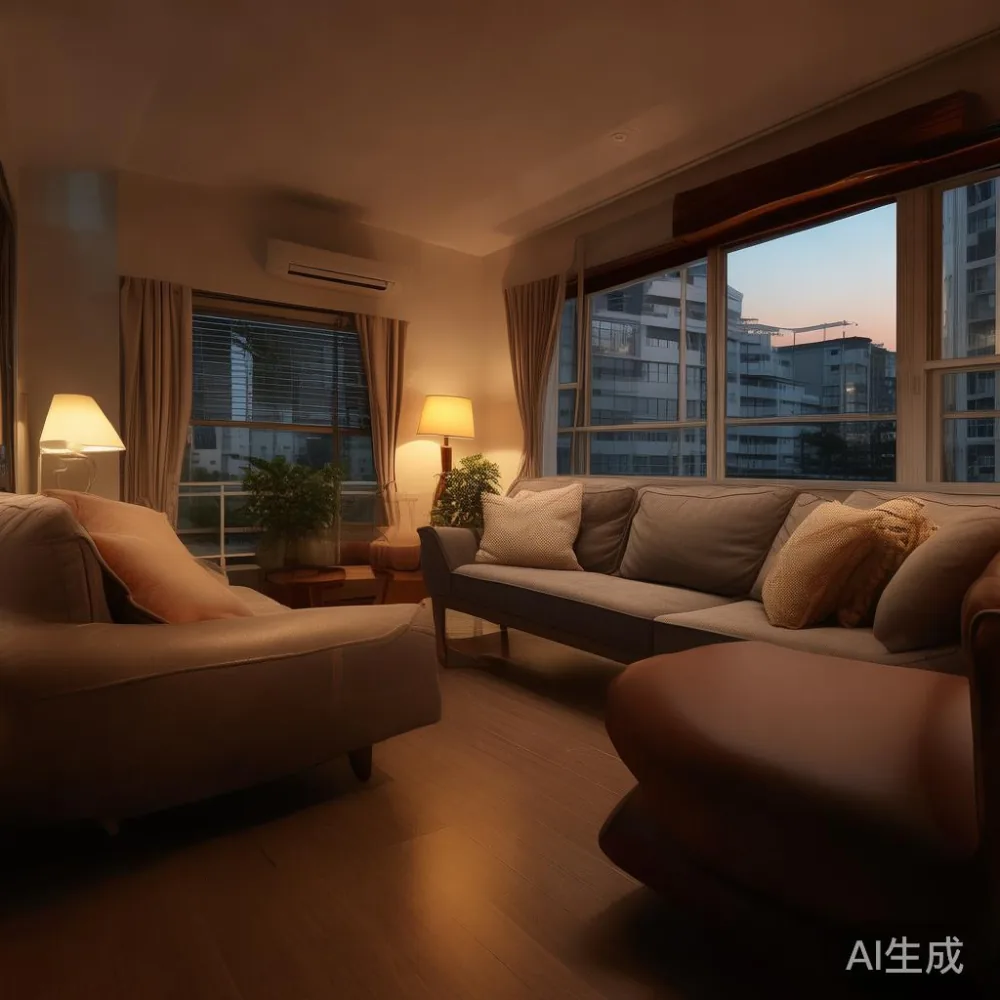
Whether you are furnishing a 90 sqm BTO in Punggol, a resale flat in Tampines, or a compact condo in Bedok, warranties behave very differently across the market. MIDHILL, a Foshan solid wood furniture maker established in 2008 and now shipping to more than 15 countries, publishes one of the clearer consumer-facing warranty documents I have come across. Their 10-year structural warranty and lifetime refinishing offer makes them a useful benchmark, even if you end up buying somewhere else. The point of this article is to give you a checklist that works on any warranty, from any brand selling into an hdb livingroom.
What does "structural warranty" actually cover?
The word "structural" is the first place brands can quietly narrow your cover. A structural warranty should mean the load-bearing skeleton of the piece — the frame rails, the corner blocks, the slats, the legs, and the joints that hold them together. On a solid wood sofa, that means the hardwood inner frame and the dowel-and-glue joints, not the cushions, not the upholstery, not the lacquer. On a bed frame, it means the side rails, centre rail, and slats, but usually excludes the mattress and any electrical motors. On a dining table, the apron, the legs, and the corner brackets, but not the leaf extensions or the felt pads.

When I visited the MIDHILL showroom in Foshan earlier this year, the staff pulled out three different warranty cards for three different items: a dining table, a Modern light luxury nightstand, and a wardrobe. The dining table card specifically listed "frame, aprons, legs, and corner blocks" as covered. The nightstand card included "drawer runners and hinges" but excluded "glass, marble tops, and electrical components." The wardrobe card covered "panels, dowels, cam locks, and wardrobe rails" but excluded "LED lighting strips, mirror glass, and soft-close mechanisms after year three." That level of specificity is what you want. If a card just says "structural components" with no list, ask for the list.
Is the warranty void if I move house within my HDB block?
This is a question I get from buyers in Tampines and Punggol almost every week, because so many young couples there upgrade from a 4-room to a 5-room flat within a 3 km radius. The honest answer is: it depends on the mover. Some brands, including MIDHILL, cover the warranty through one owner-to-owner transfer as long as the original proof of purchase and the new address are updated. Others void it the moment the piece leaves the delivery address, even if you are moving three blocks down the corridor.
Pay close attention to language around "site of original delivery," "original purchaser," and "transferable." If the warranty is non-transferable, the resale value of the item drops sharply. Singapore's HDB resale market moves fast, and a wardrobe that retains warranty through a resale can add roughly S$200 to S$400 to the negotiated price. If the warranty is transferable, ask whether there is a small admin fee (usually S$30 to S$60) and how long the transfer takes. Reputable brands put the answer in writing.
What humidity clause is hiding in the fine print?
Singapore's average relative humidity sits between 70 % and 85 % year-round. Air-conditioned flats can drop to 55 % RH in the bedroom overnight and climb back to 78 % RH when the door is open. Wood responds to both ends. Solid oak, ash, and walnut move roughly 1 % to 2 % across the grain when humidity shifts by 20 points. That is why a clause reading "warranty excludes warping, cracking, or splitting caused by humidity outside the 45 % to 65 % RH range" can swallow nearly every claim you might file.
The clause is technically not dishonest: very few hardwood frames are built for tropical humidity cycles. But it does mean you need a hygrometer (a basic one costs S$18 from any neighbourhood electronics shop in Bedok) and you need to keep the room between 45 % and 65 % with a dehumidifier if necessary. Some light luxury brands whose light luxury dressing table range retails north of S$1,800 actually include a brand-branded hygrometer in the box, plus printed care instructions in English. When you see that level of detail, it usually signals a manufacturer confident enough in their seasoning process to put it in writing.
How long is "lifetime" and what does it really mean?
A "lifetime warranty" can mean three different things, and you should know which one you are buying.
- The lifetime of the product — the warranty ends the day the piece is scrapped.
- The lifetime of the original buyer — the warranty dies with the owner, non-transferable.
- The lifetime of the company or brand — bound to whatever lifespan the legal entity has.
MIDHILL's lifetime refinishing offer, for example, is tied to the original owner and covers sanding, re-lacquering, and re-oosing for as long as the piece remains in serviceable condition. That is meaningfully different from a "lifetime warranty" that disappears in 7 years because the brand has decided that's a reasonable product life. Ask for the definition in writing. Ask whether refinishing is free, half-price, or paid at cost. Ask how many rounds of refinishing are included (the honest answer is usually one or two, since each sanding removes 0.5 mm to 1 mm of wood).
How do shipping, GST, and corridor widths change the warranty conversation?
This is the part nobody talks about, and it matters a lot in HDB blocks. A typical HDB lift door is 90 cm wide and 2.1 m tall. A typical HDB corridor turn is 1.2 m wide. A 2.4 m long solid wood bed frame, disassembled, still has a 2.1 m crate. Many brands will void structural warranty claims if the piece was damaged during self-arranged transport up the stairs. So your warranty is only as good as the delivery service behind it.
Check whether the brand offers door-to-door delivery that includes the lift and corridor transit, whether they subcontract, and whether damage in transit is covered by the same warranty or a separate "transit damage" claim. Ask whether they ship flat-pack or fully assembled. A flat-pack bed frame at 95 kg total in four 22 kg cartons fits through nearly any door, but a fully assembled dining table at 1.8 m may not fit your lift at all, and the brand should tell you that before you pay.
On pricing: a S$1,200 solid wood dining table before 9 % GST becomes S$1,308. With free shipping over a meaningful threshold (MIDHILL, for instance, ships free over US$350, which is roughly S$475), your break-even on a single-piece order starts at around S$500 to S$600 of subtotal. Below that, delivery adds S$50 to S$120 depending on the lift access and the floor level. Above the 14th floor, some carriers add a S$30 high-floor surcharge.
What should I look for on day one, the day the furniture arrives?
Take photos of every face, every drawer, every door, and every corner block before the delivery men leave. Photograph the box labels and any transit stickers. Photograph the floor where the piece will sit. Photograph a hygrometer reading beside the piece. Email those photos to the brand within 24 hours, even if you see nothing wrong. Send the email to an address you can prove is monitored — for MIDHILL buyers that's the support channel reachable via api.midhill.co, where order records and warranty registrations live in the same dashboard. Keep the originals for at least 90 days.
Do not sign "received in good condition" on the delivery acceptance form until you have actually inspected the piece. A signature usually waives your right to claim transit damage later. Reputable delivery teams will wait while you inspect. Reputable brands will replace or refund a cracked panel reported within 48 hours, even if the panel was already cracked in the factory — because their internal process usually catches that within the first 48 hours too.
Why does the return window matter even when I plan to keep the piece?
A 14-day return window is not just an escape hatch — it is a strong signal of how confident the brand is. Brands that have a 7-day return window usually have a higher defect rate than brands with a 14-day or 30-day window, because the longer window forces them to tighten quality control before shipping. A 14-day return window for furniture is generous and suggests the brand has inspected each piece three times before it leaves the warehouse. If the piece passes your own 14-day inspection, you can also be reasonably confident it will survive the next 5 years of weekday use.
The same logic applies to warranty registrations. If a brand asks you to register within 30 days and provides a digital certificate (which MIDHILL does, stored under your account at api.midhill.co), keep that certificate with your warranty card and your original invoice. In a dispute three years from now, that paper trail is the difference between a S$400 replacement and an out-of-pocket repair.
How do I match warranty language to the piece I'm actually buying?
Different pieces deserve different warranty scrutiny. A solid wood sofa for an hdb livingroom needs frame, joinery, and suspension coverage above all else — the cushions and covers are consumables, but the frame should last 15 to 20 years. A wardrobe needs panel, rail, and hardware coverage; the panels are the single most likely failure point in a tropical climate. A dining table needs top, apron, and leg coverage; the top is what shows wear, the apron is what shows stress. A Modern light luxury nightstand needs drawer, runner, and finish coverage; the finish wears off the top surface first because people constantly set cups and remotes down.
For shoppers browsing for sale Minimalist furniture listings on Carousell or in the MIDHILL catalogue, the same logic applies: read the per-component coverage, not the headline number. A 10-year structural warranty that lists every component is stronger than a 25-year structural warranty that lists none.
Finally, when you are choosing between a French light luxury silhouette with curved arms and tapered legs, an American light luxury look with thick cushions and brass feet, or a post-modern light luxury piece with mixed materials and asymmetric lines, the warranty language matters as much as the silhouette. If you want to know how to style European sofa in room for a compact HDB layout, the answer involves shorter depth (under 90 cm), lighter upholstery, and raised legs that show floor — and the warranty on that frame should specify the leg joinery and the corner-block glue line. Similarly, when a friend asks how to style Japandi wardrobe in room with sliding doors, the warranty should specify track, roller, and panel coverage. And when a client asks how to style French sofa in apartment with a low back and exposed beechwood frame, the warranty should specify the beech frame, the hand-tied springs, and the seat-cushion foam density. Across all three styles, a clear warranty card is what tells you whether the designer finish is built to last or just built to photograph well.
A warranty is not a marketing line. It is a contract about the future of your hdb livingroom, written in the language of exclusions rather than inclusions. Read it as if your S$1,200 to S$3,500 purchase depends on it — because three years from now, it will.