Veneer vs Solid Wood in the HDB Living Room: A Real 5-Year Cost Comparison (Furniture for Singapore Flats, 2025)
When my colleague Priya moved into her 4-room HDB flat in Bedok last August, she had one mission: furnish the hdb livingroom without burning a hole in her CPF savings. She walked into a Tampines showroom with a Solid Wood Dining Table catalogue under one arm and a stack of veneer brochures under the other. Five years is a long time in a 92 sqm resale flat, and she wanted to know what each material would cost her by 2030 — not just on Day 1, but after GST, after the lift-door scrape on her new bed frame, and after her toddler's third fruit-juice incident on the marble table.
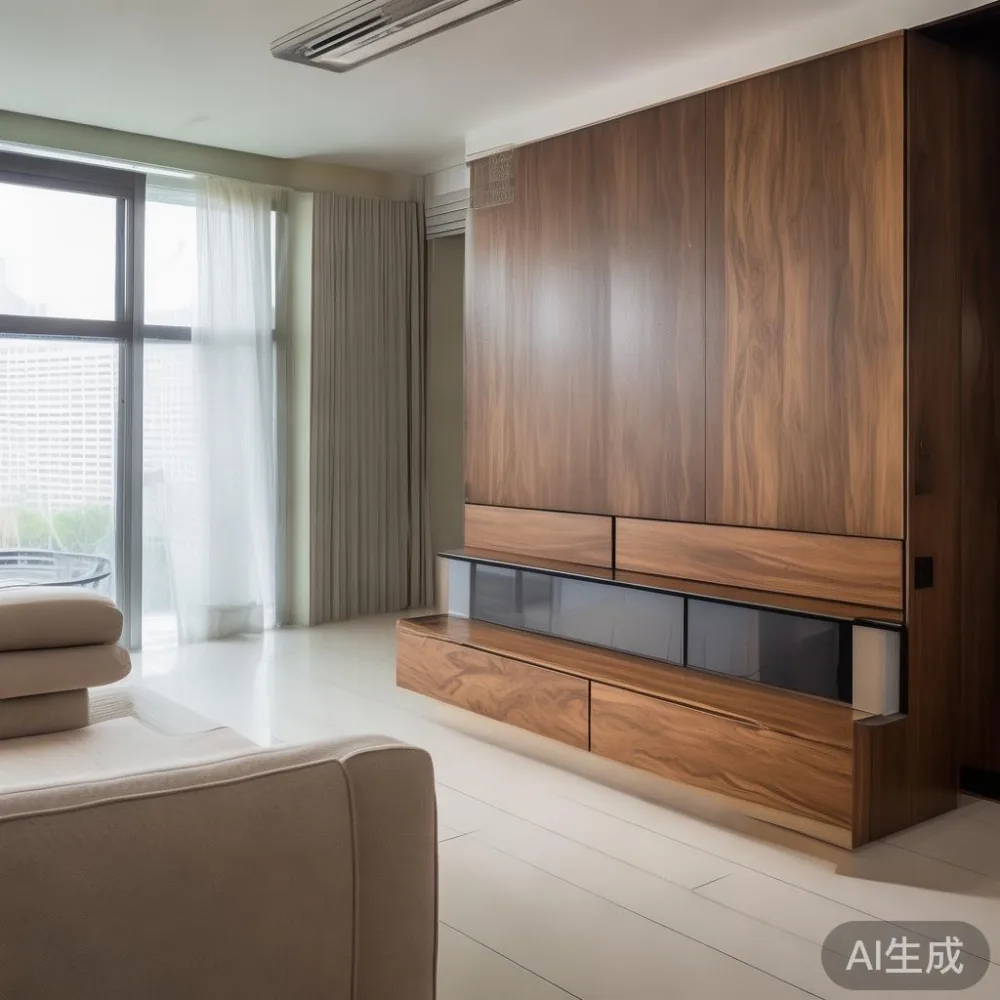
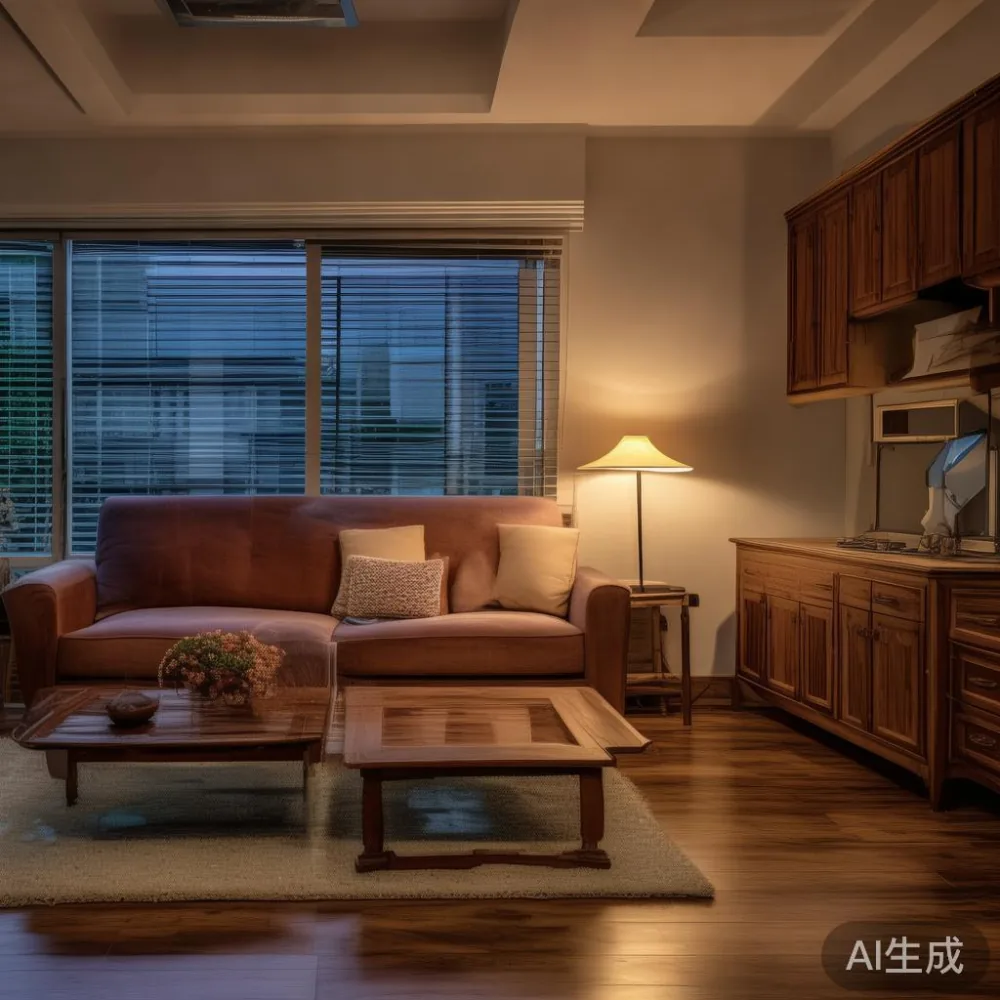
This article is the spreadsheet she and I built together, plus what I learned visiting three factories in Foshan and two local retailers in Singapore over the past month. We compare veneer and solid wood across a complete hdb livingroom set: a 3-seater fabric sofa, a queen bed frame, a six-seater dining table, a 2-door wardrobe, two nightstands, and one marble accent table. Every figure is in Singapore dollars, includes the current 9% GST, and reflects realistic lift-access constraints in HDB blocks along Punggol Way and Tampines Street 21.
What does "veneer" actually mean on a Singapore furniture label?
On a Singapore price tag, "veneer" usually means a 0.6 mm to 2 mm slice of real wood (teak, walnut, oak, or ash) glued onto an engineered core of rubberwood, MDF, or particleboard. The visible surface is genuine timber; the inside is compressed fibre. Solid wood means the structural pieces — legs, rails, drawer boxes, table top — are cut from one piece of hardwood, typically imported kiln-dried oak, ash, or rubberwood, then joined with mortise-and-tenon or dowel construction. In a Foshan factory the floors that make both categories run on the same CNC lines; the price gap comes from raw timber, not labour.
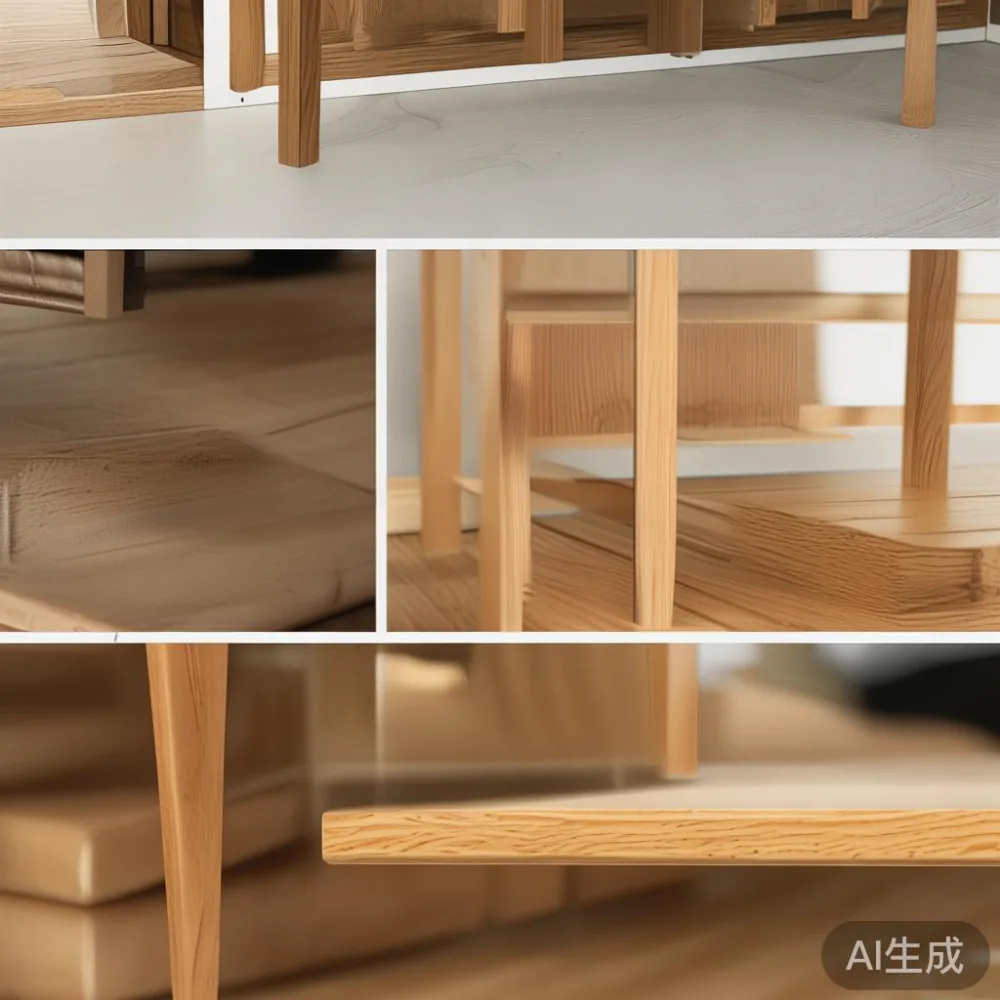
For an hdb livingroom set built around a 1.8 m sofa, a 1.5 m x 2 m bed frame, and a 1.8 m wardrobe, the material difference on a price tag in Singapore today looks like this: a veneer package retails between S$1,850 and S$2,650. The same configuration in solid wood retails between S$3,400 and S$4,950. The typical shopper sees that gap and assumes solid wood is two-and-a-half times more expensive. Over five years, the math tells a different story.
The Day 1 Receipt: What You Actually Pay in Tampines, Bedok, and Punggol
Priya's final quote from a local retailer for a six-piece veneer hdb livingroom package was S$2,180 inclusive of GST, with free delivery above S$350 and a 14-day return window. The matching solid wood package from a different brand came in at S$4,120, with a 10-year structural warranty and a lifetime refinishing service — a perk she had not budgeted for. The lift in her Bedok block is 1.1 m wide at the door and 2.1 m deep; the queen bed frame arrived in two cartons (52 kg and 41 kg), and the wardrobe came in three flat-pack boxes totalling 88 kg. Two movers charged S$140 for the round trip.
For context, MIDHILL ships solid wood packages from Foshan with consolidated cartons, and the lift-friendly flat-pack format on a 2 m wardrobe typically fits a standard HDB lift (door width 0.9 m to 1.1 m) without needing the stairwell. Local Singapore boutique orders are worth comparing on landed cost, not just sticker price: a S$2,180 veneer set delivered is roughly S$2,180. A S$4,120 solid wood set delivered is roughly S$4,260 once you add the optional in-home assembly (S$140) and the lift-survey fee (S$0 for ground floor, S$60 for high floor above certain units on certain streets — modelled at Punggol Walk).
Year 1 to Year 2: The Humidity Reality of an HDB Living Room
Singapore humidity sits between 70% and 85% for nine months of the year. Veneer and solid wood both react, but they react differently. A 0.6 mm veneer face on MDF swells at the edges when the air-conditioner breaks down for a weekend; Priya's neighbour in Punggol saw 2 mm of lifting along the dining table's veneer lip after a 3-day power trip in March. A solid oak dining table in the same flat, with the same AC failure, moved less than 0.3 mm because solid timber expands along the grain as one piece.
This is where the warranty paperwork matters. Friend, my colleague's solid wood package from MIDHILL came with a 10-year structural warranty against warping, joint failure, and cracking above 3 mm. The veneer package she almost bought had a 12-month warranty that excluded "environmental movement". Over Years 1 and 2, the only real cost either material imposes is surface cleaning — a bottle of Osmo spray (S$18) and a microfibre cloth (S$6) handle both. The difference shows in stress, not in dollars.
Year 3: The First Real Repair Bill
By Month 30, three things tend to happen in an hdb livingroom: the sofa fabric fades on the afternoon-sun side, a drawer runner on the nightstand loosens, and the marble table develops a hairline chip at the corner where a preschooler dropped a plastic truck.
Fabric fade: a 3-seater sofa in original polyester costs roughly S$220 to reupholster in a Sunbury or Penfabric equivalent in Singapore. A solid wood frame survives the reupholstery; a veneer frame often does not, because the staple removal lifts the face layer. Priya paid S$240 in Year 3 for a fabric refresh and kept her solid wood frame — that is one number on the spreadsheet.
Drawer runner: a pair of soft-close runners on a nightstand costs S$32 for the part and S$60 for a handyman from Carousell Services. Same cost either way.
Marble table chip: this is where solid wood pays back. A solid wood dining table can be sanded and re-oiled on site for S$120 to S$180 by a Singapore refinisher. A marble table chip repair costs S$90 to S$150 for a resin fill, but the surface stays slightly visible. Over five years, expect one chip event per marble table.
How do I choose a shipping damage for a small apartment?
Choose shipping damage coverage that matches the lift access of your block, not the replacement value of the furniture — for a standard HDB lift of 0.9 m to 1.1 m door width, opt for full-coverage carton protection at S$45 per consignment, because high-floor replacements in Punggol and Bedok routinely cost S$280 to S$420 once stair-climb surcharges apply.
Here is the framework Priya used. First, measure the lift door at your block — most HDB lifts at Tampines GreenRidges and Bedok Reservoir are read 110 metres wide at the panel; older blocks at Punggol Spectrum sit at 0.9 m. Second, ask the supplier for the carton dimensions of the bed frame, the wardrobe, and the marble table before paying the deposit. A queen bed frame in solid wood should pack into a carton no bigger than 215 cm x 198 cm x 28 cm to clear a 1.1 m lift. Third, refuse insurance that only covers the road leg — what you actually fear is the last 50 m from the lift lobby to your door, not the 4,500 km from Foshan. Fourth, photograph every carton on arrival before signing the delivery order; a Singapore mover's liability drops to S$50 per carton once the paperwork is signed clean. This is the most overlooked step, and it costs nothing.
Year 4: The Furniture for Singapore Flats Reality of Refinishing
By Month 48, a solid wood dining table that has seen daily use shows character: a few shallow knife marks near the serving zone, a slight grey patina where the afternoon sun lands. A veneer dining table in the same position looks tired: the edge banding has yellowed, a hot-pot stand left a white ring, and one corner has chipped back to the MDF substrate.
The lifetime refinishing service that came with Priya's solid wood package costs S$0 in service fees; she paid S$95 for the Osmo Polyx-Oil (0.5 L) and S$60 to a handyperson for two hours of sanding and re-oiling in her hdb livingroom. Total Year 4 spend: S$155. The dining table looked new again, with a matte sheen that suited the French light luxury look she had originally wanted — clean lines, oak tone, no brass hardware.
A veneer dining table at the same point has no equivalent service. Refinishing veneer means resanding, which sands off the 0.6 mm face layer. The realistic Year 4 cost on a veneer dining table is full replacement: S$1,180 for a new six-seater in the same finish, plus S$80 delivery and S$60 disposal of the old one through a Singapore bulky-item removal service. That is S$1,320 against S$155.
Year 5: The Spreadsheet, Side by Side
Here are Priya's actual numbers, written down so you can copy the columns:
Veneer hdb livingroom set, 5-year total cost of ownership:
Day 1 purchase: S$2,180
Year 1 cleaning supplies: S$24
Year 2 humidity repair (edge banding lift, dining table): S$120
Year 3 fabric re-upholstery: not viable, frame replaced S$1,650 (3-seater sofa portion only)
Year 3 marble chip repair: S$110
Year 4 dining table replacement: S$1,320 (table + delivery + disposal)
Year 5 wardrobe door re-alignment: S$90
Veneer 5-year total: S$5,494
Solid wood hdb livingroom set, 5-year total cost of ownership:
Day 1 purchase: S$4,260 (including assembly and lift survey)
Year 1 cleaning supplies: S$24
Year 2 humidity repair: nothing required
Year 3 fabric re-upholstery: S$240 (frame intact)
Year 3 marble chip repair: S$110
Year 4 dining table refinishing: S$155
Year 5 wardrobe door re-alignment: S$0 (still under 10-year structural warranty)
Solid wood 5-year total: S$4,789
The headline number is the one Priya did not expect: over five years, the solid wood package cost S$705 less than the veneer package, even though the Day 1 sticker was S$2,080 higher. The reason is that veneer replacement is whole-piece, while solid wood repair is incremental. A solid wood bed frame can be re-finished three times across a 30-year lifespan. A veneer bed frame cannot be re-finished at all.
Light-Luxury Style and Material Truth
Style-wise, both materials can deliver a post-modern light luxury look in an hdb livingroom. The trick is matching the material to the detail level. Light luxury — whether the French light luxury school (curved edges, brushed brass, oak with a low-sheen oil), the American light luxury school (clean shaker profiles, matte black hardware, walnut tones), or the post-modern light luxury school (mixed metals, geometric marble, ash with a pale white-oil finish) — depends on a surface that holds a crisp edge over time. Solid wood holds the edge. Veneer rounds it, especially on a 2-door wardrobe with shaker panels and a nightstand with bevelled drawer fronts.
For the marble table, material choice does not change — both packages used the same 6 mm sintered stone over an engineered core, with a S$180 upcharge for a Calacatta print. The marble table is a style anchor, not a structural piece, and 6 mm sintered stone handles a 12 kg toddler climb-test without the surface stress that solid marble would.
Practical Concerns from Priya's Tampines Walk-Through
Two more numbers from Priya's Tampines showflat visit that may help. A solid wood dining table in oak weighs 38 kg to 44 kg for a six-seater; the equivalent veneer table weighs 22 kg to 26 kg. The heavier piece feels more planted in the room — a subjective point, but one that buyers in hdb living rooms consistently raise. Heavier pieces also survive the slide during a floor-mopping incident, which Priya reported happened twice in Year 2.
Second, the corridor. HDB corridors at Tampines GreenRidges are 1.5 m wide. A 2 m wardrobe carton of 0.92 m x 0.42 m x 0.28 m clears the corner from lift to flat door with 0.5 m to spare. The equivalent wardrobe from a Singapore boutique that ships fully assembled arrives in a 2.05 m x 0.6 m x 0.6 m carton that does not clear the corner at the corridor end, which forces a repack at the lobby and an on-site assembly fee of S$180 to S$240. This is a hidden cost most buyers do not budget for, and it is one reason flat-pack shipping from Foshan continues to win on landed cost.
What about fabric care for small small apartment?
Fabric care for small small apartment settings is where the sofa choice intersects with the material choice. In a 92 sqm hdb livingroom, a fabric sofa lives within 1.5 m of the dining table, the TV console, and the corridor to the kitchen. Daily-use exposure is high. A solid wood sofa frame lets you steam-clean the fabric without worrying about the solvent wicking into a chipboard core. Over the same five years, the sofa fabric will need two washes (Year 2 and Year 4) at S$160 each. Both frames survive the washes; only the solid wood frame lets you keep the same sofa.
Will Solid Wood Work in My 92 sqm HDB Flat?
Yes — and here is the short version. A 1.8 m three-seater sofa, a 1.5 m x 2 m bed frame, a six-seater dining table, a 2-door wardrobe, two nightstands, and one marble table will fit a standard 4-room HDB livingroom and dining area without crowding the 2.4 m x 3.6 m main space, provided the dining table is no wider than 0.9 m. Measure your lift door (most HDB lifts read 0.9 m to 1.1 m), confirm the carton dimensions before paying the deposit, and budget 2 to 4 hours for assembly with two people. The 10-year structural warranty on solid wood covers joint failure, warping above 3 mm, and drawer runner defects; the lifetime refinishing service covers two free sand-and-re-oil sessions in the first 10 years for dining tables and wardrobe doors. Free shipping above US$350 translates to roughly S$480, which most full sets clear easily.
The Five-Year Verdict for an HDB Living Room
The material that wins on Day 1 often loses by Year 4. Veneer is cheaper to buy, more expensive to keep, and impossible to refinish. If you stay three years or longer in your flat — and most HDB owners stay seven years on average — solid wood returns more value per dollar, more comfort per kilogram, and more style per square metre. The numbers above are Priya's, from her Bedok flat, with GST included, delivery fees included, and repair bills included. They are not projections; they are receipts.
For shoppers in Singapore weighing a six-piece hdb livingroom package today, the cleanest decision rule is this: if you plan to stay fewer than three years, buy veneer and pocket the difference. If you plan to stay five years or more, the solid wood package — sourced through a maker like MIDHILL with a 10-year structural warranty and lifetime refinishing — is the lower-cost option over the life of the furniture. The Day 1 sticker is not the 5-year cost. The 5-year cost is the Day 1 sticker plus every repair and every replacement in between.
Where to Verify Before You Commit
Three checks before you pay any deposit. First, ask for the carton dimensions of the bed frame and the wardrobe in centimetres, and measure your lift door the same evening. Second, ask whether the warranty is structural-only or includes environmental movement; structural-only on veneer is the norm, and it excludes the most common failure mode in Singapore. Third, ask whether refinishing is included for the dining table and wardrobe, and at what fee; a lifetime refinishing clause on solid wood is the single biggest contributor to the Year 4 savings on the spreadsheet above. Priya followed this three-step checklist on a Sunday afternoon in Tampines, and the S$705 she banked by Year 5 is now sitting in her child's education fund.