How Humidity in Singapore Affects Your Solid Wood HDB Living Room Furniture (And What to Do About It)
I grew up in a Tampines HDB flat where my grandmother kept a teak sideboard that survived three moves, a child-rearing decade, and the perennial Singapore humidity that hovers between 70% and 90% for most of the year. Last month I visited a friend's new BTO in Punggol and watched her fret over a hairline crack running through her dining table top — bought barely eight months ago from a non-solid brand at S$1,890. The culprit was not bad luck; it was the climate, and the fact that the panels were veneer over MDF, not solid hardwood. That visit is what pushed me to write this piece, because the same climate that preserves my grandmother's 1970s teak also destroys pieces that were never built for it.
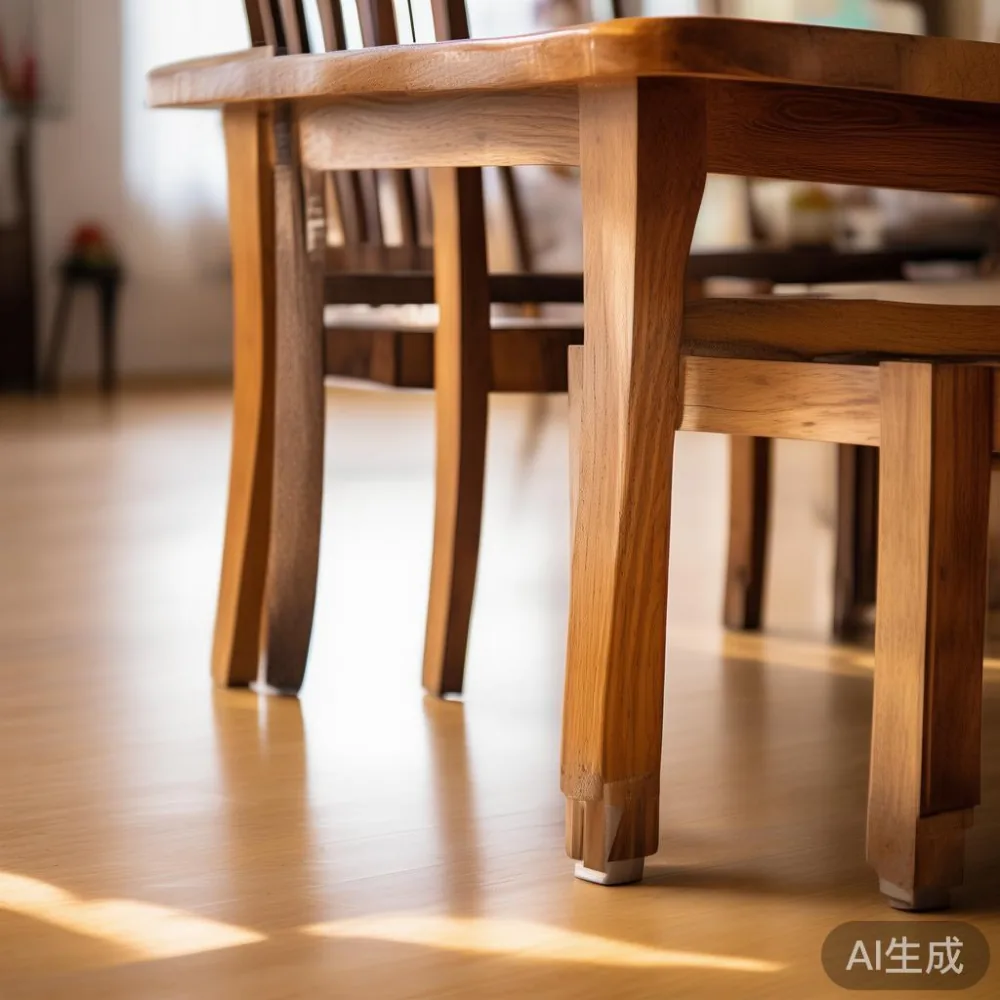
Why does Singapore's humidity damage wood furniture so quickly?
Wood is hygroscopic — it absorbs and releases moisture from the air to reach equilibrium with its surroundings. In a Tampines or Bedok HDB living room with relative humidity sitting at 78% in the morning and 88% after an afternoon thunderstorm, a solid hardwood plank is constantly expanding and contracting across the grain. A 180 cm dining table top can swell by 2 to 4 mm across its width over a single wet week, then shrink back when the air-con runs for six hours at 23°C. Over twelve months that cycle opens micro-gaps at the joints, lifts veneer at the edges, and in worst cases splits panels along the grain. Engineered boards with thin oak or walnut faces cope worse than full solid wood, because the thin face layer is glued to a substrate that moves at a different rate, so the face peels away. This is also why the corners of wardrobes feel rough after the December monsoon, and why the drawers of nightstands start to stick by March.
What real damage looks like in a Singapore HDB living room
I keep a small moisture meter in my own flat — a S$28 pin-type unit from a Sim Lim Square shop — and I have logged readings next to a 160 cm rubberwood coffee table that sits 1.2 metres from a sliding window. Between February and June 2025, the meter swung from 11% (during a dry week when the air-con ran 18 hours daily) to 16% (after a Hujan lebat weekend with windows cracked open). The wood moved enough to leave a 1.5 mm gap at one breadboard end and a faint lift on the opposite corner. None of this is visible from the sofa, but a guest sitting on the rug can feel the uneven edge under a tray. On a friend's cheaper bedside cabinet — particleboard with a paper laminate — the same humidity cycle caused the laminate to bubble at the back panel within nine months, and the doors now sit 3 mm out of alignment.
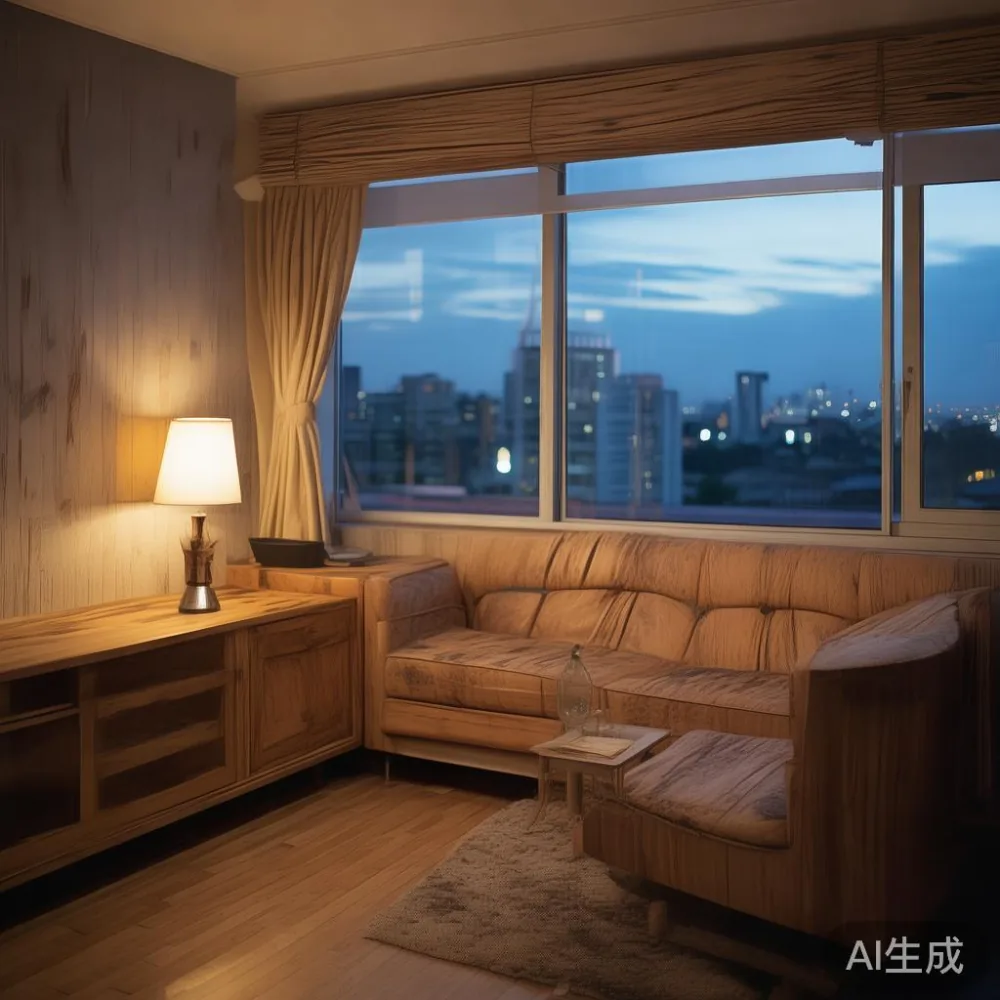
Watch for these in your own home: hairline cracks on table tops running parallel to the grain, doors that rub in January but have a 2 mm gap in July, drawer fronts that no longer sit flush, white salt-like deposits at joints (efflorescence from glue failure), and a faint musty smell in closed wardrobe corners — a sign that trapped moisture is feeding mildew on the back of panels. None of these are manufacturing defects in most cases; they are moisture defects, and they are predictable in our climate.
Why solid wood — and the right solid wood — matters for HDB living rooms
Solid hardwood that has been properly kiln-dried to 8–10% moisture content before construction will still move in a Singapore living room, but the movement is slow, reversible, and does not delaminate, because there is no glue line to fail. A 100% solid wood bed frame made from ash, oak, or rubberwood can absorb and release moisture for decades without losing structural integrity. A bed frame joined with mortise-and-tenon or dowel joints will creak less and loosen less than one held by staples and cam locks. Wardrobes benefit even more — a 200 cm tall three-door wardrobe in solid wood can flex with the humidity cycle instead of cracking the back panel.
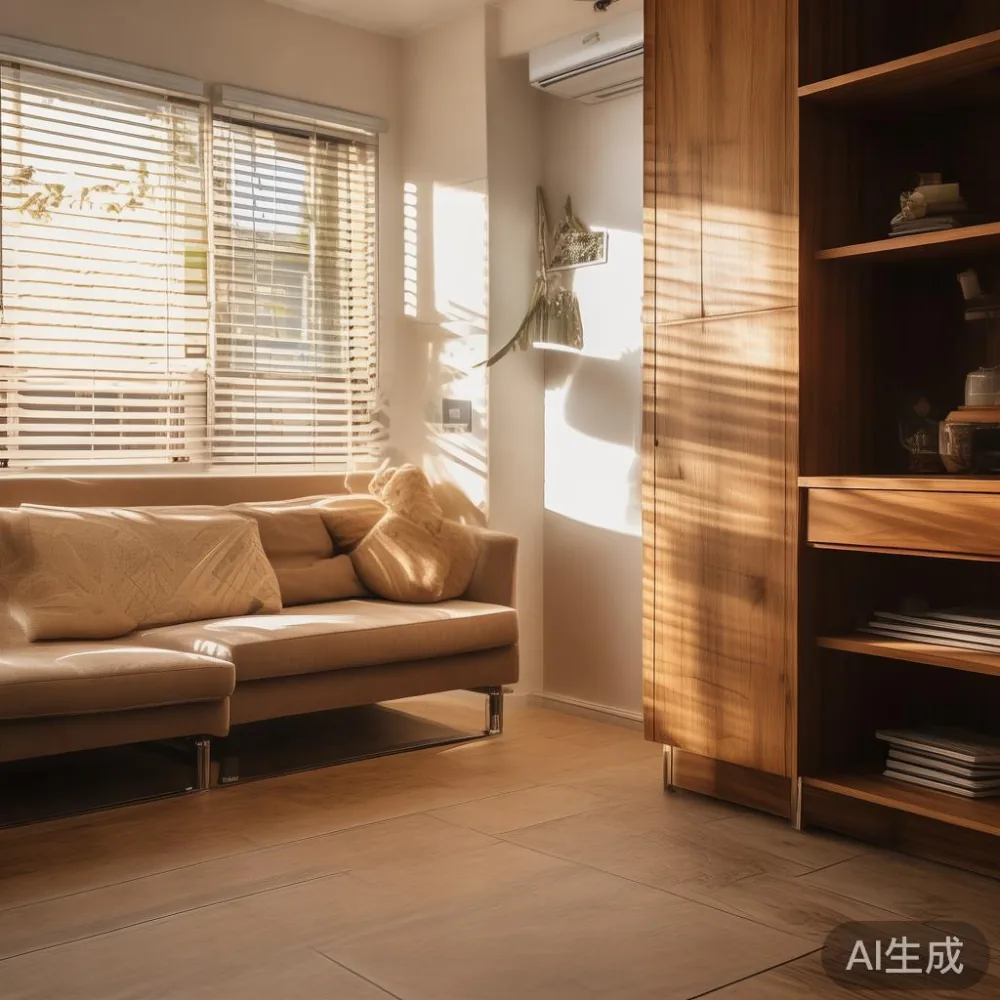
This is also where the difference between mass-market and light-luxury construction shows up. American light luxury and French light luxury styles tend to use thicker panels (22 to 28 mm for table tops versus 15 to 18 mm in entry-level pieces), full solid wood for visible faces, and slow-grown hardwoods that have tighter grain and less movement. Post-modern light luxury pieces — softer silhouettes, slightly rounded edges, lower visual weight — pair well with HDB living rooms because they read as calm, and the thicker stock resists warping better in a 90 sqm flat where the air-con only runs in the bedrooms. For a compact HDB living room, a compact chest of drawers for living room storage, built from solid ash with dovetail joints, will outlast three flat renovations.
How to choose pieces that will last 10+ years in Tampines, Bedok, and Punggol
Five checks before you hand over your credit card, whether you are buying from a local showroom or having pieces shipped from a Foshan factory like MIDHILL (which has shipped solid wood furniture into Singapore for over a decade and offers a 10-year structural warranty):
1. Ask for the wood species and the kiln-dried moisture reading. A responsible seller will tell you it is rubberwood, ash, oak, or walnut, and that the boards were kiln-dried to 8–12% before assembly. If they cannot answer, walk away.
2. Lift the piece. A 160 cm solid oak dining table weighs 45 to 55 kg. A 180 cm version weighs 55 to 70 kg. If a vendor tries to sell you a 180 cm dining table under 35 kg, it is veneer or hollow core.
3. Check the joinery. Look underneath. Mortise-and-tenon, dovetail, or dowel joints are good. Staples, brad nails, and cam locks alone are bad for long-term Singapore use.
4. Measure your lift and corridor. A standard HDB passenger lift internal size is about 1.1 m wide × 1.4 m deep × 2.1 m tall, with a door opening of roughly 0.9 m. A 200 cm tall wardrobe will not fit standing up in most lifts — it needs to be flat-packed or shipped in two halves. Corridors are narrower at around 1.2 m, so a 180 cm sofa in a single box needs to be tilted. Always confirm dimensions and packaging with the seller before paying.
5. Confirm the warranty in writing. A 10-year structural warranty is meaningful only if it covers joint failure and cracking from wood movement, not just manufacturing defects. Lifetime refinishing — sanding and re-oiling — is a bonus that adds real years of life to a solid wood dining table or marble-topped side table.
What is the difference between Modern light luxury nightstand and modern furniture?
A Modern light luxury nightstand is a solid-wood bedside cabinet built with hardwood frames, dovetail drawers, and quiet post-modern detailing — soft radii, slim bronze or brushed-steel pulls, and an oiled or matte-lacquer finish — whereas generic modern furniture is usually a flat-pack MDF or particleboard box with paper laminate, cam-lock assembly, and a high-gloss foil that peels within three years in our humidity. In short, the Modern light luxury nightstand is a piece of joinery designed to absorb Singapore's 70–90% humidity cycles for decades; generic modern furniture is a piece of industrial design designed to ship flat and look good in a catalogue photo for one season.
Day-to-day care that actually works in a Singapore flat
Three habits make the biggest difference:
Stabilise the room, not the wood. Run a dehumidifier set to 55% RH in the living room for 6 to 8 hours a day during the December and March monsoon windows. A standard 12-litre dehumidifier costs S$189 to S$260 and uses about S$4 of electricity a week. Keep the air-con at 23 to 25°C when you are home — each 1°C drop in temperature drops relative humidity by roughly 4 to 5%.
Keep furniture 15 to 20 cm away from external walls. HDB external walls in Punggol and Bedok run cooler at night and condense moisture on the inner surface. A wardrobe pushed flat against that wall will absorb that moisture through the back panel, even if the room itself feels dry.
Oil twice a year. A solid wood dining table top, coffee table, or marble table edge benefits from a wipe-down with hard wax oil or tung oil every six months — once in November before the monsoon, once in May after it ends. Budget 30 minutes per piece and about S$18 for a 250 ml tin that covers four to six applications. The oil does not seal the wood — nothing truly does — but it slows moisture exchange and refreshes the surface.
Pricing reality for Singapore buyers in 2025
A solid wood dining table seating six (180 to 200 cm, ash or oak, kiln-dried, mortise-and-tenon) from a Foshan-direct brand like MIDHILL lands between S$1,450 and S$2,100 landed, including GST and delivery above S$350 order value. A solid wood bed frame in queen size sits between S$980 and S$1,650. A three-door solid wood wardrobe in 200 cm height runs S$2,400 to S$3,200. A marble-topped coffee table with a solid wood base is S$1,100 to S$1,800. A pair of solid wood nightstands is S$480 to S$780. A compact chest of drawers for living room storage (four drawers, solid ash, 90 cm wide) is S$720 to S$1,050. These prices are roughly 30 to 45% below equivalent pieces from showroom brands at ION or Marina Square, mainly because the pieces ship direct from factory, and the savings compound when a buyer furnishes a whole 90 sqm HDB living room in one order to clear the free-shipping threshold.
What about returns, delivery, and lift access in HDB blocks?
Most direct-from-factory solid wood pieces arrive flat-packed in 2 to 4 cartons, with the largest carton typically 180 cm × 60 cm × 25 cm and 38 to 55 kg per carton — manageable through a 0.9 m lift door if tilted vertically, but worth measuring your lift car first. Delivery to a Tampines, Bedok, or Punggol HDB block usually takes 18 to 28 days from order, including sea freight from Guangdong and local last-mile delivery up to your door (above S$350 order value, free; below that, a S$45 fee is common). A 14-day return window lets you inspect every piece on arrival: check for cracks, joint gaps, and warping before signing the delivery note. If a panel arrives with more than a 2 mm bow, document it with photos and report it within 48 hours — a credible seller will replace the panel rather than argue.
The climate in Singapore will not change. What can change is the kind of furniture you bring into your HDB living room, and how you look after it. Solid wood, kiln-dried to the right moisture content, joined properly, and given two oilings a year, will outlast every air-conditioning cycle, every monsoon season, and every move to a new BTO. A bedroom set, a dining table, a sofa frame, a wardrobe, and a pair of nightstands built this way are not just furniture — they are the kind of pieces my grandmother recognised, and the kind yours will too.